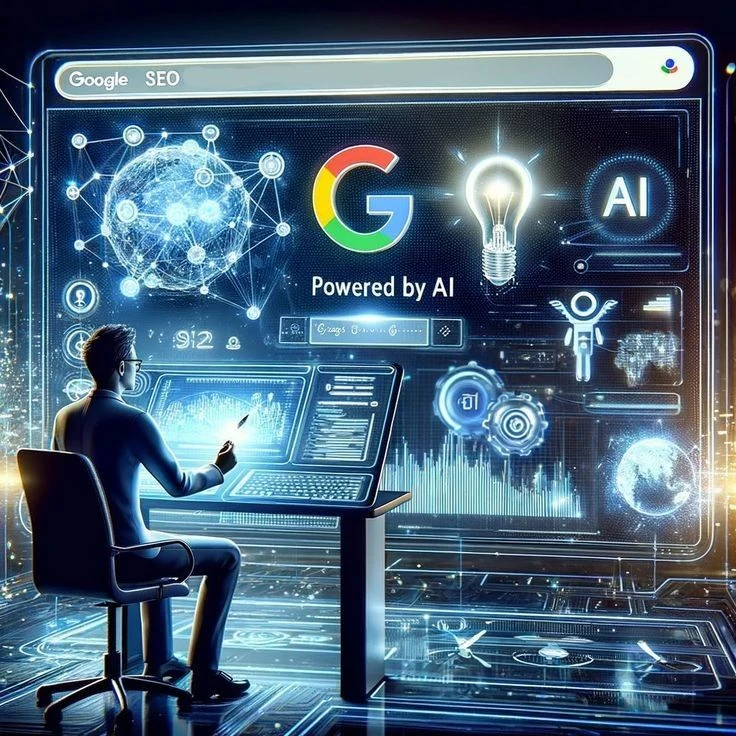
As a digital marketing strategist from Kasaragod, I’ve witnessed firsthand how digital marketing trends are constantly evolving. One of the most exciting and impactful changes in recent years is the rise of Artificial Intelligence (AI) and Machine Learning (ML) in the world of SEO (Search Engine Optimization). These technologies are not just buzzwords—they’re fundamentally reshaping how search engines operate and how businesses need to approach their SEO strategies.
AI and Machine Learning: What’s Driving the Change?
In the past, SEO was largely about keyword optimization and link building. However, with the advancement of AI and machine learning, search engines like Google are becoming smarter, more intuitive, and more capable of understanding user intent and content relevance. The Google RankBrain algorithm update in 2015 was one of the first significant indications that AI was beginning to play a major role in search engine algorithms. Now, we’re seeing even deeper integrations of machine learning, including Google BERT (Bidirectional Encoder Representations from Transformers) and Google MUM (Multitask Unified Model).
But what does this mean for businesses in Kasaragod and beyond? How can we leverage these changes to stay ahead of the curve?
1. Search Engines Can Understand Context, Not Just Keywords
AI and machine learning have empowered search engines to move beyond simple keyword matching. They now analyze search intent and context to better understand the user’s question. For example, if someone types "best places to visit in Kasaragod," search engines can now identify that the user is likely looking for travel recommendations, rather than the simple keyword "Kasaragod."
This shift means that marketers must focus less on stuffing content with keywords and more on creating contextual, high-quality content that directly answers users' questions. The future of SEO lies in creating content that answers questions in a natural, detailed, and helpful way.
2. Personalization of Search Results
AI-driven algorithms can now personalize search results based on a user’s search history, location, preferences, and behavior. For instance, someone searching for "coir products" from Kasaragod will likely see local businesses or suppliers ranked higher than international brands, thanks to localized AI algorithms.
This trend highlights the importance of local SEO for businesses in Kasaragod. Optimizing for location-based search results through Google My Business listings, local reviews, and location-targeted content will be critical for attracting nearby customers. Location-based personalization is crucial for businesses that want to stay relevant in their communities and attract hyper-targeted traffic.
3. Voice Search and Conversational Queries
AI has also revolutionized the way we interact with search engines through voice search. With the rise of smart speakers and voice assistants like Siri, Alexa, and Google Assistant, voice search queries have become a more common way for users to find information.
Voice search tends to be more conversational, which means users are now asking full questions instead of typing fragmented phrases. For example, a voice search for local tourism in Kasaragod might be something like, “What are the best places to visit in Kasaragod for nature lovers?” Instead of just targeting keywords like "tourism Kasaragod," businesses will need to optimize for long-tail, conversational keywords and FAQ-style content.
By integrating natural language processing (NLP) and machine learning models, search engines can now interpret and deliver more nuanced, accurate responses to voice searches. Businesses that adapt to this shift will be better equipped to attract voice search traffic.
4. AI for Content Creation and Curation
One of the most significant ways AI is impacting SEO is through content creation and curation. AI-powered tools like Jasper, Frase, and Copy.ai can now generate well-written content that aligns with SEO best practices. These tools analyze millions of web pages to identify patterns, keywords, and topics that resonate with audiences.
However, while AI can assist in content creation, it’s important to note that human expertise is still necessary for producing valuable, high-quality content. AI can help generate the structure, but it’s the human touch that ensures the content is relevant, engaging, and informative.
In Kasaragod, businesses involved in local tourism, handicrafts, and traditional arts can leverage AI tools to streamline content creation. Whether you're drafting blog posts, social media updates, or product descriptions for local handicrafts, AI can help reduce time spent on content creation while maintaining a high level of optimization.
5. The Importance of E-A-T (Expertise, Authoritativeness, and Trustworthiness)
Google has long emphasized E-A-T (Expertise, Authoritativeness, and Trustworthiness) as part of its ranking criteria, but with the rise of AI, these factors have become even more significant. AI systems, like Google’s BERT, now prioritize content that demonstrates authority and expertise in specific subjects. Google aims to provide users with the most accurate and reliable information available.
For businesses in Kasaragod, demonstrating local expertise (for instance, in coir products or regional tourism) and building a strong online reputation through reviews and testimonials will be essential for gaining trust and boosting SEO rankings.
6. AI and Automation in SEO Tasks
AI and machine learning tools are not just revolutionizing search engine algorithms but are also making SEO tasks more efficient through automation. Tasks like keyword research, backlink analysis, content optimization, and tracking performance can now be managed through AI-powered platforms, saving marketers time and resources.
Tools like SEMrush, Ahrefs, and Moz are already leveraging AI to give real-time insights on keyword trends, competitors' performance, and SEO health. As a result, SEO professionals in Kasaragod and across India will increasingly rely on AI-driven tools to streamline their strategies and make data-driven decisions.
7. Future SEO Practices: AI-Powered Content Marketing
As AI and machine learning continue to evolve, businesses will increasingly rely on AI-driven content marketing strategies. These strategies will focus on delivering hyper-personalized, data-backed content that meets user needs across multiple devices and platforms.
For example, a Kasaragod-based tourism company might use AI to analyze past visitor behavior and create personalized travel itineraries or content recommendations based on visitor interests—whether it’s eco-tourism, heritage sites, or local cuisine.
Author : Ahmed ismail pm




























Sign in to leave a comment.