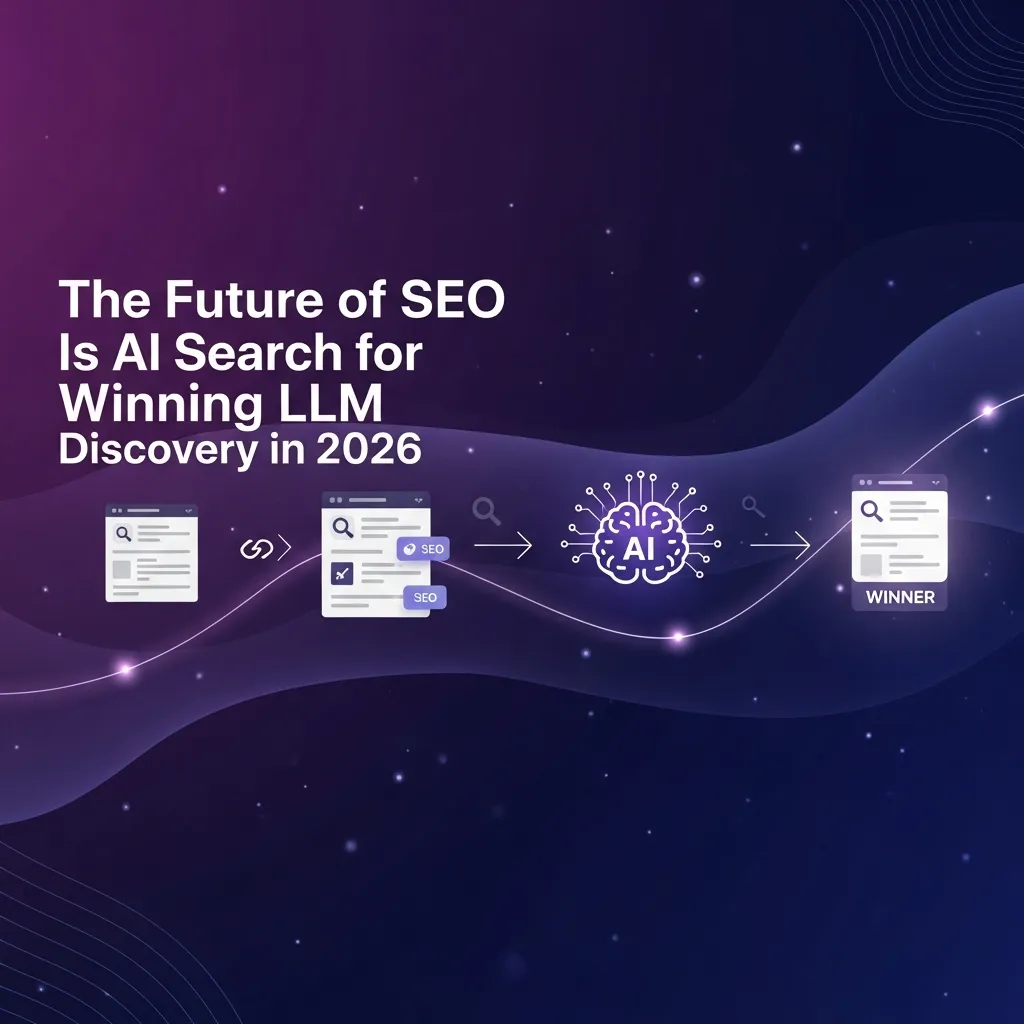

Your competitor gets mentioned in ChatGPT's answer about eCommerce marketing automation. You don't. No clicks. No impressions. No opportunity to compete.
This is 2026's digital discovery landscape. AI-powered assistants like ChatGPT, Perplexity, Google's AI Overviews, and Bing Copilot no longer return blue-link results. They synthesize information and deliver direct answers. Being invisible to these systems means being invisible to your customers.
The brands that understand LLM discovery optimization will dominate. Those that don't will fade into obscurity.
What AI-Driven Search Really Is
AI-driven search delivers synthesized answers instead of link lists. These systems process vast amounts of information and recommend solutions directly to users based on trusted sources.
Three critical shifts define this new reality:
Users get answers without visiting your site - Zero-click responses mean your brand's visibility depends on being cited, not on getting clicks.
AI citations create a new visibility layer - Appearing in AI-generated answers is now as important as ranking in traditional search results.
Conversational questions dominate - Users ask natural language questions: "What's best for my eCommerce store?" rather than keyword phrases like "eCommerce marketing automation."
AI agents make recommendations - These systems research and recommend products on behalf of users, making AI endorsement more valuable than traditional marketing.
For brands relying on marketing automation, this shift determines whether your content and campaigns are discoverable during critical customer decision moments.
Understanding LLM Discovery Optimization
LLM discovery optimization is the practice of structuring and publishing content so large language models recognize your expertise and cite it when answering questions.
This goes beyond traditional SEO optimization. While conventional approaches focus on ranking signals, LLM optimization is about becoming the trusted source AI systems reference.
Key disciplines include:
Answer Engine Optimization: Formatting content to directly answer questions AI receives
Generative Engine Optimization: Optimizing for platforms that synthesize responses
AI Search Visibility: Ensuring your brand appears in AI-generated answers
LLM Content Strategy: Aligning content with how language models process information
AI vs. Traditional SEO: Key Differences
Old SEO prioritized keywords, backlinks, and domain authority. Modern AI search optimization demands fundamentally different approaches.
Expertise Clarity Wins - LLMs favor deep, specialized knowledge over broad, generic content optimized for clicks.
Accuracy Is Mandatory - AI models cross-reference sources. Inconsistent, outdated, or vague information gets filtered out completely.
Structure Determines Discovery - Content organized around questions, definitions, comparisons, and processes gets prioritized over keyword-heavy writing.
Authority Through Citations - When multiple trusted sites consistently reference your brand positively, LLMs associate your brand with genuine expertise.
How Omnichannel Presence Powers AI Visibility
Most brands miss this critical connection: your omnichannel marketing presence directly determines your AI search visibility.
AI systems extract information from blogs, social media, reviews, podcast transcripts, YouTube, industry publications, forums, and news articles. Your brand's presence across these channels determines how frequently and consistently AI systems encounter your information.
A strong omnichannel strategy delivers:
Consistent messaging across channels reinforces LLM associations. Multiple channels create more data points for AI systems to reference. Regular publishing across email, social, blog, and video establishes topical authority. Reviews and testimonials build trustworthiness signals. Automated publishing maintains current information that AI systems reward.
This distributed presence becomes your competitive advantage in AI discovery.
Five-Step LLM Optimization Framework
Step 1: Create Topic Clusters
LLMs favor comprehensive expertise demonstrations. Organize content into interconnected clusters rather than scattered articles.
Identify your 3-5 core expertise areas. Build pillar pages covering each comprehensively. Create supporting content for specific questions. Link everything to show topical depth and authority.
Step 2: Structure for AI Discovery
Format is critical for AI systems:
Begin with direct answers to primary questions. Use natural question formatting for headings. Include FAQs and summary sections. Write clearly and concisely. Use numbered lists and step-by-step formats.
Step 3: Establish Clear Brand Identity
LLMs build knowledge graphs about brands. Help them understand your authority:
Keep brand messaging consistent across all platforms. Optimize your Google Business Profile and LinkedIn. Publish clear "About" content. Get mentioned in industry publications.
Step 4: Create Citation-Worthy Content
The most powerful optimization involves creating content others naturally reference:
Publish original research and data. Develop comprehensive guides. Create unique frameworks. Offer expert commentary journalists quote.
Step 5: Implement Technical Structure
Use FAQ schema on question-based content. Add HowTo schema for processes. Include Article schema with author data. Deploy Organization and BreadcrumbList schema site-wide.
Tracking Your AI Search Performance
AI traffic measurement is challenging since most platforms don't pass referral data. However, you can:
Monitor direct traffic increases indicating AI referrals. Track available referrals from Perplexity and Bing. Watch for branded search volume increases. Manually query major AI platforms to document brand mentions. Use specialized tools that track LLM citations.
Using Marketing Automation for LLM Success
Consistent, high-quality content production is essential. Marketing automation services become your greatest asset:
Systematically distribute content across all channels. Schedule automated content updates and audits. Automate review and testimonial collection. Maintain consistent publication and outreach. Use AI to assist production while maintaining human expertise.
The difference between visibility and invisibility often comes down to consistency—where automation excels.
Common Mistakes Undermining Your AI Visibility
Don't game the system - Success comes from genuine authority, not algorithm manipulation.
Don't ignore non-website content - Your AI visibility depends on your entire ecosystem of brand mentions.
Don't publish unstructured content - Great content without proper structure won't get cited.
Don't send mixed messages - Inconsistent messaging creates confused brand associations.
Don't rely on old metrics - Standard SEO data doesn't capture AI visibility.
Your Implementation Roadmap
Audit your content for structure, accuracy, and gaps. Map your omnichannel presence and identify weaknesses. Implement systematic distribution through content marketing services. Create original research for citation value. Set up AI visibility tracking across major platforms. Apply optimization systematically across your library. Review quarterly as AI evolves.
The Brands Winning AI Search
Winners aren't those with the most backlinks or highest domain authority by traditional metrics. They're brands that became genuinely authoritative, consistently helpful, and structurally optimized for how LLMs understand and recommend information.
LLM discovery optimization amplifies good marketing. Combined with strategic content marketing strategy, consistent omnichannel presence, and intelligent SEO services, it positions your brand to be discovered exactly when customers need answers.
The question isn't "How do we rank on Google?" anymore. It's: "When an AI is asked about our category, is our brand the one it trusts enough to recommend?"
Build that trust through expertise, structure, and intelligence, CRO and A/B testing services and AI-driven search will champion your brand.



























Sign in to leave a comment.