
Custom AI software development is gaining traction in the tech industry, offering potential benefits such as increased efficiency, automation, and data-driven decision making. But how exactly is AI used in software development? What does the process of developing AI-based software look like? And what languages are best suited for AI development? Let’s delve into these questions.
How AI is used:
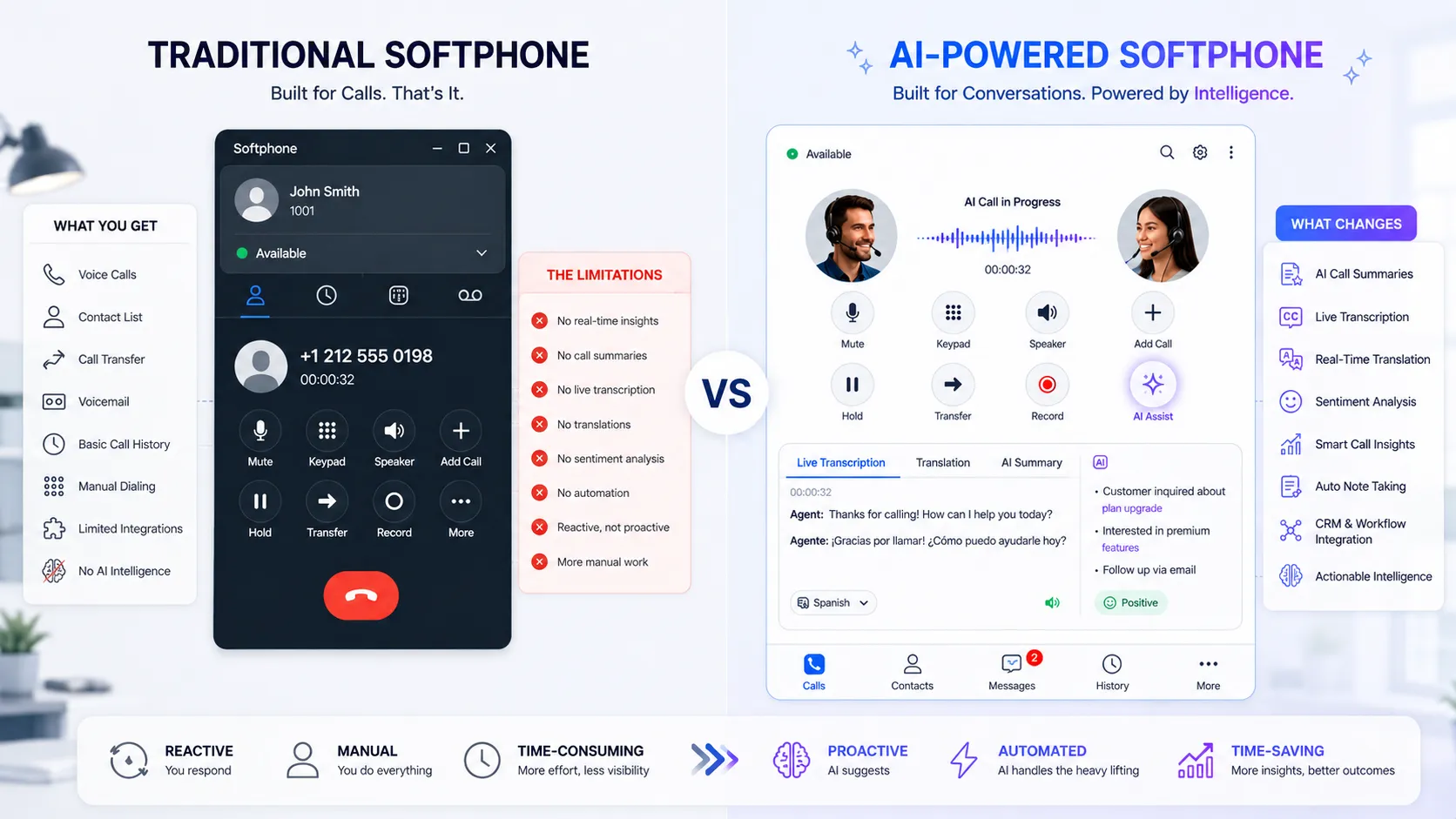
AI can add various functionalities to software, including natural language processing, machine learning, and predictive analytics. These capabilities can enhance software performance and provide more sophisticated features.
Here are some key applications:
Natural Language Processing (NLP):
AI is used to understand, interpret, and generate human language in a valuable way. It”s used in applications like voice assistants (Siri, Alexa), translation services, and sentiment analysis.
Machine Learning (ML):
AI uses ML to learn from data and improve over time without being explicitly programmed. It’s used in predictive modeling, recommendation systems (Netflix, Amazon), and fraud detection.
Predictive Analytics:
AI uses historical data to predict future outcomes. It’s used in areas like sales forecasting, risk assessment, and predictive maintenance.
Computer Vision:
AI is used to process and analyze images and videos, enabling machines to ‘see’ and understand visual input. It’s used in facial recognition systems, autonomous vehicles, and medical image analysis.
Robotics:
AI is used to enable robots to perform complex tasks autonomously. It’s used in manufacturing automation, drone navigation, and robotic surgery.
Data Analysis:
AI is used to analyze large volumes of data to extract meaningful insights. It’s used in market research, social media monitoring, and customer segmentation.
Benefits of Custom AI Software Development:
AI-powered software can increase efficiency and productivity, improve accuracy for data-driven decision making, provide personalized user experiences, and automate manual tasks. It can also enhance competitiveness and innovation across diverse industries.
Here are some key advantages:
Increased Efficiency and Productivity:
AI algorithms can automate repetitive tasks, freeing up human resources to focus on more complex and creative tasks. This leads to increased efficiency and productivity.
Improved Accuracy and Data-Driven Decision Making:
AI systems can analyze large volumes of data with high precision, reducing the risk of human error. This allows for more accurate, data-driven decision making.
Personalized User Experiences:
AI can analyze user behavior and preferences to provide personalized recommendations and experiences. This can lead to increased customer satisfaction and loyalty.
Automation of Manual Tasks:
AI can automate various manual tasks, from customer service (through chatbots) to data entry and analysis. This not only saves time but also reduces the risk of errors.
Enhanced Competitiveness and Innovation:
Businesses that leverage AI can gain a competitive edge through innovative products and services. AI can also help businesses stay ahead of market trends and adapt to changing customer needs.
Technical Aspects of Custom AI Development:
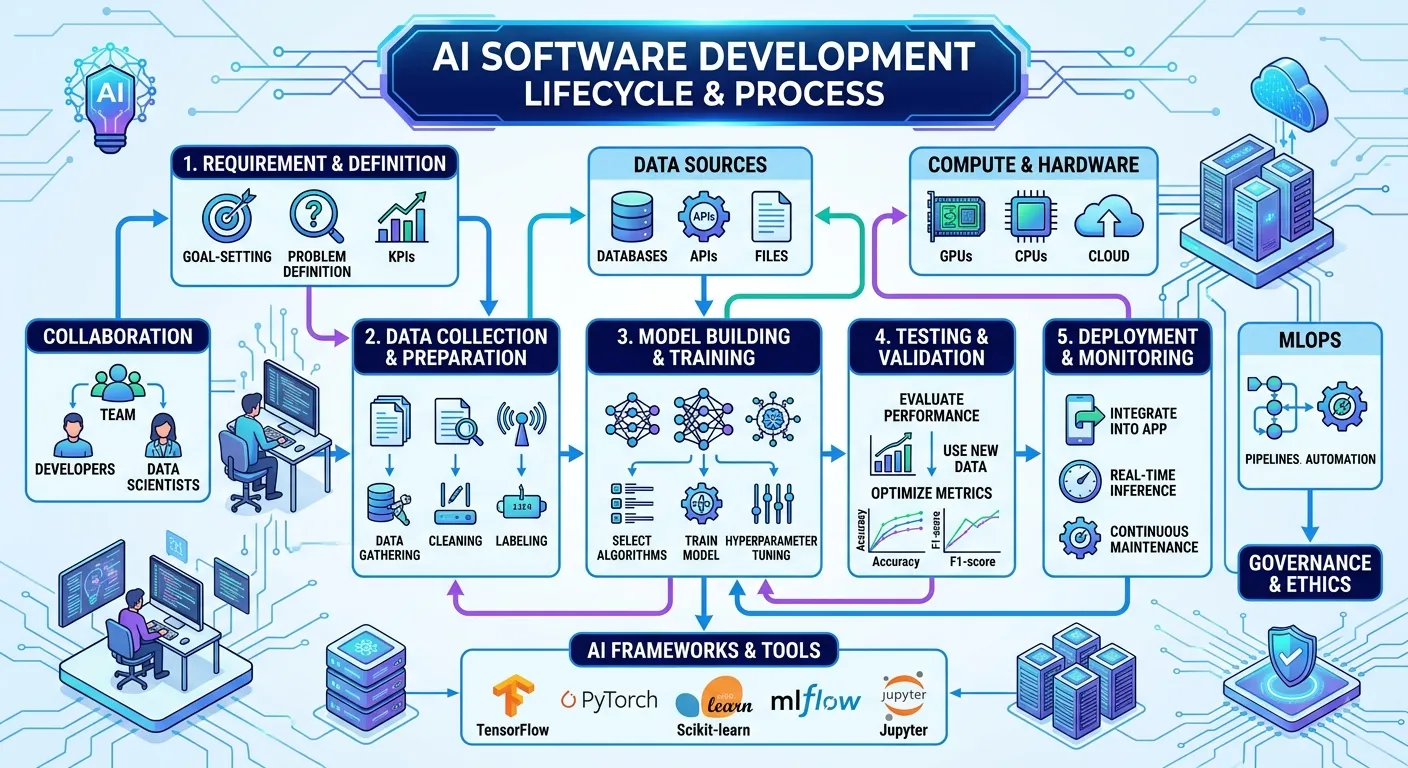
Developing custom AI software involves understanding the problem, defining goals, collecting and preparing data, choosing the right AI model and algorithms, training and testing the AI model, and integrating AI with existing software systems. Ongoing monitoring and maintenance are also crucial to ensure the software performs optimally.
Here’s a brief overview:
Understanding the Problem and Defining Goals:
The first step in any AI project is to clearly define the problem you’re trying to solve and set measurable goals. This could involve identifying the tasks you want to automate, the insights you want to gain, or the experiences you want to create.
Data Collection and Preparation:
AI models learn from data, so collecting relevant, high-quality data is critical. This could involve gathering data from various sources, cleaning it to remove errors or inconsistencies, and transforming it into a format that the AI model can understand.
Choosing the Right AI Model and Algorithms:
Depending on the problem you’re trying to solve, you might choose different AI models (like neural networks, decision trees, or support vector machines) and algorithms (like gradient descent or backpropagation). Each model and algorithm has its strengths and weaknesses, so it’s important to choose the ones that best fit your needs.
Training and Testing the AI Model:
Once you’ve chosen your model and algorithm, you’ll need to train your AI model using your prepared data. This involves feeding your data into the model, allowing it to learn patterns and make predictions. You’ll also need to test your model to ensure it’s making accurate predictions.
Integrating AI with Existing Software Systems:
After your AI model is trained and tested, you’ll need to integrate it with your existing software systems. This could involve writing code to call your AI model’s prediction function, updating your user interface to display the model’s predictions, or setting up a data pipeline to feed new data into your model.
Ongoing Monitoring and Maintenance:
AI models can drift over time as the data they’re predicting changes. To ensure your model continues to make accurate predictions, you’ll need to monitor its performance and retrain it with new data as needed.
Future of AI in Software Development:
The future of AI in software development is promising and exciting. With the rapid advancements in AI technologies, we can expect to see more sophisticated and intelligent software systems. AI will continue to play a crucial role in automating repetitive tasks, improving software quality, and accelerating the software development process.
Emerging trends like explainable AI, which provides insights into how AI models make decisions, and edge computing, which brings computation and data storage closer to the location where it’s needed, are set to revolutionize the software development landscape. The rise of hybrid AI models, which combine different AI techniques for better performance, also holds great promise.
Replacing Software Engineers:
While AI is transforming the software development process, it’s important to note that it’s not about replacing software engineers. Instead, AI is a tool that can augment the capabilities of software engineers.
AI can automate repetitive and mundane tasks, freeing up software engineers to focus on more complex and creative aspects of software development. It can also provide insights and recommendations that help software engineers make better decisions.
In the foreseeable future, the role of software engineers will likely shift rather than disappear. They’ll work alongside AI, leveraging its capabilities to create more innovative and effective software solutions. So, rather than viewing AI as a threat, it should be seen as a powerful ally in the world of software development.
Conclusion:
Custom AI software development holds immense potential for transforming the software industry. We encourage you to explore how AI can revolutionize your software solutions and provide resources for further learning. Whether you’re considering AI integration for your existing software or planning a new AI-powered solution, the future of software development is here, and it’s powered by AI.
























Sign in to leave a comment.