
Something fundamental broke in search last year. Not technically—but conceptually.
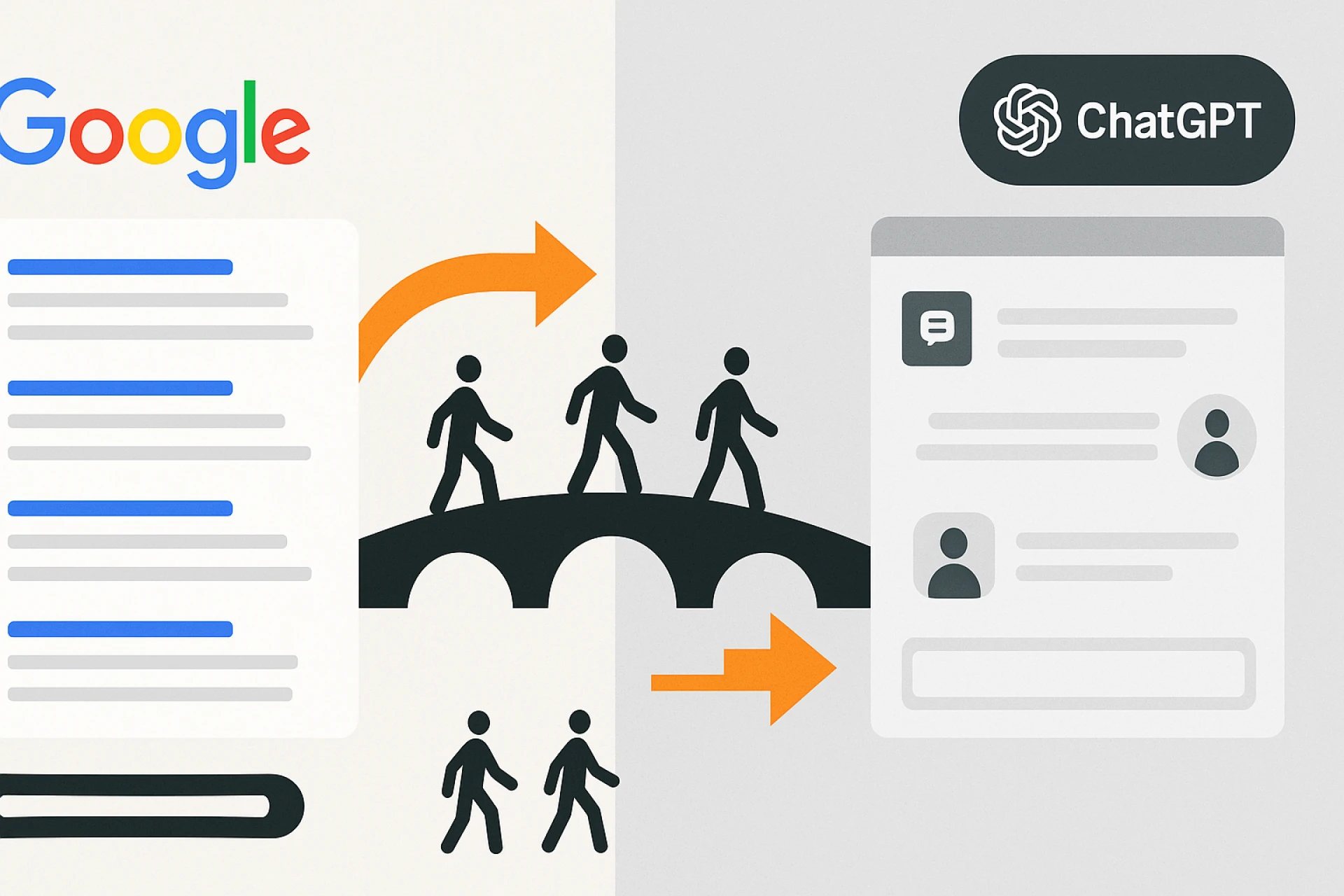
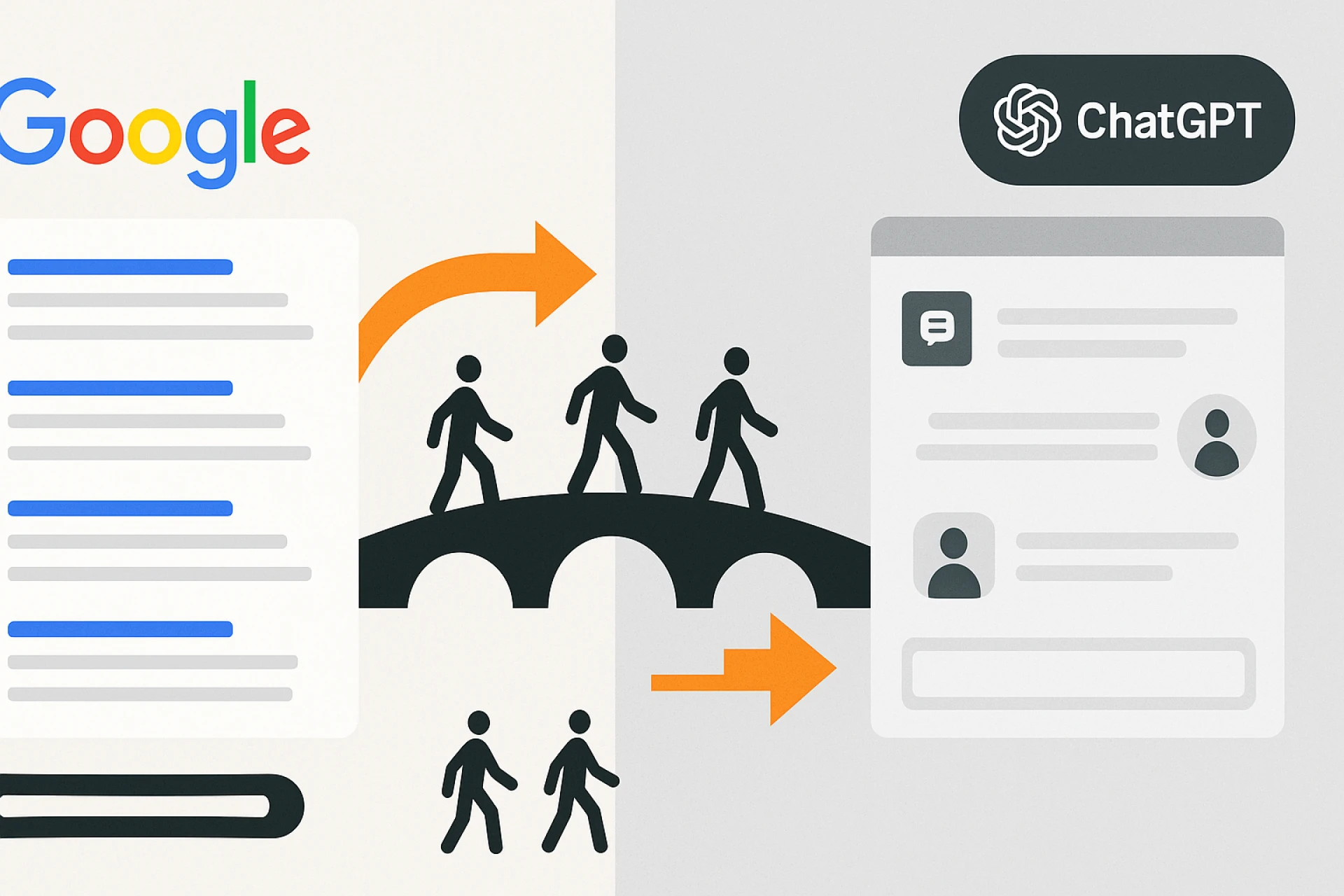
For the first time since Google's birth, millions of people stopped using traditional search engines for their daily questions. Instead, they started conversations with AI. They asked ChatGPT for restaurant recommendations. They queried Claude about investment strategies. They turned to Perplexity for research instead of scrolling through endless blue links.
I've spent two decades watching search evolve, but this shift feels different. More fundamental. When I realized I'd asked ChatGPT more questions than I'd typed into Google last month, it hit me: if seasoned SEO professionals are changing their information-seeking habits, what does this mean for keyword strategy? Everything.
The Death of Traditional Search Intent
From Keywords to Conversations
Traditional search engines built their empires on Broder's three-intent model: informational, navigational, and transactional. Users accepted the bargain of scanning titles, evaluating snippets, and hunting for answers across multiple tabs.
AI search engines flipped this completely. They promise direct answers, not navigation aids. Users ask questions and receive synthesized responses from multiple sources. No clicking required.
Consider this real example:
Traditional Google search: "best project management software small business 2025"
- Result: 10 links to listicles and vendor pages
- Time investment: 15-20 minutes of clicking and comparing
ChatGPT conversation: "What's the best project management tool for a 5-person marketing agency that needs time tracking and client collaboration?"
- Result: Detailed analysis of 3 specific tools with pros/cons for my exact situation
- Time investment: 3-5 minutes
The efficiency gain isn't marginal. It's transformative.
The New Intent Reality
AI search platforms reveal intent categories that traditional keyword research completely misses. Based on iPullRank's expanded intent framework, we're now seeing:
Multi-turn exploration where conversations evolve from one intent to another seamlessly. Users start with "What is generative engine optimization?" and naturally progress to "How do I apply it to eCommerce?"
Orchestrated intent where AI initiates chains of related actions. Ask ChatGPT to "Create a content plan" and it might research competitors, analyze gaps, and draft a strategy automatically.
Ambient intent refers to AI providing proactive, context-triggered updates without explicit requests.
Prompt inversion where AI asks clarifying questions to refine results instead of forcing users to anticipate perfect phrasing.
Traditional keyword research measures what people type into Google. But AI search operates on conversational patterns, context persistence, and intent orchestration that evolve over multiple exchanges.
How AI Engines Process Queries?
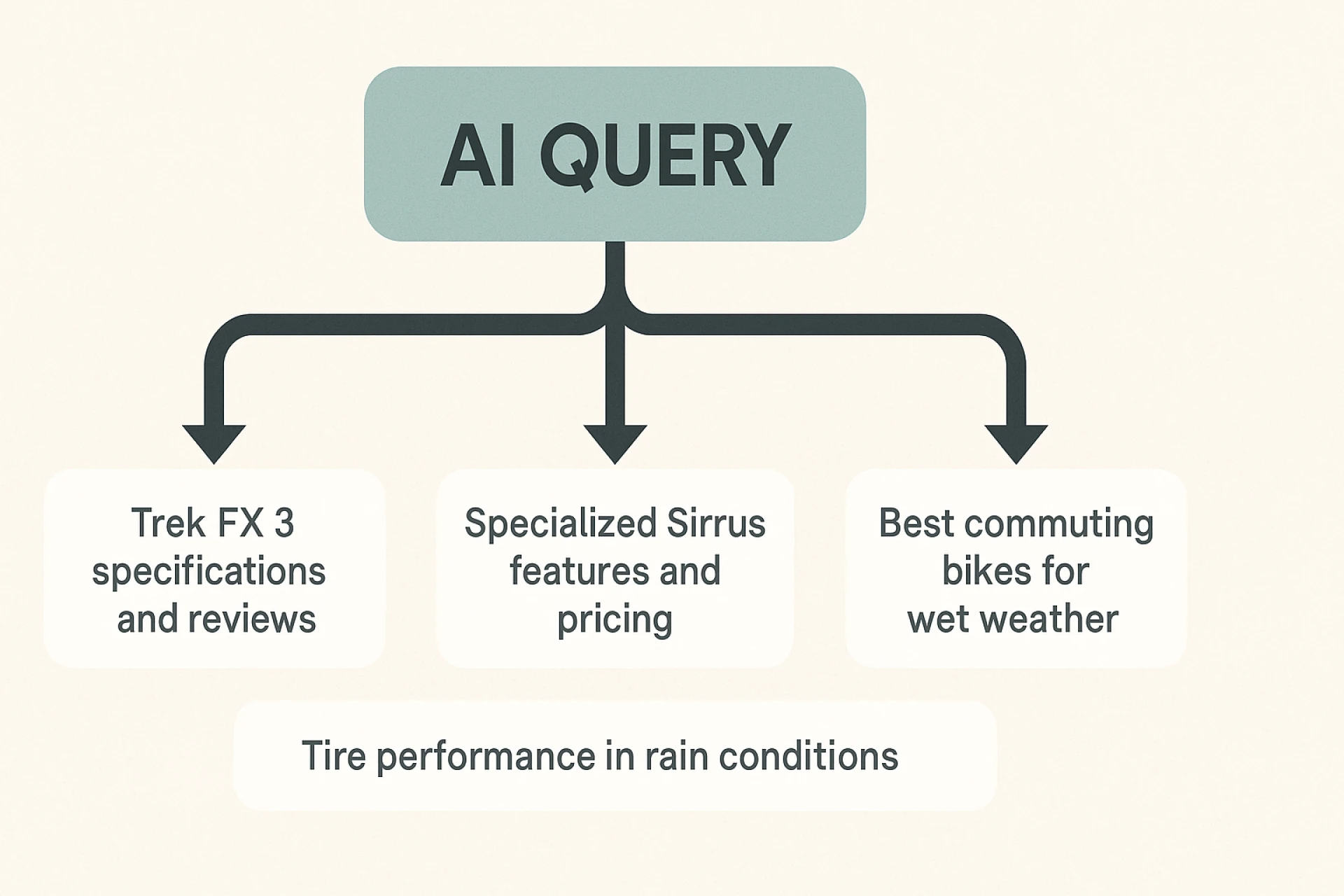
AI platforms don't take your words at face value. They perform sophisticated query rewriting and decomposition behind the scenes.
A single complex query like "Compare Trek FX 3 vs. Specialized Sirrus for commuting in rainy climates" gets internally split into multiple subqueries:
- Trek FX 3 specifications and reviews
- Specialized Sirrus features and pricing
- Best commuting bikes for wet weather
- Tire performance in rain conditions
For SEO and GEO, this means your content can contribute to final answers even if it never ranks for the full original query. You only need to satisfy one subquery exceptionally well.
Passage-Level Retrieval
Instead of evaluating entire pages, AI engines extract the most relevant passages—compact, self-contained sections that directly address specific needs. These passages get stitched together from multiple sources to form synthesized responses.
This changes everything about content strategy. Your comprehensive guide might contribute a single paragraph to an AI answer, but that contribution builds authority and brand recognition across hundreds of related queries.
Transforming Your Keyword Research
From Keywords to Conversational Patterns
The mindset shift is fundamental. Instead of asking "What keywords do people search for?", we need to ask "What conversations do people want to have?"
Conversation mapping replaces traditional keyword clustering. Map natural dialogue progressions: How do conversations flow? What questions lead to follow-ups? Which topics naturally connect?
Intent layering becomes more sophisticated. Users might want education, comparison, recommendation, and action guidance within a single conversation thread.
New Research Approaches
Standard keyword tools weren't designed for conversational search patterns. Smart marketers are adapting with new approaches:
AI conversation analysis involves studying actual interactions on ChatGPT, Claude, and Perplexity. What questions do users ask? How do they refine queries? Which response formats generate follow-up engagement?
Conversational pattern analysis reveals how users express information needs beyond traditional search terms. Query decomposition shows intent layers that keyword tools miss. Natural language processing identifies dialogue progressions that shape AI responses. Keyword research remains fundamental but requires approaches that decode conversational intent rather than volume metrics when AI platforms synthesize responses from multiple sources across interconnected topics.
Query decomposition analysis reveals how AI platforms break complex requests into subqueries, creating opportunities for focused content that serves specific components of larger conversations.
Platform-Specific Optimization Strategies
ChatGPT conversations lean toward problem-solving and iterative refinement. Content supporting detailed exploration and context building performs well.
Perplexity searches focus on research and fact-finding with clear source attribution. Authoritative content with supporting evidence is frequently featured.
Google AI Mode blends traditional search with conversational synthesis, often pulling from multiple sources to create comprehensive answers.
Content Architecture for AI
Traditional website architecture optimizes for search engine crawling. AI-friendly architecture prioritizes information extraction and synthesis capabilities.
Comprehensive topic coverage works better than keyword-targeted pages. Instead of creating multiple posts targeting variations, develop authoritative resources addressing entire conversational themes.
Structured information hierarchy supports both human reading and AI parsing. Use clear headings, logical progression, and direct statements that AI engines can easily extract and contextualize.
Passage-ready formatting helps AI engines identify and extract relevant information. Write self-contained sections that answer specific questions completely.
Measuring Success in the AI Era
Beyond Traditional Metrics
Traditional SEO metrics fall short for AI search performance. Success requires new measurement approaches:
AI platform monitoring tracks mentions and citations across conversational search platforms. Unlike traditional rankings, this involves qualitative assessment of how your content contributes to AI responses.
Brand authority signals become increasingly important. Monitor branded search volume, direct traffic increases, and mention quality across AI platform responses.
Conversation completion rates measure how well your content serves entire user journeys rather than individual queries.
Long-Term Authority Building
AI search platforms increasingly favor established authorities over keyword-optimized content. This creates opportunities for businesses investing in comprehensive expertise demonstration.
Topical consistency helps establish domain expertise in AI training data. Regular publication of insightful content within specific subject areas builds recognition as a reliable source.
Source citation patterns influence how AI platforms perceive authority. Content referenced by other authoritative sources signals credibility to AI algorithms, creating positive feedback loops.
Your Action Plan for AI Search Success
The transformation from blue links to AI conversations represents the most significant search evolution since Google's original PageRank algorithm. Businesses that adapt quickly will establish authority in AI training data and conversational search patterns.
Immediate Steps
Audit your current content through the conversational lens. What natural questions does your expertise answer? How can you provide more complete, helpful responses?
Invest in comprehensive content that serves entire conversation themes rather than isolated keyword queries. AI platforms favor sources providing complete context over those optimizing for specific phrases.
Monitor AI platform presence systematically. Track mentions, analyze citation quality, and identify opportunities for improved visibility.
The Bigger Picture
We're witnessing a fundamental shift toward user-centric search experiences. Search engines prioritize serving immediate value over generating clicks. Businesses aligning with this philosophy build stronger, more sustainable search presence.
The companies struggling with AI search are often those still thinking like it's 2015—optimizing for search engines instead of searchers. The winners understand that helping users find complete answers builds more valuable relationships than forcing unnecessary clicks.
The choice isn't whether to adapt to AI search—it's how quickly you can transform your strategy to serve conversational information needs. In a world of AI answers, authority matters more than optimization.
Ready to transform your keyword strategy for the AI search era? Understanding conversational patterns and natural language queries is essential for building authority that AI platforms recognize and reference.

I'm Fahad Raza, an SEO consultant with 18+ years of experience witnessing search evolve from Yahoo's human editors to today's AI algorithms. After co-founding Right Click and leading IKEA's SEO strategy, I launched KeywordProbe to help small businesses succeed with systematic, transparent SEO solutions.
























Sign in to leave a comment.