
A supplier quote can make an imported product look inexpensive.
Then the shipment arrives, the customs paperwork is processed, freight and handling charges are added, and the economics suddenly look different.
This is a common problem when businesses evaluate international sourcing based primarily on the supplier's unit price.
The missing piece is usually the cost of getting the product to its destination.
That is what landed cost helps businesses understand.
The purchase price is only the beginning
Suppose an importer receives a quote for $20 per unit.
It would be tempting to use $20 as the product cost when comparing suppliers. But the business may also have to pay for transportation, insurance, customs duties, import taxes, clearance, handling, and delivery.
The actual cost of acquiring the product can therefore be substantially higher than the supplier's invoice price.
This is why procurement teams should understand landed cost before making sourcing or pricing decisions.
What can contribute to landed cost?
Landed cost isn't identical for every business or shipment. The applicable components depend on the product, countries involved, shipping arrangement, commercial terms, and the company's costing methodology.
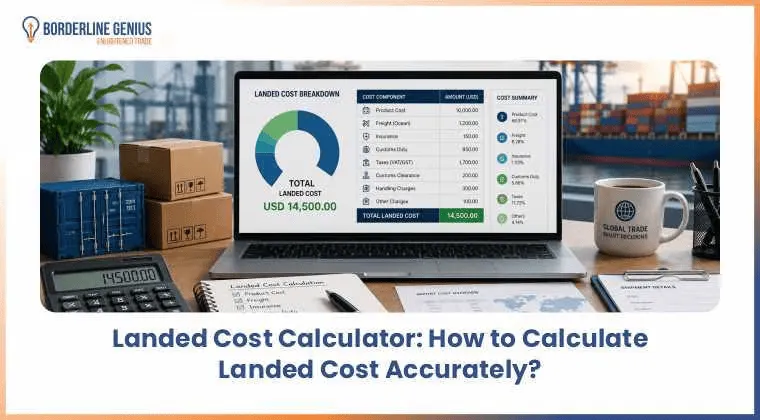
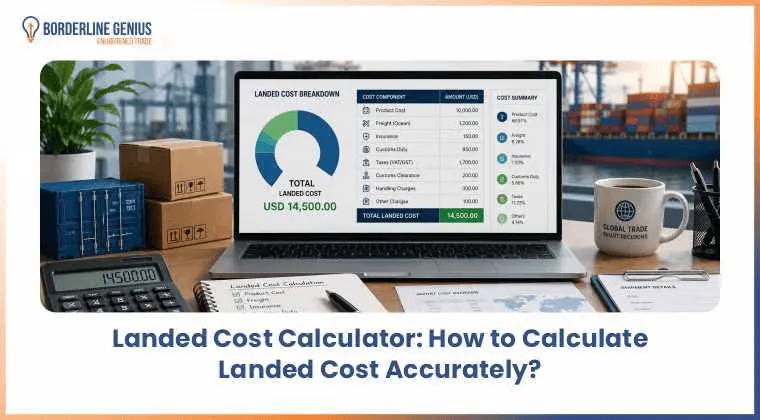
Common components can include:
- Product purchase cost
- Ocean, air, road, or rail freight
- Cargo insurance
- Customs duties
- Import taxes
- Customs clearance
- Terminal or handling charges
- Destination delivery
- Other applicable import expenses
The important point is to identify the costs that actually apply instead of relying on a generic estimate.
Why the same product can have different landed costs
Two companies can import the same product and still arrive at different landed costs.
Consider two sourcing options.
Supplier A has a lower product price but requires a more expensive shipping route.
Supplier B charges more for the product but has lower transportation costs and different tariff implications.
If the purchasing team compares only the supplier invoice, Supplier A appears cheaper.
Once the complete import cost is considered, Supplier B could turn out to be the better option.
This is one reason landed cost is useful for supplier evaluation.
Customs data can change the calculation
Not every import shipment is subject to the same customs treatment.
The applicable duty can depend on factors such as:
- Product classification
- HS code
- Customs value
- Country of origin
- Import destination
- Applicable tariff treatment
Import taxes can also vary by destination.
This creates an important distinction between a simple mathematical calculation and an accurate landed-cost assessment.
You can add ten numbers together perfectly and still get the wrong answer if one of those numbers is based on an incorrect tariff rate or product classification.
A basic landed cost formula
A simplified formula is:
Landed Cost = Product Cost + Freight + Insurance + Customs Duties + Taxes + Other Applicable Charges
The formula provides a useful framework, but the individual inputs need to be validated.
For example, freight should reflect the relevant transportation costs. Duty should be based on the applicable customs treatment. Destination expenses should be considered where they form part of the company's landed-cost methodology.
Don't forget landed cost per unit
Total shipment cost is useful, but businesses often need a product-level figure.
The basic calculation is:
Landed Cost Per Unit = Total Landed Cost ÷ Number of Units
This can help purchasing and finance teams compare products, suppliers, and sourcing options on a consistent basis.
A shipment with a low overall transportation cost may still have an unfavorable per-unit landed cost if the shipment volume is small.
Where manual calculations become difficult
A spreadsheet can work well when an importer has a limited number of shipments.
Complexity increases when the business is managing:
- Multiple suppliers
- Several sourcing countries
- Different import destinations
- Numerous HS classifications
- Changing tariff rates
- Multiple currencies
- Different transportation modes
- Large shipment volumes
At that point, maintaining accurate calculations manually can require considerable effort.
A landed cost calculator can help organize these inputs and standardize the calculation process.
However, software doesn't automatically guarantee accurate results. The underlying shipment, product, tariff, tax, and cost data still need to be reliable.
Why accurate landed cost matters
A realistic landed-cost figure can influence several decisions.
Pricing
Businesses can set prices using a more complete understanding of acquisition costs.
Profitability
Actual import expenses can be incorporated into margin analysis.
Supplier selection
Procurement teams can compare suppliers using total acquisition cost rather than invoice price alone.
Sourcing strategy
Businesses can evaluate whether a particular country, supplier, or transportation route makes economic sense.
Inventory planning
Understanding the real cost of imported inventory can improve financial forecasting and purchasing decisions.
A better question for procurement teams
Instead of asking:
"Which supplier has the lowest price?"
ask:
"Which supplier gives us the best landed cost for the required product and service level?"
Those are not necessarily the same thing.
A lower supplier price can be offset by higher freight, duties, taxes, handling, or other import expenses.
That is why landed cost should be considered before the purchasing decision is finalized rather than calculated only after the shipment arrives.
Final takeaway
International sourcing involves more than negotiating a good supplier price.
The real economics of an import shipment depend on the complete cost of getting the goods to their destination.
A structured landed-cost calculation helps businesses account for those costs and make better-informed decisions about pricing, sourcing, and profitability.
For a detailed walkthrough of the formula, individual cost components, and calculation process, see this landed cost calculation guide.
The goal isn't simply to calculate another number. It's to understand what an imported product actually costs the business.




























Sign in to leave a comment.