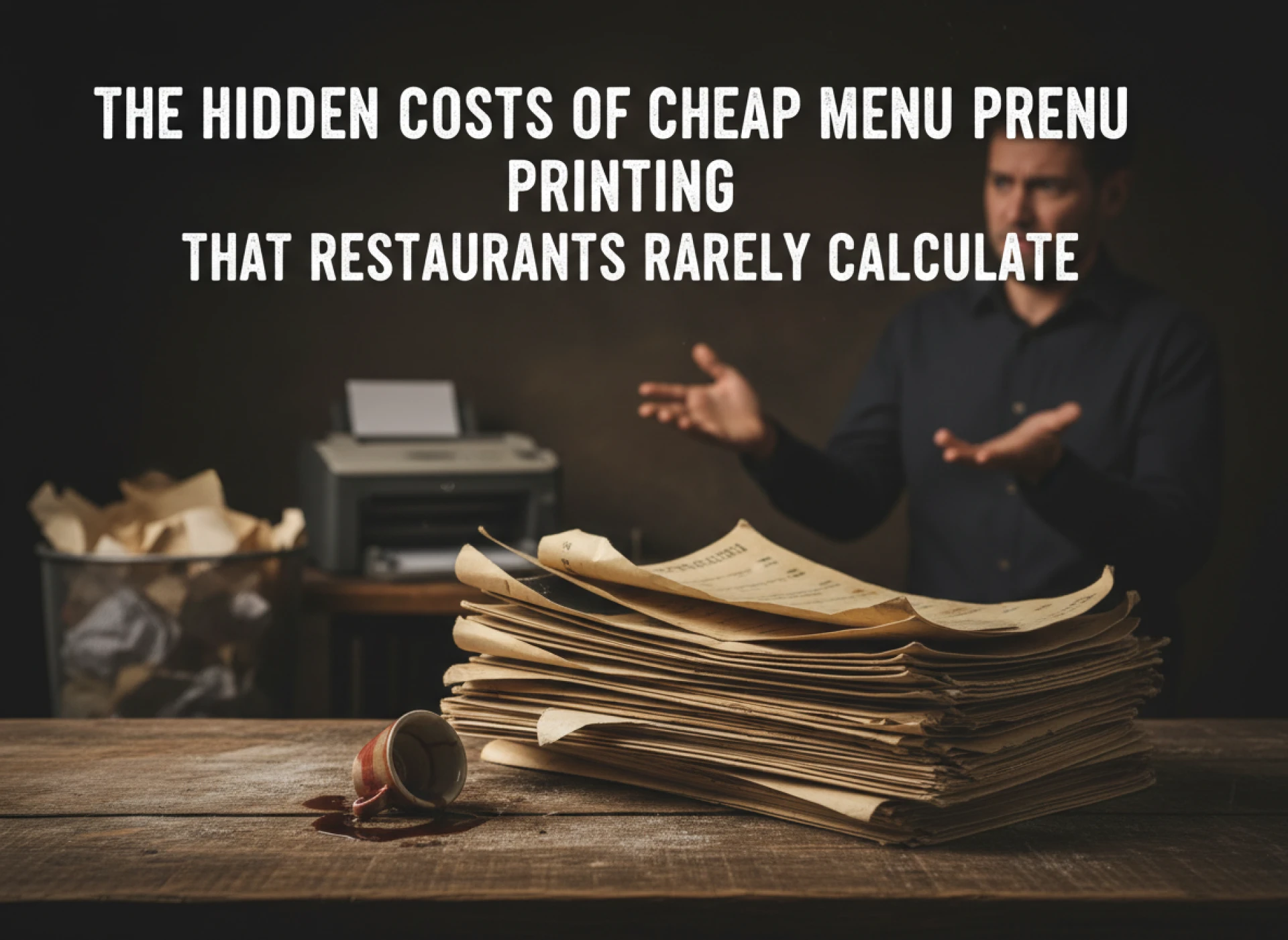

Cheap menu printing looks attractive on paper. Lower upfront cost. Faster approval. Less hesitation. For many restaurants, especially new or fast moving ones, it feels like a sensible decision.
The problem is that menu costs do not end at checkout. They unfold slowly, during service, across weeks and months, in ways that rarely show up on an invoice. By the time owners realise something is wrong, the damage has already been absorbed into lost confidence, slower ordering, and quiet brand erosion.
Menus are not disposable tools. They sit at the centre of the ordering experience. When corners are cut, the cost is rarely obvious, but it is always real.
Cheap Printing Optimises for Price, Not Performance
Most low cost menu printing decisions are made in isolation. The focus is on unit price rather than lifecycle cost.
The Upfront Cost Bias
When comparing quotes, it is easy to focus on the lowest number. That number feels concrete. Everything else feels theoretical.
What is missing is context. A menu is handled hundreds of times. It is wiped repeatedly. It sits under lighting that exaggerates flaws. It is read when customers are tired, distracted, or in a hurry. Printing that performs well in ideal conditions often breaks down under this kind of use.
Cheap printing does not fail immediately. That is what makes it dangerous. It fails gradually, in ways that are difficult to measure but impossible to ignore once they accumulate.
Frequent Replacement Is the First Hidden Cost
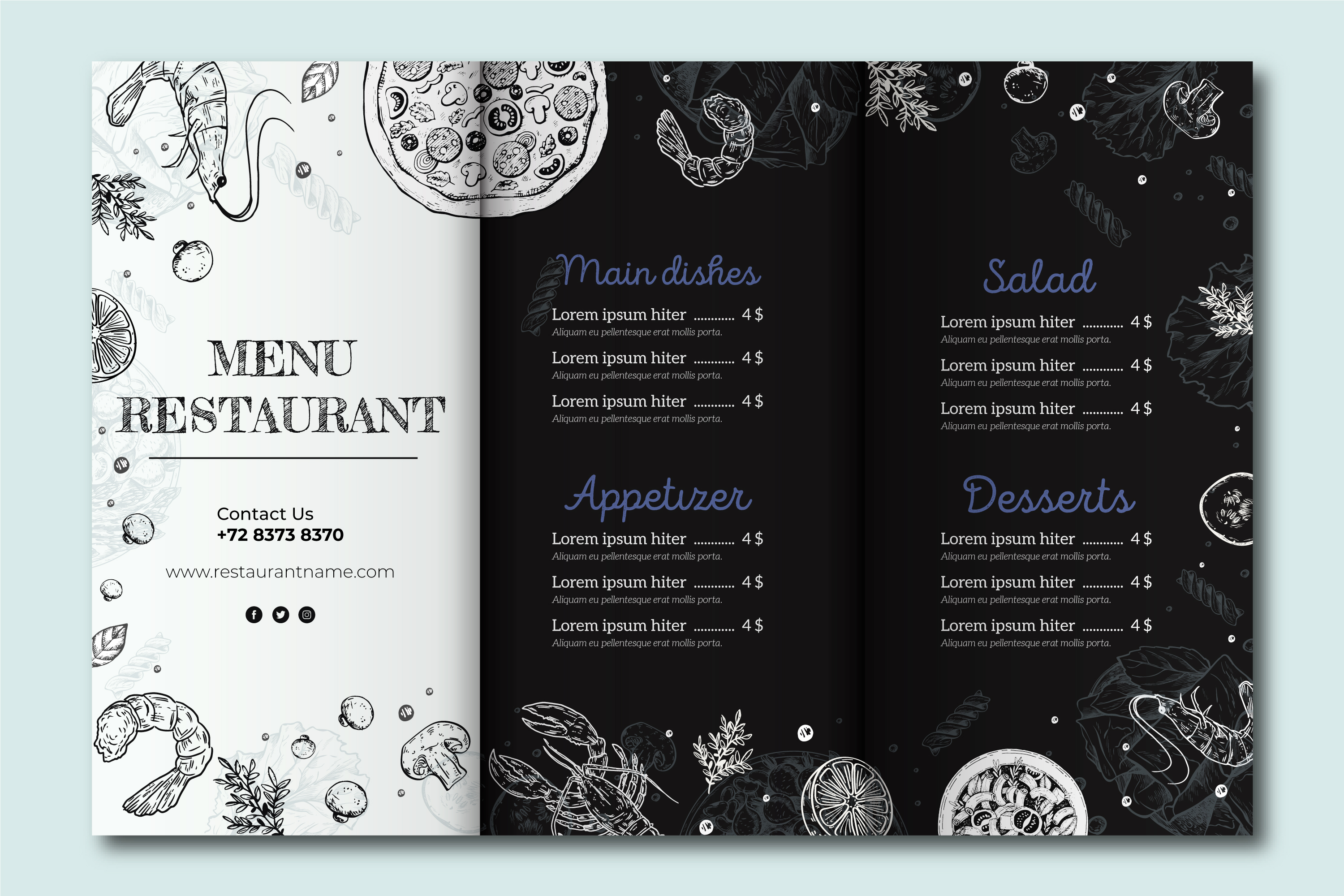
Low quality menus rarely last as long as expected.
Wear Shows Faster Than Owners Anticipate
Edges soften. Pages curl. Lamination clouds. Ink dulls. These changes happen incrementally. Staff see them every day and stop noticing. Customers see them instantly.
A menu that looks tired sends a signal, even if the food is excellent. It suggests shortcuts. It suggests inconsistency. It suggests that details may not be looked after elsewhere either.
Replacement Costs Are Spread Out and Underestimated
Replacing menus every few weeks does not feel expensive in the moment. The costs are staggered. They slip into operating expenses quietly.
Over time, those small reprints often exceed the cost of a more durable option that would have lasted months instead of weeks. The difference is not just financial. It is operational.
Inconsistency Erodes Brand Confidence
Cheap printing often introduces variation.
Colour Drift and Material Changes
Small print runs increase inconsistency. Colours shift slightly. Paper feels different from one batch to the next. Finishes behave unpredictably.
Customers may not compare menus side by side, but staff do. Regular customers do. Over time, the menu stops feeling stable. Stability matters more than novelty.
Why Consistency Feels Like Competence
A menu that looks the same every time builds trust subconsciously. When that consistency disappears, even subtly, confidence drops. Customers become more cautious. Cautious customers spend less.
Poor Readability Slows Ordering
Cheap menu printing often compromises readability without meaning to.
Ink, Paper and Contrast Issues
Lower quality stocks absorb ink differently. Fine text loses sharpness. Contrast drops. Under warm lighting or angled viewing, legibility suffers.
Customers may not articulate the issue. They simply take longer to decide or default to familiar options. High margin items are overlooked. Specials are skipped.
Slow Decisions Hurt Turnover and Experience
Longer decision times affect table flow. They increase pressure on staff. They change the rhythm of service. What looks like a small printing choice quietly alters the pace of the entire operation.
Staff Compensate and Mask the Problem
When menus underperform, staff step in.
Verbal Explanation Becomes a Crutch
Teams explain items more often. They point things out. They simplify choices. This feels like good service, but it is actually covering for a failing tool.
Extra Labour Is a Cost, Even If It Is Invisible
Every explanation takes time. Every pause adds friction. Over a busy service, those seconds compound. Cheap menus shift workload onto staff without owners realising why service feels heavier than it should.
Cheap Finishing Ages Poorly in Public

Most menu quality issues come from finishing, not design.
Cutting, Trimming and Lamination Shortcuts
Uneven trimming. Sharp corners. Thin lamination. These details may seem minor. They are not.
Customers associate physical precision with professionalism. When menus feel rough, assumptions follow. No one verbalises it. Everyone feels it.
Public Wear Changes Perception Faster Than Private Wear
Menus age in front of customers. Every mark is visible. Every crease is judged. A menu that looks worn changes how the business is perceived, regardless of how good the kitchen is.
Cheap Printing Encourages Reactive Decisions
Low cost printing often leads to poor planning.
Small Batches Increase Long Term Costs
Printing in small quantities feels flexible. It also increases variation and replacement frequency. Each reprint becomes a reaction instead of a strategy.
Planning Reduces Waste More Than Cheap Prices
Menus that change often require one approach. Menus that stay stable benefit from controlled volume. Cheap printing rarely supports this balance. It encourages short term thinking.
Durability Is a Business Decision, Not a Luxury
Durability is often framed as an upgrade. In reality, it is risk management.
Matching Materials to Handling Frequency
High turnover venues need menus that tolerate abuse. Calm dining rooms need menus that age gracefully. Using the wrong solution costs more than using a better one upfront.
Longevity Protects Perceived Value
Menus that hold their shape, colour and clarity maintain trust. Trust supports confident ordering. Confident ordering increases spend.
Cheap Menus Undermine Design Investment
Even strong design cannot survive poor printing.
Printing Is the Final Filter
Design sets intention. Printing determines reality. A well designed menu printed poorly will always underperform a simple menu printed well.
Cheap printing cancels out thoughtful menu design decisions by introducing noise, wear and inconsistency that no layout can fix.
What Restaurant Owners Usually Realise Too Late
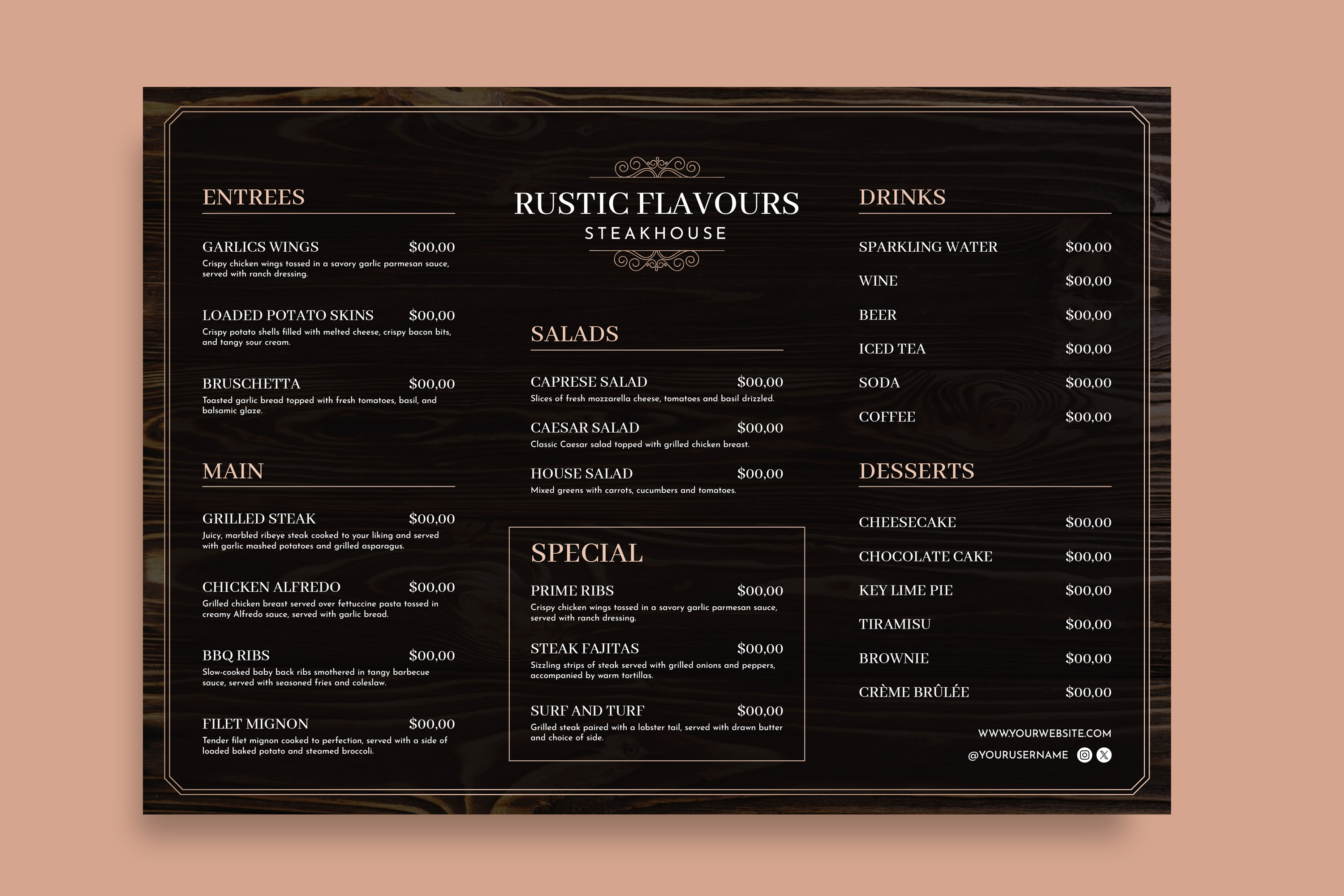
Most owners do not regret choosing cheap restaurant menu printing immediately.
The Problem Appears Gradually
Sales soften slightly. Ordering patterns shift. Staff feel busier. Nothing seems broken enough to fix.
By the time the menu is blamed, habits have already formed around its weaknesses.
Prevention Is Cheaper Than Correction
Fixing perception takes longer than protecting it. Reprinting menus repeatedly does not address the underlying issue. Choosing better printing does.
Final Thoughts: Cheap Printing Is Rarely Cheap
Menu printing costs should be measured over time, not at checkout. Cheap menus often cost more through replacement, inconsistency, slower service and reduced confidence.
Menus that sell more food are not printed to be economical for a week. They are printed to perform for months. When printing decisions are made with real service conditions in mind, menus stop quietly draining value and start supporting it.
This is why restaurants that work with experienced providers like I YOU PRINT often see fewer problems over time, not because they spend more, but because they replace less, correct less, and protect their brand more effectively.


























Sign in to leave a comment.