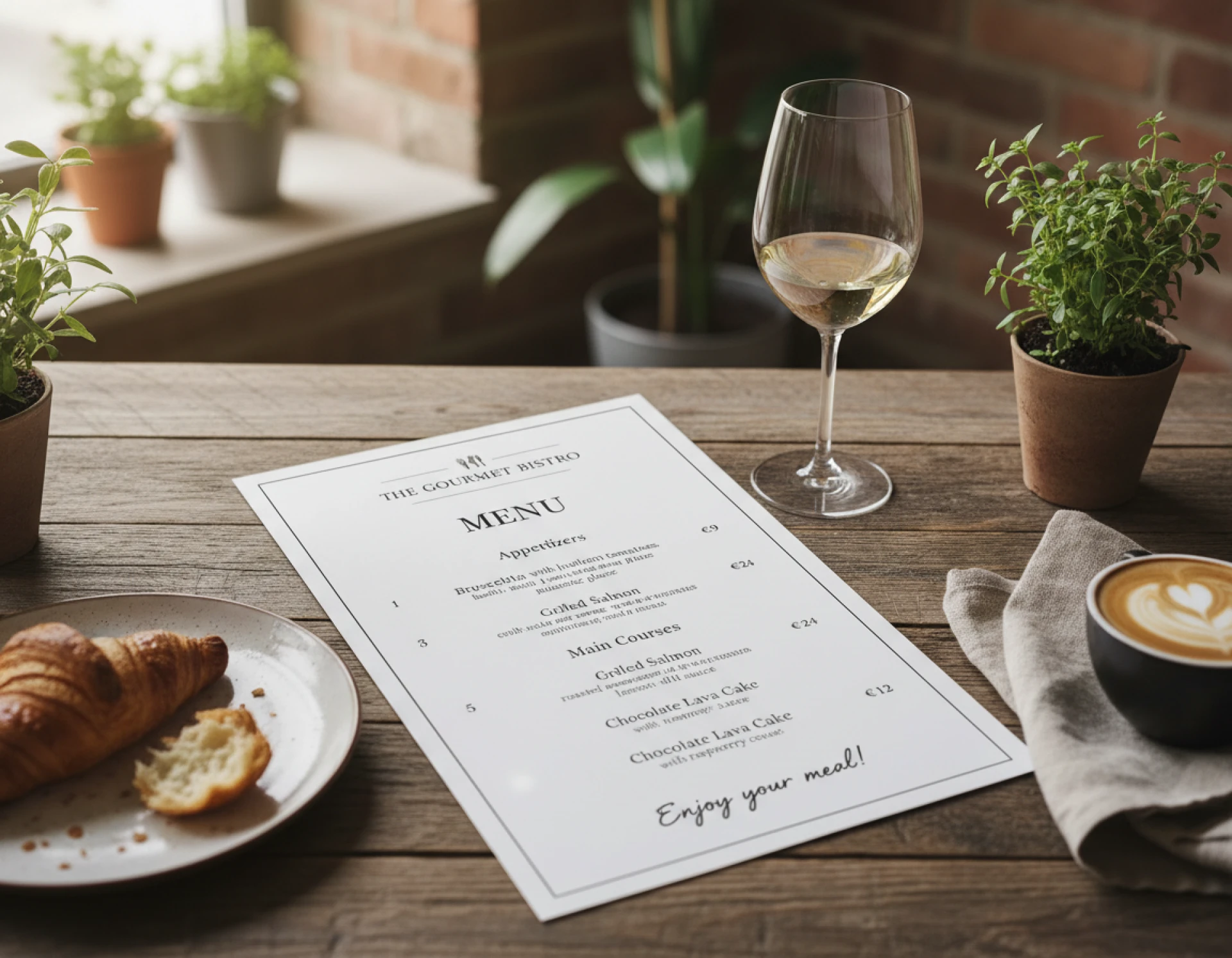

Restaurant menus rarely fail because the food is bad or the prices are wrong. They fail quietly, through friction, wear, confusion and poor real world performance. Most of the time, owners only realise something is wrong after customers hesitate longer, order less, or stop engaging altogether.
Menus are often designed in controlled environments. Bright screens. Perfect lighting. No spills. No rush. No pressure. Real service conditions are nothing like that. And it is in this gap that many otherwise good menus slowly fall apart.
Menus Are Designed in Ideal Conditions but Used in Real Ones
Menu design usually begins on a screen. Layouts are reviewed in silence. Colours look sharp. Text feels balanced. Everything appears under control. What is missing is reality.
The Gap Between Design Assumptions and Daily Service
During service, menus are handled dozens or hundreds of times. They are picked up with wet hands. They are folded, stacked, wiped and dropped. They are read under warm lighting, at angles, across tables and sometimes in a hurry.
Design decisions made without considering this environment often do not survive it. Fonts that look elegant on screen become hard to read in dim light. Spacing that feels generous digitally becomes cramped once printed. Materials that look premium begin to curl, mark or fade far earlier than expected.
Why What Looks Good on Screen Rarely Survives the Dining Room
Screens remove friction. Dining rooms create it. The difference matters. A menu that relies on precision or delicacy often struggles once exposed to noise, movement and repetition. What performs well visually does not always perform well physically.
What Actually Happens to Menus During a Normal Service
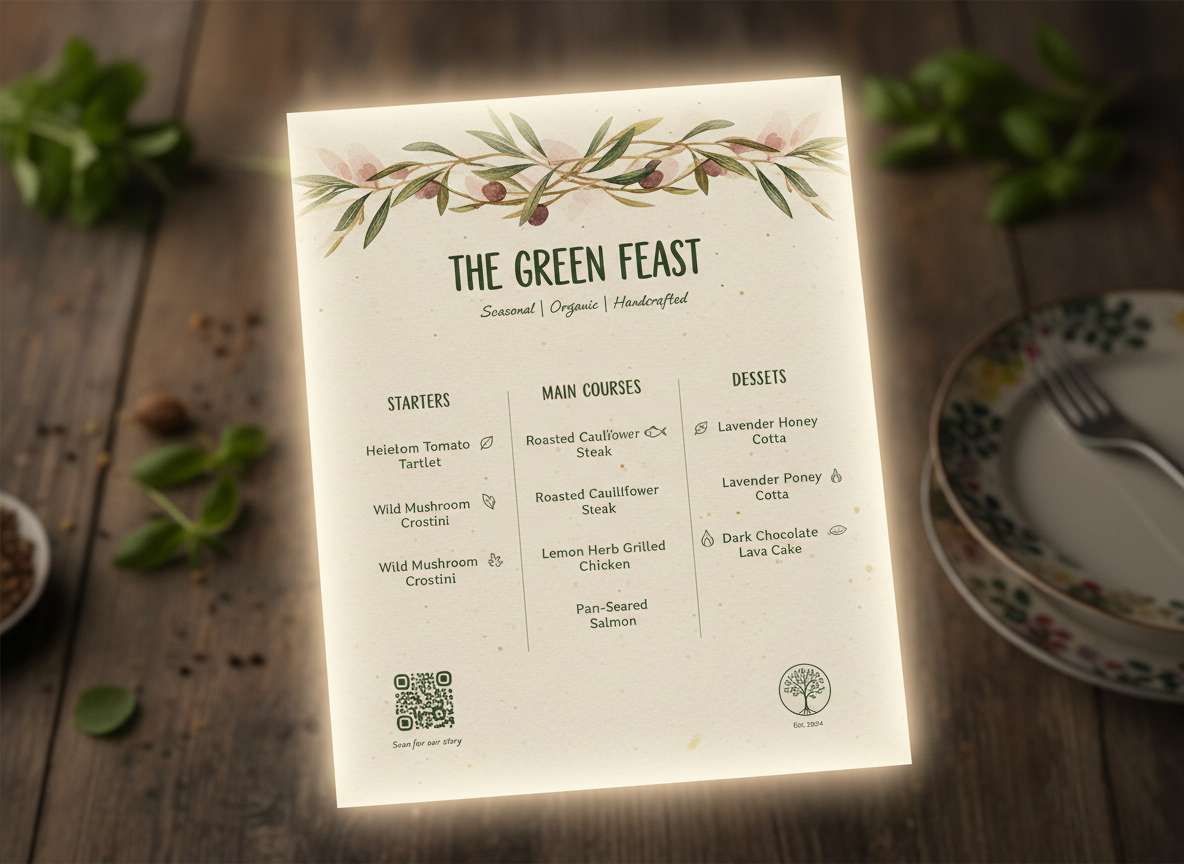
Menus live hard lives. Even in well run restaurants, they are rarely treated gently. This is not negligence. It is simply how service works.
Constant Handling Changes How Menus Perform
Menus are touched constantly. They are passed from hand to hand. They are wiped quickly between tables. Drinks are placed on them. Food lands where it should not. All of this affects how a menu ages and how it feels to the next customer.
Folding, Stacking, Wiping and Spilling Are Not Edge Cases
These are not rare events. They are daily realities. When menus are not designed or printed with this in mind, deterioration becomes visible fast. Corners soften. Pages warp. Colours dull. Text loses sharpness. Customers notice long before owners do.
Environmental Factors Owners Rarely Account For
Lighting varies across tables. Daylight shifts. Evenings dim. Candles flicker. Menus are read at different heights and angles depending on seating and table layout.
Lighting, Table Height and Viewing Angles
A layout that works flat under bright light may fail when tilted or partially shadowed. Text size, contrast and spacing all behave differently once the environment changes. Menus that ignore these factors often slow ordering without anyone understanding why.
Why Menu Failures Often Go Unnoticed Until Sales Drop
Menu problems rarely announce themselves. They build quietly, disguised as normal variation in customer behaviour.
Gradual Wear Creates Invisible Damage
Menus do not suddenly look bad. They slowly lose clarity, structure and confidence. By the time the problem becomes obvious, customers have already adapted by ordering safer options or disengaging sooner.
When Menus Age Before Owners Realise It
Staff see the same menus every day. Familiarity dulls awareness. What customers notice immediately becomes invisible to the team. This delay allows small issues to become persistent ones.
Customers React Before They Comment
Most customers do not complain about menus. They adjust their behaviour instead.
How Perception Shifts Without Feedback
They skim faster. They avoid unfamiliar items. They order less adventurously. From the outside, everything appears normal. Inside, conversion is slipping.
The Hidden Cost of Menus That Do Not Hold Up
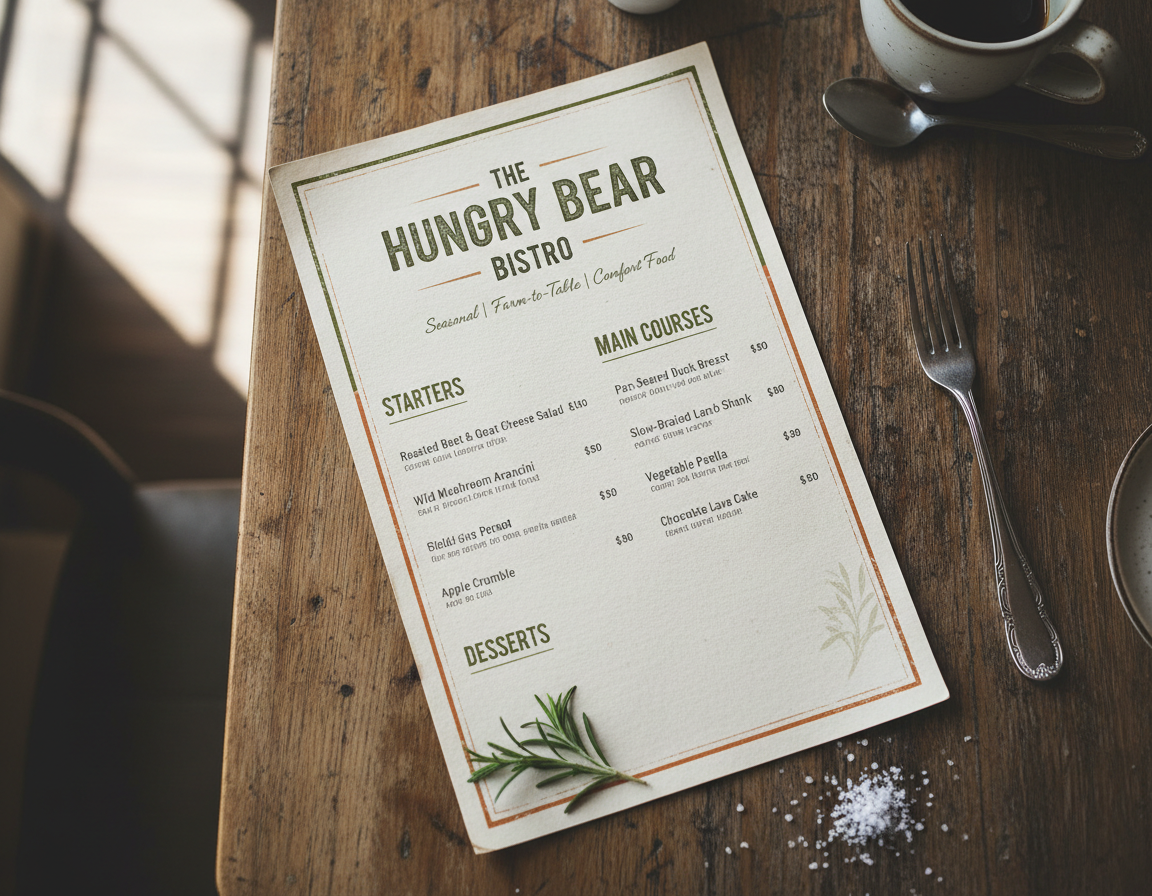
Poor menu performance is rarely calculated correctly. The cost is not just reprinting.
Reprints, Inconsistency and Brand Dilution
Frequent reprints create inconsistency. Colours shift. Paper feels different. Layouts drift slightly. Over time, the menu stops feeling stable. Stability matters more than most realise.
Why Cheap Fixes Create Long Term Expense
Low upfront cost often leads to higher replacement frequency. This spreads expense out quietly, making it feel smaller while adding up to more.
Staff Adaptation Masks the Problem
Teams compensate for menu weaknesses without intending to.
When Teams Compensate for Poor Menu Design
They explain items verbally. They point things out. They simplify choices for customers. This hides the issue while adding pressure to service and slowing tables.
Where Most Menu Decisions Go Wrong
Most menu failures are not dramatic mistakes. They are misaligned priorities.
Design Choices Made Without Operational Input
Menus are often approved without involving staff who actually use them.
Why Designers and Service Staff See Different Problems
Designers focus on appearance. Staff experience friction. When those perspectives never meet, issues remain unresolved.
Material Selection Based on Price Instead of Use
Paper and finishes are often chosen based on cost or trend rather than handling frequency.
Durability as a Business Decision, Not a Visual One
Durability determines how long a menu maintains trust. Trust drives ordering confidence.
How Strong Menus Are Built for Real Service Conditions
Successful menus accept reality rather than fight it.
Design That Anticipates Wear, Not Perfection
Menus that age gracefully outperform menus that aim to stay pristine.
Accepting Reality Improves Longevity
Designs that allow for wear, cleaning and repetition maintain clarity longer and feel intentional rather than tired.
Printing Choices That Support Daily Handling
Printing decisions should reinforce the design, not undermine it.
Matching Finishes to Service Style
Fast turnover venues require different solutions than slow dining rooms. Matching materials to behaviour matters more than matching trends.
Why Specialist Menu Printing Prevents Failure Before It Starts
Experience fills the gap between intention and outcome.
Experience Matters More Than Equipment
Most printers can print. Few understand how menus are actually used.
Knowing What Will Fail Before It Does
Anticipating curl, reflection, fading or wear comes from repetition, not theory.
What Restaurant Owners Usually Learn Too Late
Menus rarely fail overnight.
Menus Do Not Fail Suddenly
They erode quietly, in public, one service at a time.
They Fail Quietly and Publicly
Customers see the decline even when owners do not.
Final Thoughts: Menus That Survive Reality Perform Better
Menus that sell more food are not perfect objects. They are resilient ones. They are designed, printed and maintained with real use in mind. When menus stop fighting their environment and start working within it, they support confidence, speed decisions and protect value over time.
This is where working with specialists who understand both design and real service conditions matters, and why businesses that print menus with providers like I YOU PRINT often notice fewer problems over time rather than more.








Sign in to leave a comment.