
Asian students are often viewed as one of the most academically successful groups in American higher education. Graduation rates are generally strong, and many students are enrolled at highly selective universities. Yet beneath these achievements lies a financial challenge that receives far less attention.
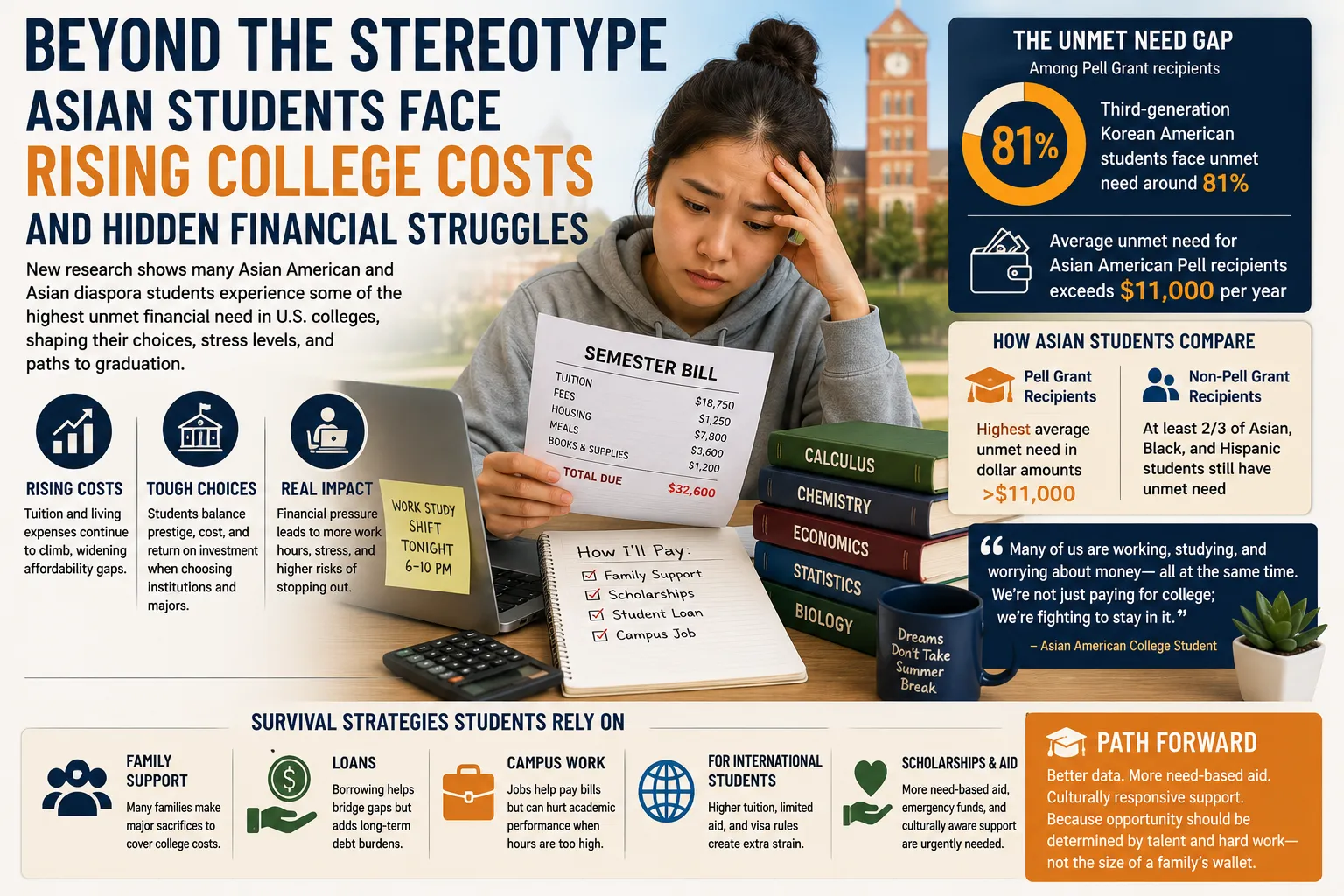
New research shows that rising tuition and growing unmet financial need are creating serious obstacles for many Asian American and Asian diaspora students. Some subgroups report unmet need rates exceeding 80 percent, revealing financial pressures that remain largely invisible in public discussions about college affordability.
The numbers tell a story that challenges stereotypes and highlights a growing affordability crisis affecting thousands of students across the United States.
Why College Costs Are Hitting Harder Than Ever
The cost of attending college has expanded far beyond tuition bills. Students must also pay for housing, meal plans, transportation, technology, textbooks, insurance, and countless smaller expenses that accumulate throughout the academic year.
Financial aid packages often fail to cover these full costs. The gap between what students need and what aid provides is known as unmet financial need. According to the research, Asian American Pell Grant recipients experience some of the highest average unmet need amounts among all racial groups, often exceeding $11,000 annually.
That gap forces students and families to find alternative sources of funding year after year. For many households, the challenge is not getting admitted to college. It is figuring out how to stay enrolled until graduation.
The Cost of Prestige
College selection is increasingly becoming a financial calculation.
Many Asian families place a strong emphasis on educational opportunity and institutional reputation. As a result, students often pursue admission to selective universities even when those schools come with significantly higher costs.
The research suggests that some Asian student groups are concentrated in high-cost metropolitan areas and selective institutions where net prices remain especially expensive. This can create a difficult trade-off between attending a dream school and maintaining financial stability.
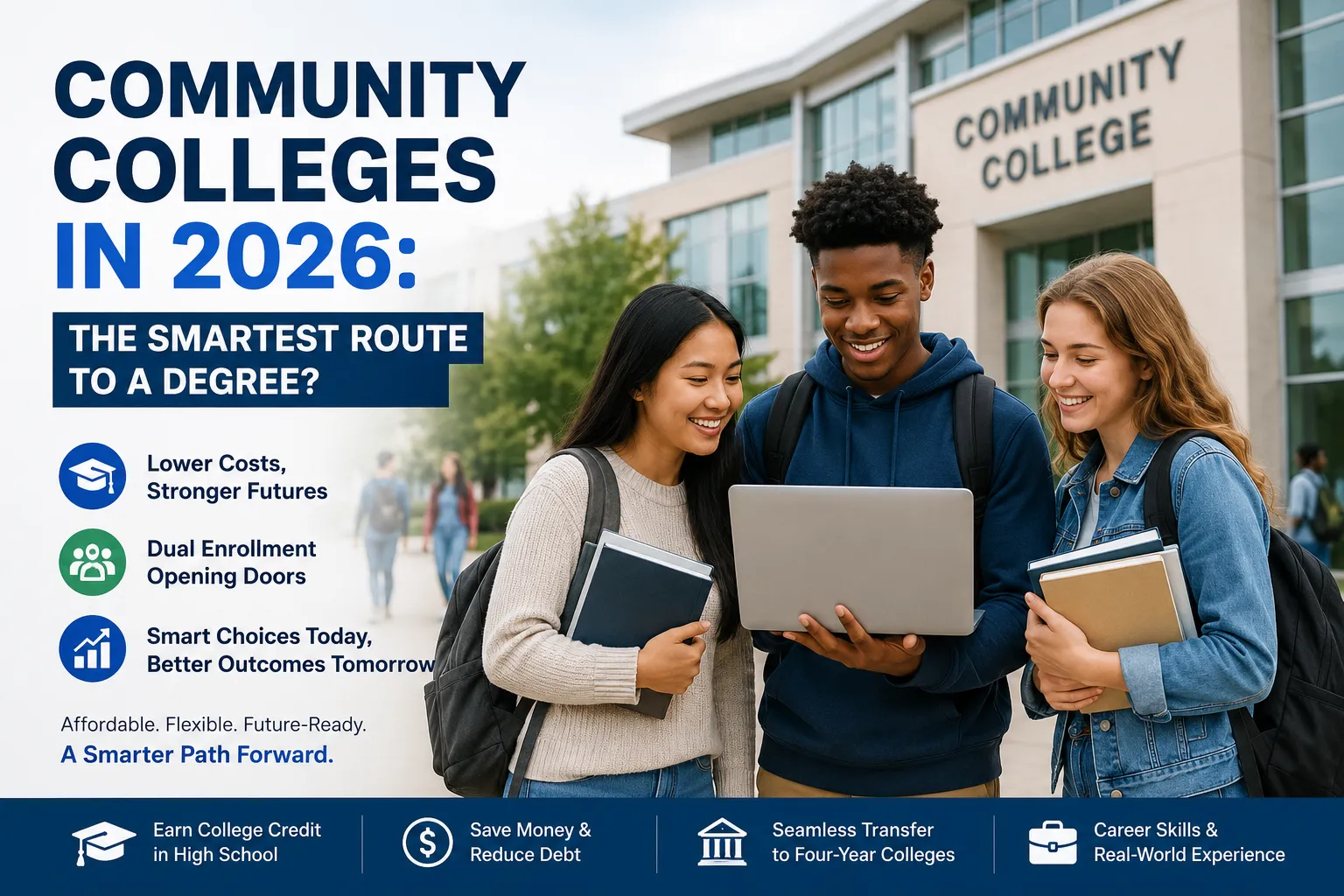
Some students choose community colleges before transferring to four-year institutions. Others select regional universities that offer larger scholarship packages. These decisions are not always driven by academic preference. Frequently, they are driven by affordability.
A degree may open doors, but the path to earning it is becoming increasingly expensive.
When Families Become the Financial Aid System
For many Asian students, family support serves as the final piece of the funding puzzle.
Parents often contribute significant portions of tuition and living expenses, even when doing so creates financial strain. Families may postpone retirement, use personal savings, work additional jobs, or borrow money to support educational goals.
This pattern reflects both cultural values and practical necessity. When grants and scholarships fall short, families often step in because there are few alternatives.
Students whose families cannot provide substantial support typically rely on a combination of scholarships, employment income, and student loans. Platforms that connect students with academic support resources, such as Expertsmind.com, have also become useful for students seeking flexible tutoring help while managing demanding work schedules and academic responsibilities.
The challenge is that these solutions rarely eliminate financial stress. They simply redistribute it across different parts of a student's life.
Debt and Work Are Reshaping Student Experiences
Financial pressure does not end once a student secures funding. It often affects daily life throughout college.
Students facing large affordability gaps frequently increase their work hours to cover expenses. Many balance classes with campus jobs, retail positions, freelance work, or gig economy opportunities. Some also assist family businesses or take on caregiving responsibilities at home.
The result can be an exhausting schedule that leaves little room for rest or personal development.
Researchers consistently find that excessive work commitments increase the likelihood of academic difficulties, delayed graduation, and withdrawal from college. Students may reduce course loads to maintain employment income, which can extend the time needed to complete a degree and increase total costs.
In other words, the strategy used to afford college can sometimes make college even more expensive.
International Students Face Additional Barriers
Financial challenges are particularly severe for international students from Asian countries.
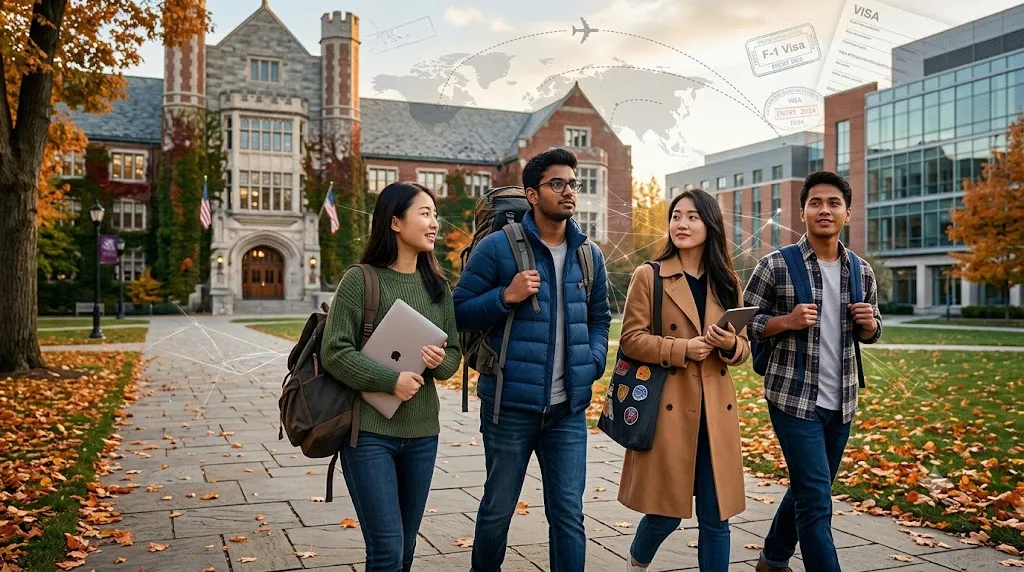
Unlike many domestic students, international students often have limited access to federal financial aid programs. They commonly pay full tuition rates and depend heavily on family funding, institutional scholarships, or private loans.
Visa regulations create another obstacle. International students face restrictions on employment opportunities, limiting their ability to earn additional income during periods of financial stress. Currency fluctuations and economic conditions in home countries can further increase uncertainty.
A sudden financial setback can jeopardize not only a student's education but also their ability to remain enrolled and maintain legal status in the United States.
Looking Beyond the Stereotypes
The most important lesson from this research is that financial hardship among Asian students is often hidden in plain sight.
Broad statistics frequently group all Asian students together, masking major differences between ethnic communities, immigration histories, and socioeconomic backgrounds. While some groups experience strong financial outcomes, others face substantial affordability challenges that resemble or exceed those experienced by many other underserved populations.
Better data collection and more targeted support programs can help institutions identify students who need assistance before financial difficulties become academic emergencies.
The image of universal success has obscured a more complicated reality. Many Asian students are not simply working toward a degree. They are balancing loans, family expectations, employment demands, and rising costs at the same time. Understanding that reality is the first step toward creating a higher education system that truly reflects the diversity of student experiences.






























Sign in to leave a comment.