

The modern internet feels stable, borderless, and almost self-healing. Websites load instantly, services scale globally, and routing failures are often invisible to end users. But beneath this apparent resilience lies a governance structure that is far more centralized—and far more fragile—than most people realize. The systems that allocate and manage the internet’s most fundamental resources, such as IP addresses and autonomous system numbers (ASNs), are increasingly concentrated in a small number of institutions and policy frameworks. That concentration introduces risks that are not always visible until something breaks.
The Central Role of Internet Registries
At the heart of internet governance are Regional Internet Registries (RIRs), organizations responsible for distributing and managing IP address space across the globe. In theory, they operate as neutral coordinators. In practice, they function as critical gatekeepers to a scarce and valuable resource. IPv4 addresses, in particular, have long been exhausted in most regions, which has transformed them from simple technical identifiers into tradable assets with real economic weight.
This shift from abundance to scarcity has quietly changed the nature of governance. When IP addresses were plentiful, allocation policies were largely administrative. Today, they involve complex considerations of transfer markets, regulatory compliance, and regional policy differences. As a result, the institutions that manage these resources are no longer just technical bodies—they are de facto economic regulators of internet infrastructure.
Scarcity Turns Coordination into Control
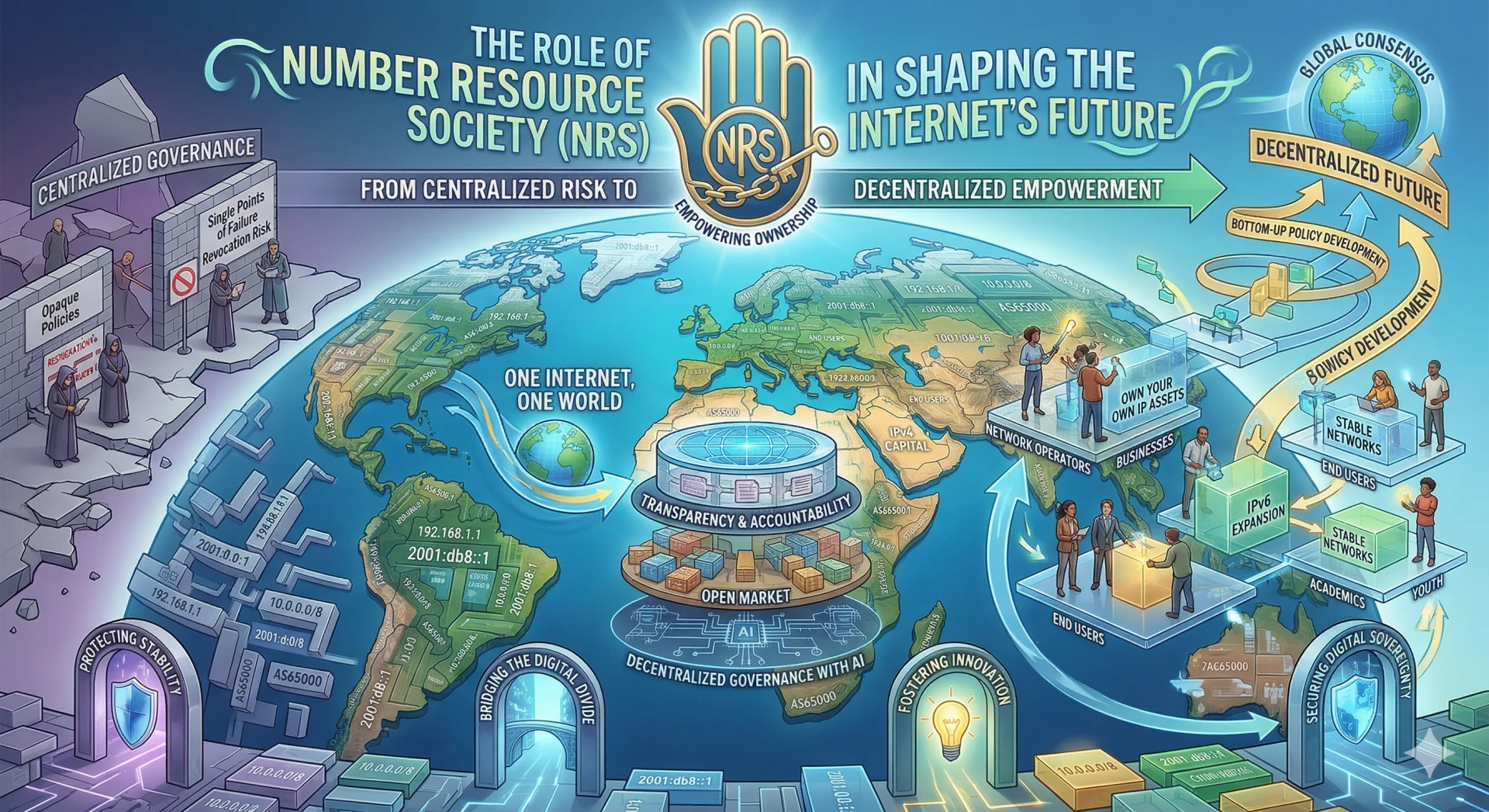
The fragility emerges from this centralization of control. A small number of organizations effectively determine who can participate in the global routing system at a fundamental level. If access to IP space is delayed, restricted, or politically influenced, entire networks can be impacted. This creates a single layer of dependency that is rarely discussed in mainstream conversations about internet resilience.
What makes this shift subtle is that it happened gradually. The governance system did not set out to become a point of control; it evolved into one because scarcity forced more structured allocation rules. Scarcity turns coordination problems into power structures, even when no single actor intends to hold that power.
A Decentralized Internet Built on Centralized Foundations
One of the most overlooked contradictions in modern infrastructure is that the internet’s upper layers are highly decentralized, while its foundational governance is not. Cloud providers operate across regions, content delivery networks replicate data globally, and applications are designed for redundancy and failover.
Yet all of this depends on a relatively small number of entities managing access to address space and routing identity. This creates a structural mismatch: highly distributed systems built on top of centralized permission layers. The result is a system that appears resilient at the surface but contains hidden dependencies underneath.
Fragmentation and Policy Inconsistency
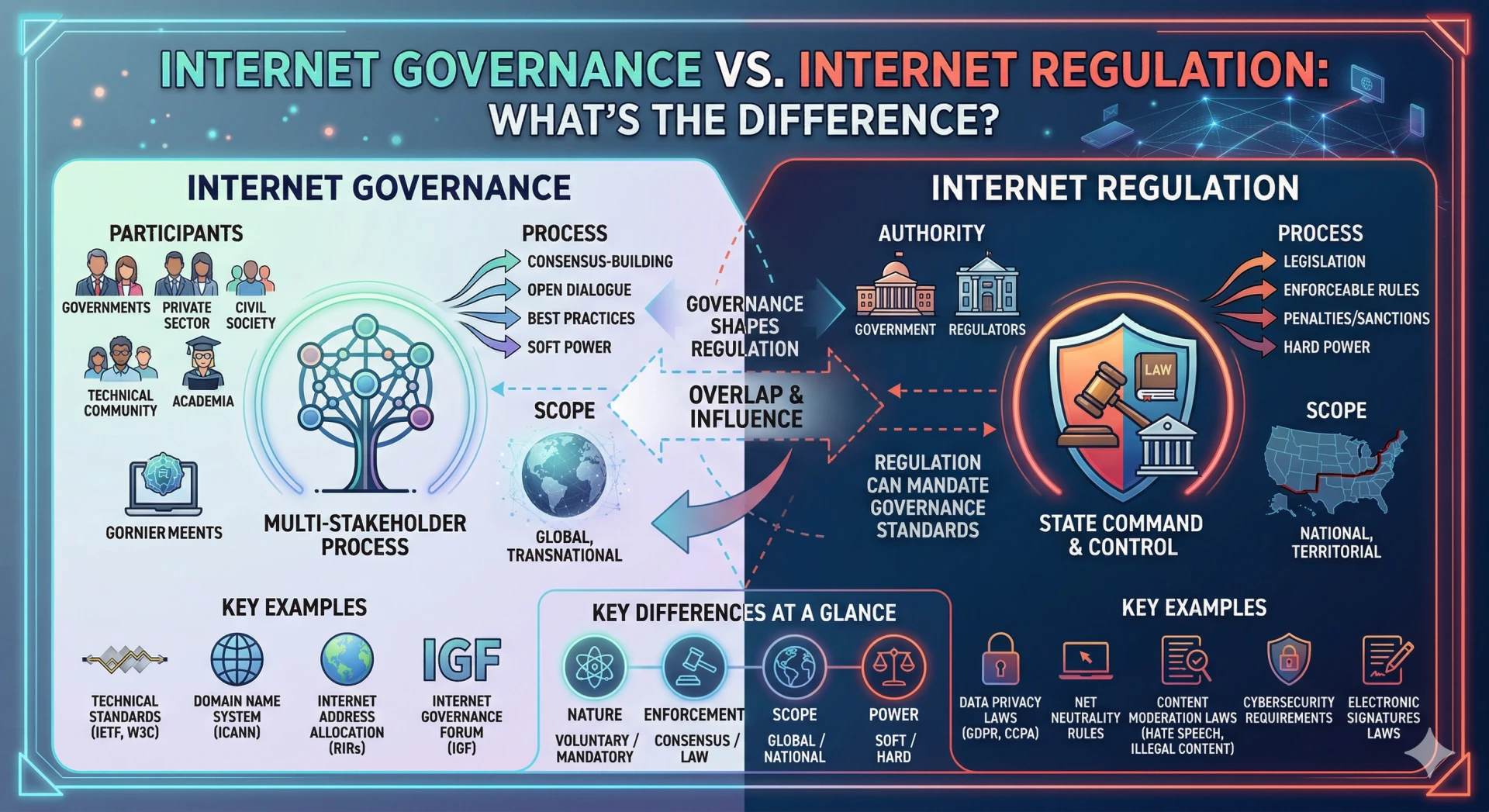
Another layer of fragility comes from regional differences in governance. Internet registries operate independently across different parts of the world, each with its own policies for transfers, allocation, and dispute resolution. While this decentralization of governance might seem beneficial, it often results in inconsistency.
For global operators, this means navigating a fragmented policy landscape where the rules governing critical infrastructure are not fully aligned. In a system that operates at global speed, even small inconsistencies can introduce friction, inefficiency, or operational risk.
Slow Governance in a Fast-Moving System
Centralized governance systems also tend to evolve slowly. Decisions must pass through committees, consensus processes, and regulatory considerations. While this ensures stability, it can also create lag in adapting to new technological or geopolitical realities.
The internet, however, does not wait. Traffic patterns shift rapidly, new protocols emerge, and geopolitical pressures evolve in real time. When governance cannot keep pace, the gap between system design and system reality widens.
Why Decentralization Is a Structural Safeguard
Decentralization is often framed as ideology, but in infrastructure terms, it functions as a risk-control mechanism. It reduces dependency on single decision-making layers and ensures that participants retain exit options.
Exit rights—being able to move resources, reconfigure systems, or switch providers without institutional blockage—are essential for resilience. Without them, systems become locked into governance bottlenecks that are difficult to bypass during crises.
Conclusion: Fragility Lies Beneath Stability
The real danger of centralized internet governance is not sudden collapse, but gradual constraint. It reduces flexibility, increases dependency, and concentrates risk in places most users never see.
As the internet becomes more essential to global infrastructure, finance, and communication, its governance layers matter as much as its technical ones. Understanding this hidden fragility is the first step toward building systems that remain resilient not just in theory, but in practice.






























Sign in to leave a comment.