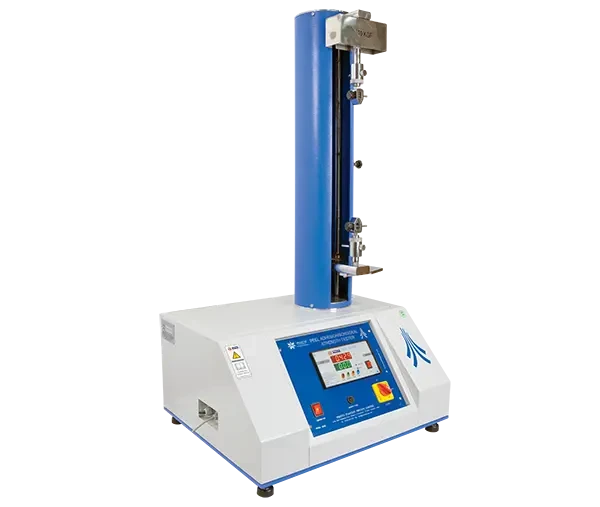
In the world of packaging, the strength of seals and adhesives plays a critical role in protecting the product inside. Whether it’s flexible packaging, laminated films, or labels, maintaining a strong bond ensures that products reach customers safely and remain fresh for longer. This is where a Peel Strength Tester becomes an essential tool for manufacturers who value quality, reliability, and consistency in their packaging.
What Is a Peel Strength Tester?
A Peel Strength Tester is a precision instrument used to measure the adhesive strength between two bonded materials. It helps determine how much force is required to separate or peel apart the layers of a laminated or sealed surface. In simpler terms, it tests how well your packaging seals hold together under stress.
This testing process helps manufacturers evaluate the performance of adhesives, laminates, and heat seals. The test provides valuable data on packaging durability and helps ensure that the seals will not fail during handling, transportation, or storage.
Importance of Peel Strength Testing in Packaging
Seal integrity is one of the most important aspects of modern packaging. Weak or inconsistent seals can lead to product leakage, contamination, or reduced shelf life. Performing a Peel Strength Test ensures that your packaging materials maintain the required strength to protect the product effectively.
Here’s why peel strength testing is important:
- Ensures Seal Integrity: Verifies that the seal strength meets required quality standards.
- Prevents Leakage and Contamination: Ensures airtight and tamper-proof packaging.
- Improves Adhesive Formulation: Helps packaging designers and material engineers enhance bonding materials.
- Enhances Customer Satisfaction: Guarantees that the product remains safe and fresh throughout its lifecycle.
- Supports Quality Assurance: Provides reliable data for maintaining consistency in every batch.
How Does a Peel Strength Tester Work?
The working principle of a Peel Strength Tester is straightforward yet effective. The specimen, usually a bonded or sealed material, is clamped between two jaws of the testing machine. One jaw remains stationary while the other moves at a controlled speed, peeling the material apart. The force required to separate the layers is recorded as the peel strength.
These readings help manufacturers assess the uniformity of sealing and bonding strength across samples.
Key Features of a Modern Peel Strength Tester
Modern digital peel strength testers come with advanced features to ensure accurate and repeatable test results. Some key features include:
- Digital Display: Provides clear and precise readings of peel strength.
- High Sensitivity Load Cell: Ensures accurate measurement of even small variations in force.
- Adjustable Speed Control: Allows flexibility for different test standards and materials.
- Memory Storage: Stores test data for easy comparison and record-keeping.
- Sturdy Design: Built for long-term reliability and consistent performance.
Applications of Peel Strength Testers
The Peel Strength Tester is widely used across multiple industries where bonding and sealing are crucial:
- Flexible Packaging Industry: Tests the seal strength of pouches, sachets, and laminated films.
- Food and Beverage Industry: Ensures packaging seals prevent leakage and maintain freshness.
- Pharmaceutical Industry: Checks the reliability of blister packs, foil seals, and sachets.
- Label Manufacturing: Tests adhesive strength for labels and stickers.
- Automotive and Electronics: Evaluates adhesive bonds used in parts and assemblies.
Benefits of Using a Peel Strength Tester
A Peel Strength Tester offers numerous benefits that contribute to improved product quality and reliability:
- Accurate Seal Testing: Provides consistent and precise results for quality assurance.
- Improved Product Design: Helps identify weak bonding areas for design improvements.
- Reduced Product Failures: Ensures packaging strength and reliability during shipment.
- Enhanced Efficiency: Streamlines the testing process, reducing rework and waste.
- Regulatory Compliance: Meets international packaging and testing standards.
Maintenance and Best Practices
To get the most accurate results and ensure long equipment life, follow these simple maintenance practices:
- Regularly calibrate the tester for accuracy.
- Keep the grips and fixtures clean and free from residue.
- Check for mechanical wear and replace parts as necessary.
- Operate within recommended test conditions.
Proper maintenance ensures that your Peel Strength Tester continues to deliver dependable performance for years.
Final Thoughts
In any industry that relies on sealed or bonded packaging, ensuring the right level of adhesive strength is vital. A Peel Strength Tester provides manufacturers with the confidence that their packaging will withstand handling, transportation, and storage without compromising quality.
By investing in reliable testing equipment, manufacturers not only maintain product safety but also strengthen their brand’s reputation for quality and trust. In today’s fast-paced market, accurate seal testing is not just a quality check — it’s a commitment to excellence.


























Sign in to leave a comment.