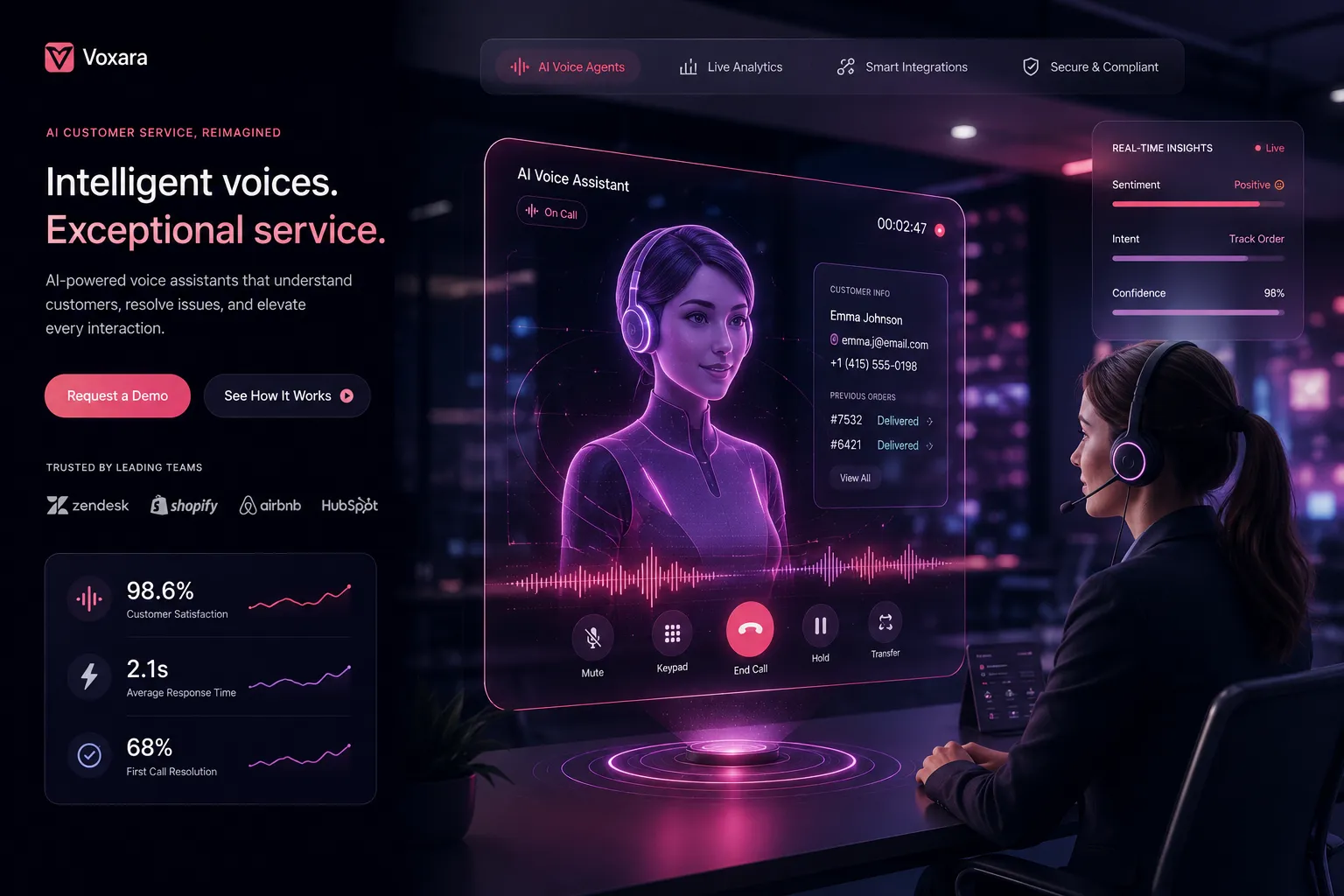

Customer service has always been one of the most expensive operational functions for businesses. Whether it involves hiring support teams, maintaining large contact centers, or managing long customer wait times, the cost of keeping customers satisfied continues to rise. At the same time, customers expect faster, smarter, and more personalized experiences than ever before.
Businesses are now rethinking traditional support systems, especially as operational costs increase and customer expectations evolve. This shift is where voice AI is beginning to play a transformative role. Instead of relying entirely on human-heavy support structures, companies are increasingly blending automation with customer interactions to reduce inefficiencies while improving service quality.
But this transformation is not only about cutting expenses. It is changing the economics of customer service itself, influencing staffing models, response times, scalability, customer retention, and long-term profitability.
Why Traditional Customer Service Has Become Expensive
Customer support costs are rising because businesses are expected to offer immediate assistance across multiple channels while maintaining high satisfaction levels.
Several challenges are driving these expenses:
- High employee turnover in call centers
- Rising labor and training costs
- Growing demand for 24/7 support availability
- Increased ticket volumes during peak periods
- Customer dissatisfaction caused by long wait times
Traditional customer support often struggles with scalability. When customer requests suddenly increase, businesses must hire more staff, invest in infrastructure, and spend heavily on onboarding.
The problem becomes even more expensive when repetitive queries consume support agents’ time instead of allowing them to solve complex issues.
How Voice AI Is Changing the Cost Structure of Customer Support
The biggest economic shift happening in customer service is the movement from labor-heavy operations to intelligent automation.
Unlike conventional IVR systems that frustrate customers with rigid menus, modern AI voice systems can understand intent, hold natural conversations, and resolve common customer concerns without requiring human intervention.
Here’s where businesses are seeing measurable changes:
1. Reduced Operational Costs
Businesses spend a significant portion of customer support budgets on staffing. Voice-powered automation reduces dependency on large teams by handling repetitive conversations such as:
- Order status updates
- Appointment confirmations
- Basic troubleshooting
- Billing inquiries
- FAQs
Instead of expanding headcount, companies can automate high-volume requests while human agents focus on sensitive or complex customer issues.
2. Faster Resolution Times
Customers no longer want to wait on hold for ten or fifteen minutes.
Modern voice systems can instantly answer calls, understand customer intent, and provide solutions within seconds. This directly reduces Average Handle Time (AHT), one of the most important metrics in customer support economics.
When problems are solved faster, businesses spend less per interaction while simultaneously improving customer satisfaction.
3. Scalable Customer Service Without Linear Costs
Traditional support models grow linearly.
More customers usually mean:
- More agents
- More infrastructure
- More training expenses
Voice AI changes this equation.
Once implemented, businesses can handle significantly larger call volumes without proportionally increasing operational costs. This creates a more scalable support model where growth does not automatically increase spending at the same rate.
This is one reason many organizations are investing in a Voice AI Platform to future-proof customer engagement operations.
The Hidden Economic Impact: Better Customer Retention
Customer service economics is not just about reducing costs. It is also about retaining revenue.
Poor support experiences often lead to:
- Customer churn
- Negative reviews
- Lost repeat business
- Lower lifetime customer value
When customers receive instant, consistent, and reliable support, they are more likely to remain loyal to a brand.
A faster support system can indirectly improve:
- Brand reputation
- Customer trust
- Repeat purchase behavior
- Retention rates
The long-term economic effect becomes much larger than simple cost savings.
How Industries Are Benefiting from Voice Automation
Different industries are adopting voice automation based on their customer support needs.
E-Commerce
Retail brands use intelligent voice systems for:
- Return requests
- Delivery tracking
- Refund updates
- Order confirmations
Healthcare
Hospitals and clinics automate:
- Appointment scheduling
- Prescription reminders
- Patient inquiries
Banking and Financial Services
Financial institutions are improving:
- Account-related inquiries
- Fraud alerts
- Payment reminders
- Customer verification processes
Telecom and Utilities
Companies reduce support bottlenecks by automating:
- Service complaints
- Technical troubleshooting
- Billing support
Businesses implementing Voice AI for Customer Support are particularly seeing improvements in operational efficiency because customer queries are addressed instantly instead of entering overloaded queues.
The Growing Opportunity for Businesses in India
India is becoming a major hub for AI-driven customer experience transformation.
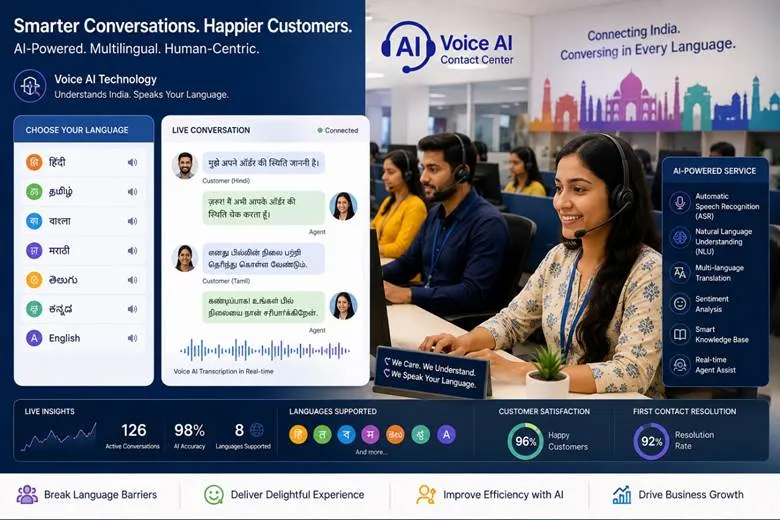
Businesses dealing with multilingual audiences often face challenges in maintaining consistent support quality across languages and regions. Voice-enabled systems are helping organizations overcome this barrier through multilingual conversational capabilities.
As digital adoption accelerates, AI in Customer Support India is becoming an important business strategy for companies seeking cost optimization without compromising customer experience.
Challenges Businesses Should Consider
While voice automation offers strong economic advantages, implementation still requires strategic planning.
Common challenges include:
Integration Complexity
Businesses must ensure AI systems integrate smoothly with CRMs, helpdesks, and communication channels.
Customer Experience Design
Poorly designed automation can frustrate users. Natural conversational experiences matter.
Escalation Management
Not every issue should remain automated. Customers need seamless transfer to human agents when necessary.
The most successful companies treat AI as an enhancement to customer service, not a total replacement for human support.
The Future Economics of Customer Service
The economics of customer service are shifting from reactive and labor-intensive operations to intelligent, scalable systems. Businesses no longer need to choose between cost reduction and customer satisfaction because automation is helping achieve both simultaneously.
Companies adopting voice-driven customer support are finding that efficiency, speed, and personalization can coexist without dramatically increasing expenses. As customer expectations continue to evolve, organizations that embrace smarter service models will likely gain a stronger competitive advantage.
In the coming years, customer support may no longer be viewed as a cost center alone. Instead, it could become a strategic driver of retention, loyalty, and sustainable growth through intelligent automation.
FAQs
1. How does voice AI reduce customer service costs?
Voice AI automates repetitive customer interactions, reducing staffing requirements and improving response efficiency.
2. Can voice AI replace human customer service agents?
No, voice AI works best alongside human agents by handling repetitive tasks while humans solve complex issues.
3. Which industries benefit most from voice AI?
E-commerce, healthcare, banking, telecom, and retail businesses commonly benefit from voice automation.
4. Is voice AI suitable for multilingual customer support?
Yes, modern systems can support multiple languages, helping businesses serve diverse customer bases effectively.
5. Why is voice AI becoming important for customer service?
It helps businesses lower costs, improve response speed, scale operations, and enhance customer satisfaction.


























Sign in to leave a comment.