

In today’s always-on world, speed isn’t a luxury; it’s an expectation. Customers don’t just want solutions; they want them instantly. When businesses fail to respond quickly, the impact goes far beyond a single missed interaction. It quietly erodes trust, damages loyalty, and chips away at revenue.
The truth is, customer experience is no longer defined only by product quality or pricing. It’s shaped by how quickly and effectively a brand responds when customers reach out. A delayed response may seem harmless in isolation, but over time, it becomes a silent business killer.
Let’s break down the hidden costs that most companies underestimate and why fixing response delays should be a top priority.
Why Speed Matters More Than Ever
Customers today compare your response time not just with competitors, but with the best experiences they’ve ever had.
Think about it:
- Instant replies on messaging apps
- Real-time tracking updates
- Same-day deliveries
This has fundamentally reshaped expectations.
When response times lag, customer experience takes an immediate hit because:
- Customers feel ignored or undervalued
- Frustration builds quickly
- Trust starts to decline
Even a delay of a few hours can feel like poor service in a world used to seconds.
The Silent Revenue Loss You Don’t See
Delayed responses don’t just affect satisfaction; they directly impact your bottom line.
1. Lost Conversions
When potential customers reach out with queries and don’t get timely replies:
- They move on to competitors
- Purchase decisions get delayed or dropped
- Interest fades quickly
Speed often determines who wins the sale.
2. Reduced Customer Lifetime Value
Existing customers who face delays:
- Are less likely to return
- Spend less over time
- Become disengaged
A poor customer experience today can cost you years of future revenue.
3. Negative Word of Mouth
Unhappy customers talk:
- Social media complaints
- Bad reviews
- Private recommendations against your brand
And these effects multiply rapidly.
Emotional Impact: The Human Side of Delay
Behind every ticket or query is a person expecting help.
When responses are slow:
- Customers feel unimportant
- Anxiety or frustration increases
- Brand perception turns negative
This emotional disconnect is one of the most damaging aspects of poor customer experience because emotions drive loyalty more than logic.
Operational Inefficiencies That Make It Worse
Delays often aren’t intentional; they’re systemic.
Common Causes:
- Overloaded support teams
- Lack of automation
- Poor ticket prioritization
- Fragmented communication tools
These inefficiencies compound over time, making it harder to deliver a consistent customer experience.
How Delays Erode Brand Trust
Trust is built in moments and broken in minutes.
When customers repeatedly experience slow responses:
- Reliability comes into question
- Brand credibility weakens
- Customers hesitate before engaging again
Trust is a core pillar of customer experience, and once damaged, it’s incredibly hard to rebuild.
The Competitive Advantage of Speed
Fast responses aren’t just about fixing problems; they’re a strategic advantage.
Businesses that respond quickly:
- Close deals faster
- Build stronger relationships
- Create memorable interactions
Speed signals competence. It tells customers: “We value your time.”
Companies that prioritize customer experience through faster response times often outperform competitors even with similar products or pricing.
Technology as the Game-Changer
Modern businesses are turning to smarter solutions to eliminate delays.
Tools-like Voice AI for Customer Support are transforming how companies handle large volumes of queries without sacrificing speed or personalization.
Key benefits:
- Instant responses, 24/7
- Reduced workload on human agents
- Consistent communication quality
- Scalable support operations
Technology doesn’t replace human touch; it enhances it, ensuring faster and more efficient customer experience delivery.
Practical Ways to Reduce Response Delays
Improving response time doesn’t require a complete overhaul. Small, strategic changes can make a big difference.
1. Implement Smart Automation
- Use chatbots for common queries
- Automate acknowledgments
- Route tickets efficiently
2. Prioritize High-Impact Interactions
- Identify urgent queries
- Focus on revenue-related conversations
- Reduce backlog intelligently
3. Optimize Team Workflows
- Use unified dashboards
- Reduce tool switching
- Enable faster collaboration
4. Set Clear Response SLAs
- Define expected response times
- Monitor performance regularly
- Hold teams accountable
5. Leverage Data for Insights
- Track response time metrics
- Identify bottlenecks
- Continuously improve processes
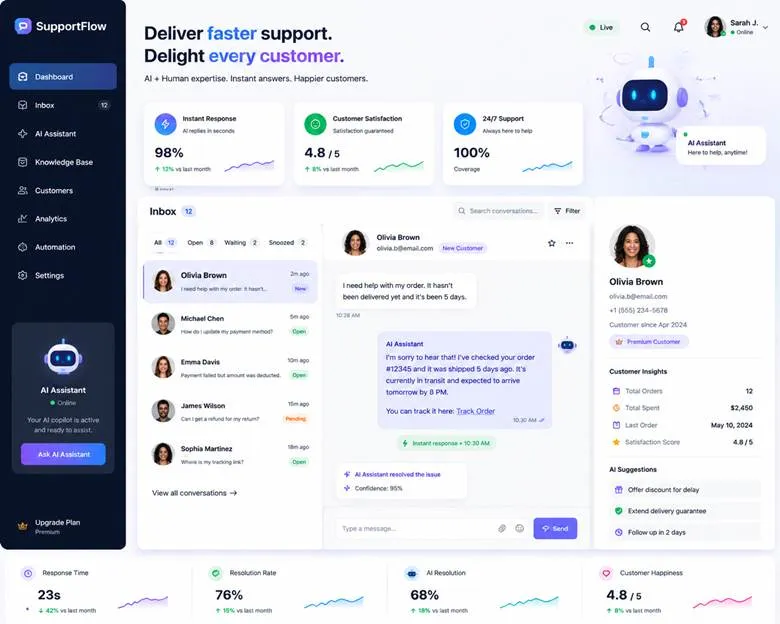
Measuring What Truly Matters
To improve customer experience, you need to track the right metrics:
- First Response Time (FRT)
- Resolution Time
- Customer Satisfaction Score (CSAT)
- Net Promoter Score (NPS)
These indicators reveal how delays are affecting your business and where improvements are needed.
The Long-Term Business Impact
When response delays are fixed:
- Customer retention improves
- Revenue grows steadily
- Brand reputation strengthens
- Support teams become more efficient
In contrast, ignoring delays leads to a slow but steady decline in customer experience, one that’s often noticed too late.
Conclusion
Delayed responses may seem like small operational issues, but their impact runs deep. They influence how customers perceive your brand, whether they choose to stay, and how they talk about you to others. In a highly competitive landscape, even minor delays can create major disadvantages that compound over time.
Improving response speed is not just about efficiency; it’s about respect for the customer’s time and expectations. Businesses that prioritize timely communication naturally build stronger relationships, higher trust, and better long-term outcomes. Ultimately, investing in faster responses is one of the simplest yet most powerful ways to elevate customer experience and stay ahead in today’s market.
FAQs
1. Why are delayed responses harmful to businesses?
Delayed responses lead to lost sales, reduced trust, and poor customer retention, all of which directly impact business growth.
2. What is an ideal response time for customer queries?
While it varies by industry, customers typically expect responses within minutes, especially on digital channels.
3. How can companies improve response time?
By using automation tools, optimizing workflows, and setting clear response benchmarks.
4. Does response speed really affect customer loyalty?
Yes, fast responses significantly improve satisfaction and increase the likelihood of repeat business.
5. What role does technology play in improving response times?
Technology like AI and automation enables instant replies, reduces manual workload, and ensures consistent support quality.





























Sign in to leave a comment.