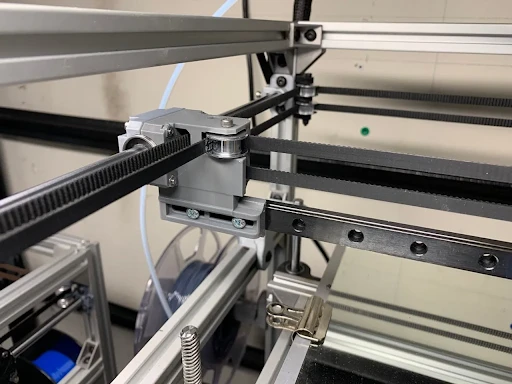
In the world of 3D printing, the quality of components is crucial to achieving high-performance results, and one of the most often overlooked yet pivotal parts of any 3D printer is its 3D printer rails. While most enthusiasts and professionals focus on the extruder, print bed, or filament, the rails—the guiding mechanism that ensures the smooth and accurate movement of the print head—can dramatically affect the overall print quality. Understanding how 3D printer linear rails and other rail systems work can help you optimize your printer's performance and achieve the best possible results. Let’s explore how these seemingly simple components can impact your 3D printing experience.
The Role of 3D Printer Rails in Printing Performance
At the heart of every 3D printer’s operation is the need for precise, accurate movement. The 3D printer rails are integral in ensuring that the print head (or nozzle) moves along the X, Y, and Z axes with precision. These rails guide the movement of the printer’s carriage, ensuring that the print head follows the correct path as it lays down each layer of material. Without high-quality rails, this movement could become erratic, causing the printer to misalign or fail to adhere to the correct print specifications.
High-performance 3D printer linear rails minimize friction and offer a consistent, smooth movement, preventing issues like layer misalignment, ghosting, or even print failure. In other words, the rails have a direct influence on how well your printer performs, making their quality a crucial aspect of overall printing success.
Why Quality Matters: The Impact of Low-Quality Rails
If you’ve ever experienced prints with poor resolution, misaligned layers, or inconsistent surface finishes, it could be a direct result of subpar 3D printer rails. Low-quality rails often introduce problems like:
- Increased friction: Poor-quality rails lead to uneven movement, causing print heads to jerk or skip positions. This can result in uneven layers and a general lack of precision.
- Excessive wear and tear: Inferior materials tend to degrade faster, leading to the need for frequent replacements. This affects both the longevity of your printer and the cost-effectiveness of printing in the long term.
- Increased vibration: Low-quality rails often lack proper stability, which can cause vibrations that impact print quality. These vibrations create unwanted artifacts on your prints, like ringing or ghosting.
Therefore, investing in good 3D printer linear rails is essential if you want to achieve smooth, professional-quality prints over an extended period.
Benefits of High-Quality 3D Printer Rails
When you upgrade to quality rails, you’ll notice a significant improvement in the following areas:
- Improved Precision and Accuracy
- Quality rails ensure smoother, more precise movements of the print head, reducing the chances of misaligned layers or print defects. This is especially critical for intricate designs or large prints that require high levels of detail. High-quality 3D printer rails also reduce backlash and play, improving overall accuracy.
- Better Surface Finish
- Smoother movements mean that the printer can lay down more consistent layers, which results in a cleaner surface finish. If you're working with materials that demand precision, such as high-resolution prints or prints with intricate details, the quality of your rails plays a significant role in achieving that flawless look.
- Extended Printer Lifespan
- By reducing friction and ensuring the moving parts work efficiently, quality rails can reduce wear and tear on other components of the printer, such as motors and belts. This not only enhances the overall lifespan of your printer but also reduces maintenance costs over time.
- Faster Printing Speeds
- With superior 3D printer linear rails, printers can operate at higher speeds while maintaining accuracy and quality. Low-quality rails may hinder movement, forcing the printer to slow down in order to avoid inaccuracies, while high-quality rails allow faster movement with minimal loss of precision.
Choosing the Right 3D Printer Rails and Accessories
The right 3D Printing Accessories and rails can depend on the specific needs of your printer. For example, linear rails tend to offer superior accuracy and durability compared to traditional bearing systems. While traditional rails may be suitable for budget-friendly printers or casual projects, higher-end 3D printer rails are ideal for professionals who require high-precision printing. Some features to consider when selecting rails include:
- Material: Stainless steel or aluminum rails are more durable and resistant to wear.
- Rail Size: Ensure the rails are compatible with your printer’s design and build.
- Smoothness: The smoother the surface of the rail, the less friction the printer will experience, leading to better performance.
For those looking to maximize performance, pairing quality rails with other accessories, such as upgraded bearings, enhanced motion systems, or dampers for vibration control, can further optimize your printer's output.
Conclusion
In the realm of 3D printing, achieving high-quality results is more than just about choosing the right filament or adjusting the temperature. The quality of your 3D printer parts plays a fundamental role in ensuring smooth, accurate, and consistent prints. From preventing wear and tear to enhancing the surface finish and overall print quality, high-quality 3D printer linear rails are crucial for optimizing your printing experience.
























Sign in to leave a comment.