
As Dubai continues its ascent as a global business hub, organizations face an escalating need for intelligent, scalable, and future-ready security solutions. Traditional keys and swipe cards are no longer adequate to protect people, data, and assets in today's high-stakes corporate environment.
A biometric access control system uses unique physiological characteristics—fingerprints, facial geometry, iris patterns, or voice—to authenticate identity and regulate entry. Unlike conventional systems, biometrics cannot be lost, cloned, or shared, making them the gold standard in modern security access control.
In this definitive guide, we explore everything businesses in Dubai and the UAE need to know about access control systems: from the core technology and solution types to compliance, smart integration, ROI, and emerging trends.
1. What Is a Biometric Access Control System?
A biometric access control system is a physical security technology that verifies an individual's identity using measurable biological or behavioral traits before granting or denying access to a secured area, device, or network.
Unlike passwords or access cards—which authenticate something you know or have—biometrics authenticate who you are. This intrinsic link between credential and identity makes biometric systems inherently more secure and reliable.
Core biometric identifiers used in access control:
- Fingerprint patterns (loops, whorls, arches)
- Facial geometry and 3D mapping
- Iris and retinal vasculature
- Voice cadence and tone
- Vein pattern recognition (palm or finger)
Each identifier is enrolled during onboarding, encrypted, and stored as a mathematical template—never as a raw image—ensuring both security and privacy compliance.
2. Why Dubai Businesses Need Advanced Access Control Systems
Dubai's economy hosts thousands of multinational corporations, financial institutions, government entities, and technology firms operating from premium office space. This concentration of high-value operations creates an elevated threat landscape that demands enterprise-grade protection.
Key drivers for adopting advanced access control in the UAE:
- Rising insider threat and tailgating incidents in shared commercial buildings
- Increased regulatory scrutiny around data protection and workplace safety
- Government smart-city mandates requiring digitally integrated security infrastructure
- Post-pandemic demand for touchless, hygienic authentication methods
- Growth in hybrid workplaces requiring flexible, remote-manageable access policies
Implementing a certified access control system in UAE is not only a security imperative—it is increasingly a legal and operational necessity.
3. Evolution of Access Control: From Keys to Biometrics
Understanding the trajectory of access control helps organizations appreciate the significance of biometric adoption.
| Technology | Security Level | Primary Vulnerability |
| Traditional Locks & Keys | Low | Duplication, loss, unauthorized copying |
| Proximity Card / Key Fob | Moderate | Card theft, cloning, tailgating |
| PIN / Password Systems | Moderate | Shoulder surfing, sharing, forgetting |
| Smart Card + PIN (2FA) | High | Card loss combined with PIN compromise |
| Biometric Systems | Very High | Spoofing (mitigated by liveness detection) |
| AI-Powered Multi-Modal Biometrics | Highest | Minimal—requires simultaneous multi-trait bypass |
4. Types of Biometric Access Control Systems
Different biometric modalities suit different security environments, budgets, and workflow demands. Here is a detailed breakdown of the primary technologies deployed across Dubai offices.
4.1 Fingerprint Recognition
The most widely deployed biometric modality globally, fingerprint recognition captures the unique ridge-and-valley pattern on a fingertip and matches it against enrolled templates. Modern optical and capacitive sensors deliver sub-second identification with false acceptance rates (FAR) below 0.001%.
Best for: Small-to-medium offices, time-and-attendance integration, cost-conscious deployments.
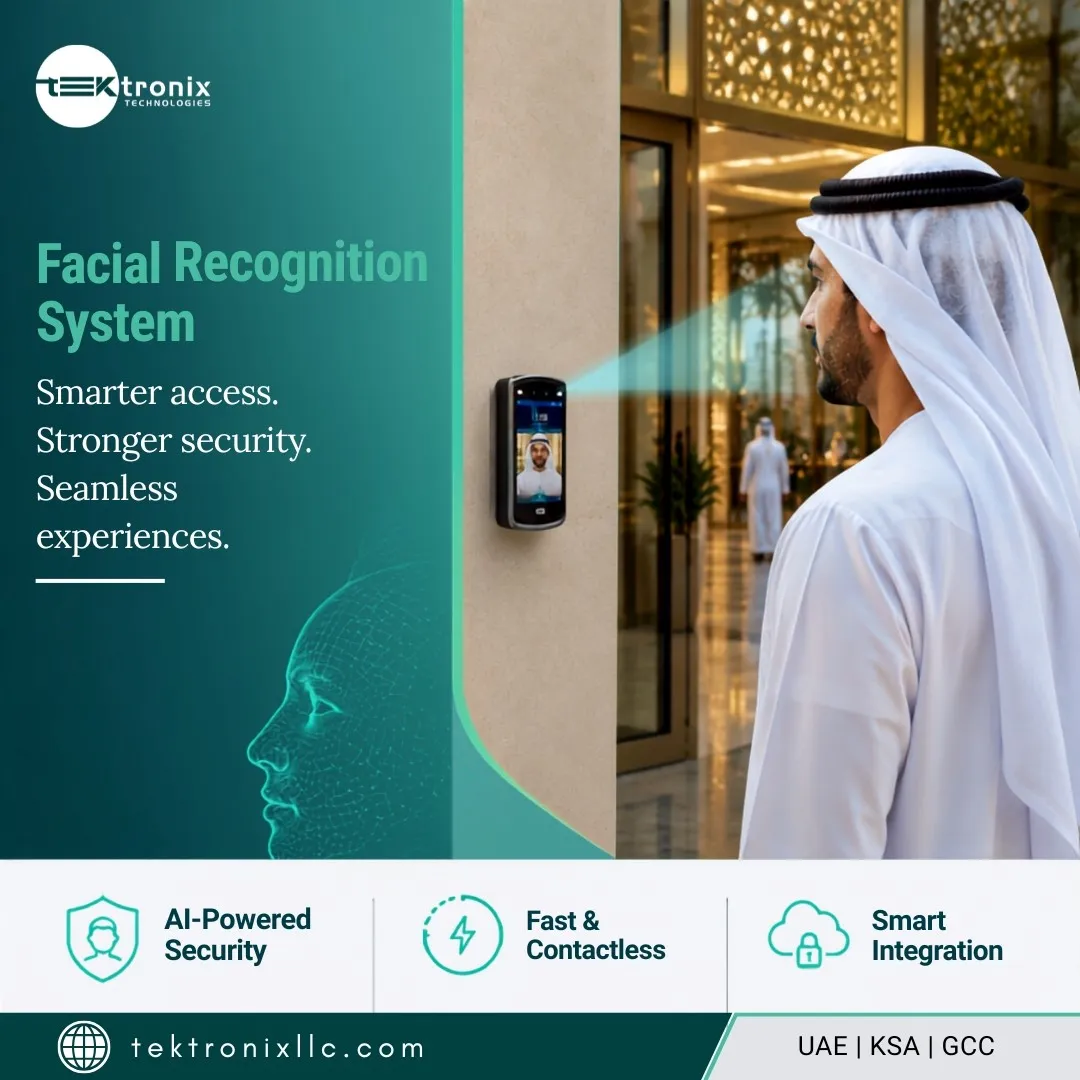
4.2 Facial Recognition Access Control
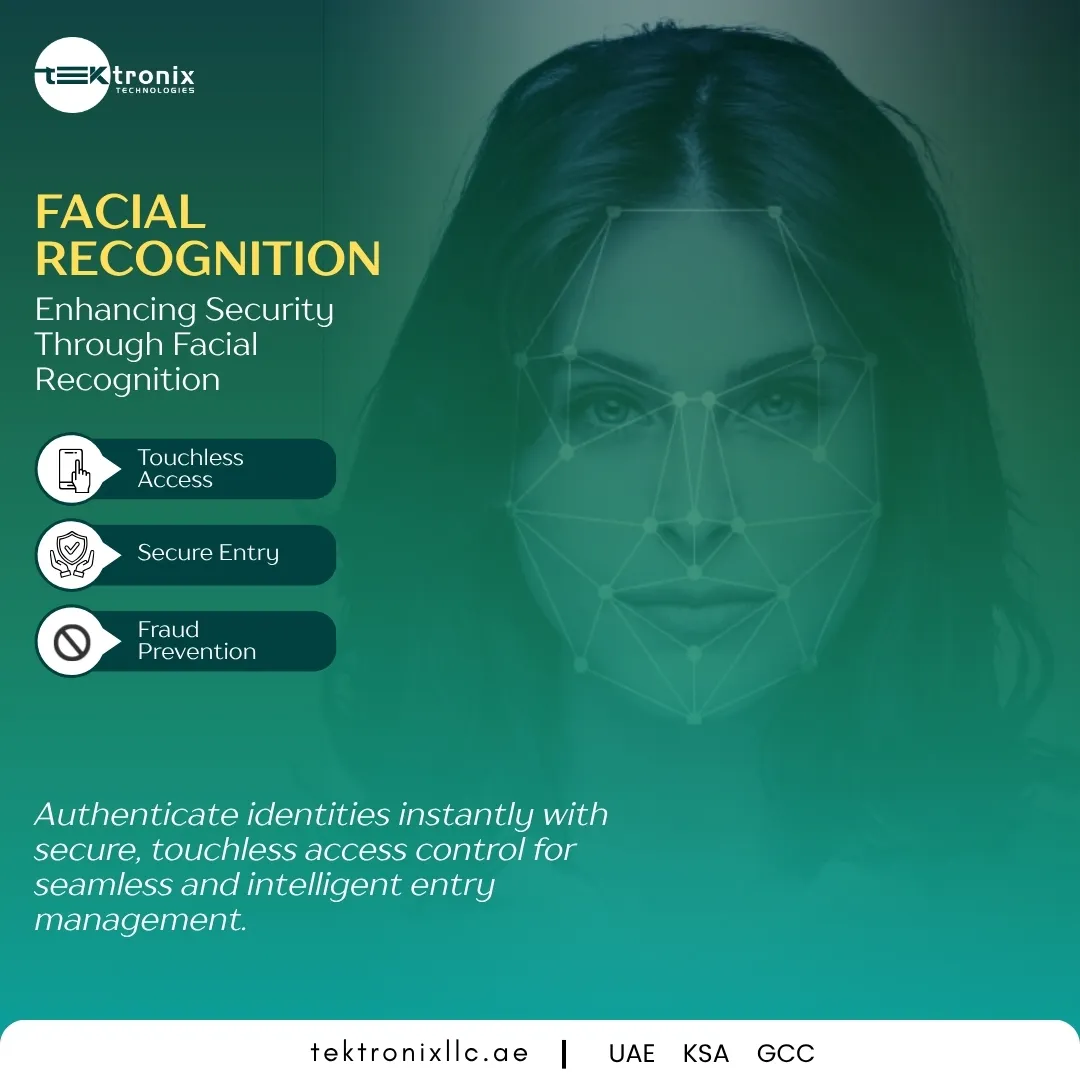
Facial recognition access control analyzes up to 80 distinct facial nodal points—including distances between eyes, nose width, and jawline contours—to create a unique faceprint. Advanced systems employ 3D structured-light or infrared sensors to defeat photograph or mask spoofing, even in low-light or backlit environments.
Best for: High-traffic corporate entrances, hands-free zones, post-pandemic hygiene requirements, executive areas.
4.3 Iris & Retina Scanning
The iris—with over 200 unique features compared to 40 in fingerprints—offers one of the highest biometric accuracy rates available. Iris scanners work at distances of 20–40 cm without physical contact. Retinal scanners analyze blood vessel patterns at the back of the eye and are reserved for ultra-high-security environments.
Best for: Data centers, government facilities, financial vaults, research labs.
4.4 Voice Recognition
Voice biometrics authenticate users based on vocal characteristics including pitch, tone, and cadence. While less common as a primary access credential, voice recognition excels as a secondary factor in multi-factor authentication (MFA) or remote verbal command systems.
Best for: Hands-free environments, remote verification, MFA workflows.
4.5 Vein Pattern Recognition
Near-infrared light illuminates the vascular pattern beneath the skin of the palm or finger. Since vein patterns are internal, they are immune to surface damage (cuts, calluses) and extremely difficult to spoof. This modality is gaining traction in UAE healthcare and banking sectors.
Best for: Healthcare facilities, banking institutions, environments where fingerprints are unreliable.
5. Key Features of Modern Access Control Solutions
Enterprise-grade access control solutions deployed across Dubai combine hardware authentication with sophisticated software management platforms. Essential features to evaluate:
- Real-time monitoring dashboards with live entry/exit feeds
- Cloud-based access management with role-based permission assignment
- Mobile credential support (smartphone-based Bluetooth/NFC entry)
- Seamless CCTV, alarm, and video analytics integration
- Multi-factor authentication (biometric + PIN, biometric + mobile OTP)
- Comprehensive audit trails with exportable compliance reports
- Anti-pass back and tailgating detection
- Automated lockdown and emergency evacuation protocols
- API-first architecture for integration with HR, payroll, and visitor management platforms
- GDPR-aligned and UAE PDPL-compliant data handling
6. Benefits of Biometric Access Control Systems
6.1 Superior Security Assurance
Biometric credentials are inherently tied to a specific individual and cannot be replicated, transferred, or forgotten. With liveness detection algorithms neutralizing spoofing attempts, a modern biometric system provides security assurance that no card- or PIN-based system can match.
6.2 Operational Efficiency
Contactless, sub-second authentication eliminates bottlenecks at entry points. Employees move freely without fumbling for cards or entering codes, accelerating daily workflows and reducing friction in high-traffic zones.
6.3 Measurable Cost Savings
Eliminating recurring costs of card printing, replacement, and re-issuance generates substantial long-term savings. Studies in the GCC region show that mid-sized organizations recoup biometric system investment within 18–24 months through reduced administrative overhead alone.
6.4 Accountability and Forensic Auditability
Every access event is timestamped and logged against a verified identity—not just a card or PIN. This creates an irrefutable audit trail valuable for HR investigations, security incidents, regulatory audits, and legal proceedings.
6.5 Scalability and Flexibility
Modern access control systems in the UAE are architected for growth. Cloud-managed platforms allow organizations to add doors, sites, and users without infrastructure overhauls, supporting expansion across Dubai, the UAE, and globally.
6.6 Elevated Employee and Visitor Experience
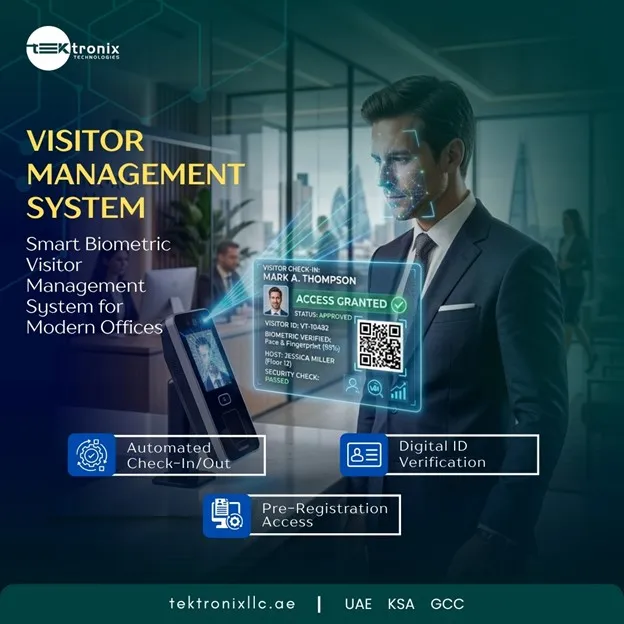
Fast, frictionless authentication improves the overall workplace experience. Visitor management modules pre-register guests and issue temporary biometric credentials, eliminating reception queues and manual sign-in sheets.
7. Facial Recognition Access Control: Transforming Dubai's Corporate Sector
Facial recognition access control has emerged as the dominant modality in Dubai's commercial real estate and corporate campuses. The convergence of high-density processing chips, advanced AI models, and competitive pricing has made enterprise-grade facial recognition accessible to organizations of all sizes.
Key performance benchmarks achieved by leading facial recognition systems deployed in UAE markets:
- Identification speed: under 0.5 seconds per person
- Accuracy rate: 99.9%+ under controlled lighting; 98%+ in outdoor or variable conditions
- Liveness detection: ISO 30107-3 PAD Level 2 compliance
- Throughput: up to 40 individuals per minute at a single lane
The contactless nature of facial recognition proved particularly valuable during the COVID-19 pandemic and continues to be a hygiene and user-experience advantage in high-footfall lobbies.
8. Integration with Smart Office Technologies
A standalone advanced access control system delivers strong security. When integrated with Dubai's expanding smart-building ecosystem, it delivers transformative operational intelligence:
- Automated HVAC and lighting adjustment based on occupancy data from access events
- Visitor management systems with pre-registration, photo capture, and NDA e-signature
- HR and payroll integration for accurate, automated time-and-attendance recording
- Emergency evacuation management with real-time personnel muster reports
- Building Management Systems (BMS) for centralized facility control
- Video surveillance analytics correlating access logs with camera footage
- Parking and lift access control synchronized with building entry credentials
This integrated approach converts access control from a siloed security function into a strategic operational platform that enhances productivity, reduces costs, and strengthens compliance posture.
9. Compliance and Regulatory Requirements in the UAE
Organizations operating in Dubai must navigate a multi-layered regulatory environment. A properly implemented access control system directly supports compliance across several key frameworks:
- UAE Federal Decree-Law No. 45/2021 (Personal Data Protection Law – PDPL): Mandates lawful processing and secure storage of biometric data as a category of sensitive personal data
- Dubai Cybersecurity Law (2021): Requires robust identity and access management controls for critical information infrastructure
- DIFC Data Protection Law 2020: Applies to organizations operating within the Dubai International Financial Centre
- ISO/IEC 27001: International standard for information security management, increasingly required by enterprise clients
- SIRA (Security Industry Regulatory Agency): Governs physical security system standards and installer licensing in Dubai
Working with SIRA-licensed providers who offer compliant, certified solutions ensures that your access control deployment meets all applicable UAE legal and regulatory obligations.
10. How to Choose the Right Biometric Access Control System
Selecting the optimal solution requires a structured evaluation framework aligned to your organization's security requirements, infrastructure, and growth plans.
10.1 Define Your Security Perimeter and Risk Profile
Identify all access points (main entrances, server rooms, executive floors, parking, etc.) and classify them by risk level. High-risk zones warrant multi-factor or high-accuracy modalities such as iris or facial recognition; standard zones may be adequately protected by fingerprint readers.
10.2 Assess Scalability Requirements
Choose a cloud-managed platform if your organization operates multiple UAE locations or anticipates growth. On-premise solutions may suit organizations with strict data sovereignty requirements.
10.3 Evaluate Integration Compatibility
Verify that shortlisted systems offer open API frameworks compatible with your existing HR software, CCTV infrastructure, building management systems, and ERP platforms.
10.4 Review Compliance Certifications
Require suppliers to provide evidence of SIRA licensing, ISO certification, GDPR/PDPL-compliant data handling practices, and third-party penetration test results for their management software.
10.5 Calculate Total Cost of Ownership (TCO)
Look beyond upfront hardware costs. Factor in software licensing, cloud subscription fees, maintenance contracts, training, and anticipated replacement cycles over a 5-year horizon.
10.6 Request a Pilot Deployment
Before full rollout, commission a pilot on 2–3 representative access points to validate performance under real-world conditions, including peak-hour throughput, edge-case scenarios, and IT integration stability.
11. Common Challenges and How to Overcome Them
| Challenge | Impact | Recommended Mitigation |
| High initial CAPEX | Budget strain for SMEs | Opt for SaaS/subscription-based access control models |
| Biometric data privacy concerns | Regulatory exposure | Choose on-device template storage; avoid central biometric databases |
| Environmental interference | False rejections at outdoor readers | Deploy IP65+ weatherproof hardware with IR illumination |
| Employee resistance / adoption | Low enrolment rates | Communicate privacy safeguards; offer multi-modal fallback options |
| Legacy system integration | Data silos, manual reconciliation | Select vendors offering REST API and open-standard protocols |
| Power and connectivity outages | Access denial or uncontrolled entry | Implement PoE backup, offline-capable edge devices, and fail-safe/fail-secure modes |
12. Future Trends in Access Control and Biometric Security
Dubai's positioning as a global smart-city pioneer means its organizations are early adopters of next-generation security technologies. Key trends reshaping the access control landscape over the next 3–5 years:
12.1 AI-Powered Behavioral Biometrics
Beyond physical traits, AI systems now analyze behavioral patterns—gait, keystroke dynamics, mouse movement—to create continuous authentication that monitors identity throughout a session, not just at the entry point.
12.2 Decentralized Identity and Blockchain Credentials
Blockchain-based digital identity frameworks allow individuals to own and selectively share verifiable credentials without relying on centralized databases, reducing breach exposure and aligning with UAE's digital identity strategy.
12.3 Multi-Modal Biometric Fusion
Combining two or more biometric modalities (e.g., face + iris, fingerprint + vein) in a single authentication event dramatically reduces both false acceptance and rejection rates, meeting the highest security benchmarks.
12.4 Zero-Trust Security Architecture
Access control is evolving from perimeter-based models to zero-trust frameworks where every access request—regardless of location or network—is continuously verified. Biometrics serve as the identity anchor in zero-trust deployments.
12.5 Sustainable and Energy-Efficient Systems
Next-generation access hardware is designed for low power consumption, solar compatibility, and sustainable materials, aligned with Dubai's Net Zero 2050 strategy and green building certifications such as LEED and Estidama.
13. Why Dubai Businesses Are Accelerating Biometric Adoption
The convergence of technology maturity, regulatory pressure, and organizational awareness has created a tipping point. Forward-looking executives in Dubai's corporate sector recognize that a modern access control system is not a cost center—it is a strategic investment in operational resilience, data integrity, and brand reputation.
- Government Vision: UAE's national AI strategy and smart-city vision actively incentivize biometric infrastructure adoption across public and private sectors
- Talent and Asset Protection: With talent acquisition costs rising, protecting employees and intellectual property has a quantifiable ROI
- Insurance Premium Reduction: Certified access control systems can qualify organizations for reduced commercial property and cyber insurance premiums
- Competitive Differentiation: Demonstrating robust security posture strengthens proposals to enterprise clients with supply-chain security requirements
Conclusion: Securing Dubai's Future with Intelligent Access Control
In one of the world's most dynamic and competitive business environments, security infrastructure is a foundational pillar of organizational excellence. A biometric access control system delivers the trifecta of protection, efficiency, and compliance that Dubai businesses demand.
From contactless facial recognition access control at high-traffic lobbies to multi-modal biometric vaults securing sensitive data centers, the right solution exists for every size, sector, and security requirement.
Partnering with a certified, experienced provider of access control solutions in the UAE ensures that your deployment is not only technically superior but fully compliant, scalable, and future-proof. In a city that never stops innovating, your security should not either.
Frequently Asked Questions (FAQs)
What is a biometric access control system?
A biometric access control system is a security technology that uses unique physiological or behavioral characteristics—such as fingerprints, facial geometry, iris patterns, or voice—to verify an individual's identity before granting or denying access to a secured area or resource.
How does facial recognition access control work?
A facial recognition system captures a live image or video frame, extracts key facial features using AI algorithms, and compares the resulting mathematical template against an enrolled database. Liveness detection prevents spoofing via photographs or masks. Authentication typically occurs in under 0.5 seconds.
Are biometric access control systems legal in the UAE?
Yes, biometric systems are legal in the UAE when deployed in compliance with the UAE Personal Data Protection Law (PDPL) and, where applicable, the DIFC Data Protection Law. Organizations must obtain informed consent, implement appropriate data security measures, and work with SIRA-licensed security providers.
Can biometric access control integrate with existing CCTV and HR systems?
Modern access control solutions are designed with open API architectures that integrate seamlessly with CCTV platforms, video management systems, HR software, payroll, and building management systems. Always verify API compatibility during the vendor evaluation process.
What is the ROI of investing in an advanced access control system?
ROI is generated through eliminated card replacement costs, reduced security officer headcount, improved time-and-attendance accuracy, potential insurance premium reductions, and mitigation of breach-related financial liabilities. Most mid-size organizations achieve payback within 18–30 months.
What is the difference between fail-safe and fail-secure access control?
Fail-safe doors unlock automatically during a power failure—prioritizing evacuation safety, typically used on fire exit doors. Fail-secure doors remain locked during power failure—prioritizing security, used on server rooms or high-security vaults. Many deployments use both modes depending on door function.
biometric access control system






























Sign in to leave a comment.