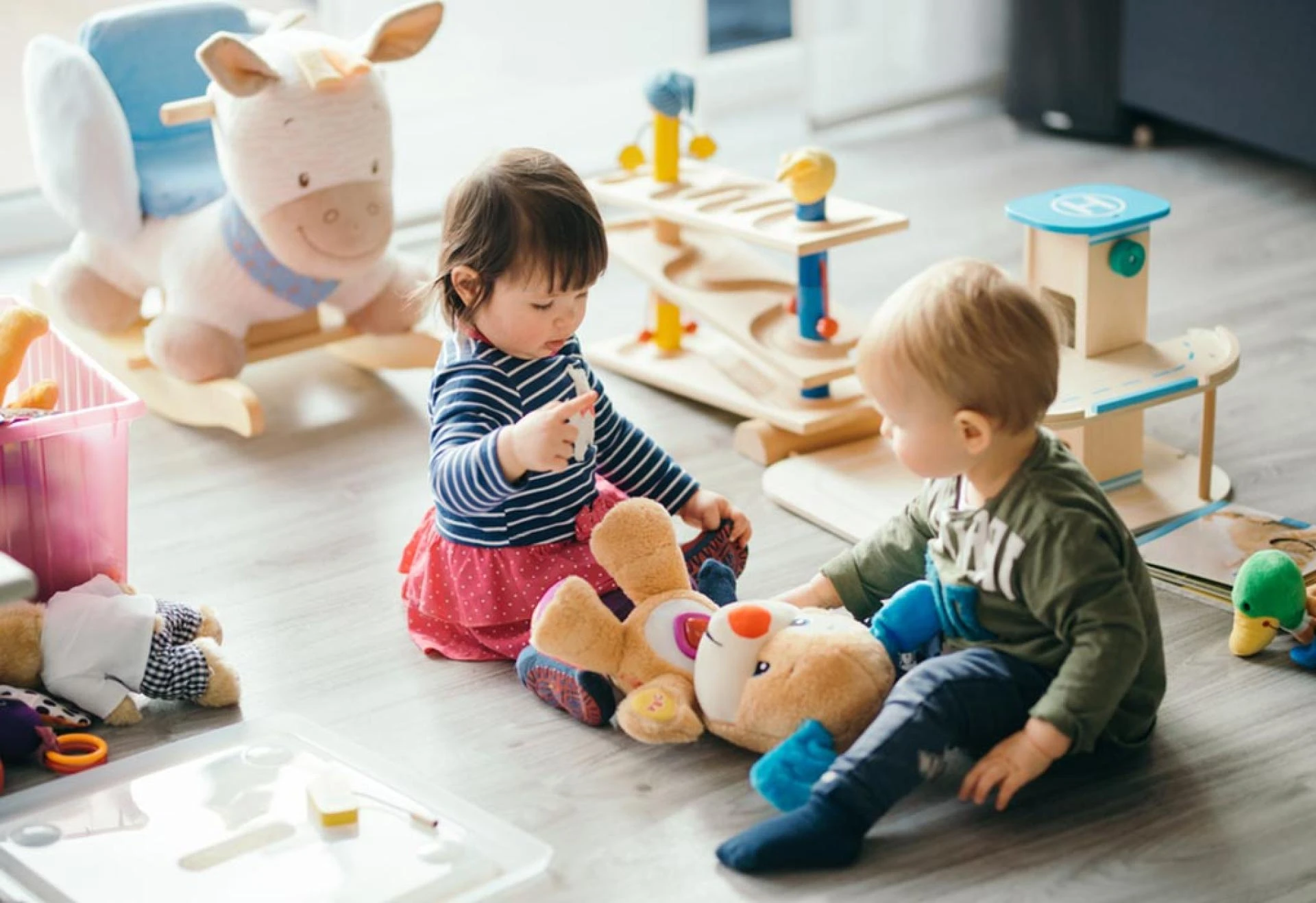

Christmas is coming and this is synonymous with gifts. Below we show you a series of guidelines so that you have no doubt when choosing gifts for the little ones in the house.
What is play for children?
Play is absolutely necessary and essential in the life of every child, it is a basic need. In addition to increasing their development and learning, the best toys and games bring joy. Toys have multiple benefits in a child\'s life; They help to let the imagination fly, thus being able to create a new episode of play every day, the ability to relate to other children and/or adults, thus generating bonds with them, in addition to having fun, laughing, relaxing, etc.
Let\'s not forget that it is essential that children play with their parents, either with their toys or with everyday items in order to foster imagination or routine activities of each day and thus make the tasks that they sometimes refuse to do something fun.
It is highly recommended that children sometimes play alone, so they can experiment and learn about the things they are capable of doing on their own.
From the year on, they will want to start playing with other children but we will have to be aware since it is very common that they do not want to lend or share their toys and certain fights may arise. Once this phase of "selfishness" is over, so to speak, they will begin to play with each other and enjoy the company and be able to share their game.
What should we take into account when choosing a toy?
The main thing is that the child wants it, keeping in mind their tastes and personality, they must comply with the established safety regulations and adjust to the age recommended by the manufacturer.
We should not buy toys and games regularly and constantly since the little ones can lose their enthusiasm for them. In addition, the attention span of children (and adults) is limited and they need a reasonable amount of time to “use up” the time dedicated to their new toy, before presenting a new one, generating oversaturation.
[caption class="snax-figure" align="aligncenter" width="662"] [/caption]
What kinds of toys are best suited for different ages?
In the first months of life, what most attracts your attention are the striking colors, different textures, colors and shapes.
Between approximately 8 and 18 months, different objects and sounds begin to attract more attention, such as geometric figures to stack and fit all kinds of sound toys.
When they start to stand upright on their own and later walk, we can offer them the strollers, walkers, wheeled bikes and they will love it.
Between a year and a half and two years they already speak and understand what is transmitted to them, they continue to play with the above but dolls, coloring pictures, musical instruments are added
Between the ages of 2 and 5, they begin to act out everyday situations in their family, as well as being able to memorize songs from school, from movies, etc. They are more curious and ask everything that comes to mind. The most common toys could be bicycles, plasticize, costumes, dolls, telephones, puzzles, stories, etc.
Between 6 and 9 years old, they already know how to read and write, which is why a wide range of interactive games opens up.
From the age of 10, they like more physical activities, play any type of sport, are more interested in video games and can begin to love reading and music.
Definitely; as one advance in age, the more complex the games will be. Although all this is relative, each child will have tastes and preferences and will discover different games in earlier or later ages.
Do we avoid those toys that they call sexist toys?
Sexist toys as such do not exist, what arises is the sexist game. It is ideologically imposed that boys should play some things and girls play others, but a truck or a doll is not a sexist toy for this reason. On many occasions, we are the adults who impose this type of game according to the sex of our child. This is not to say that, for example, girls should not play with dolls or kitchens, but rather that boys are given the opportunity to also participate in the game or vice versa, that girls can play with cars and balls.
All this is more a matter of educating adults than children themselves, avoiding prejudices and offensive or derogatory comments since children take adults as an example and repeat what they say or do.

























Sign in to leave a comment.