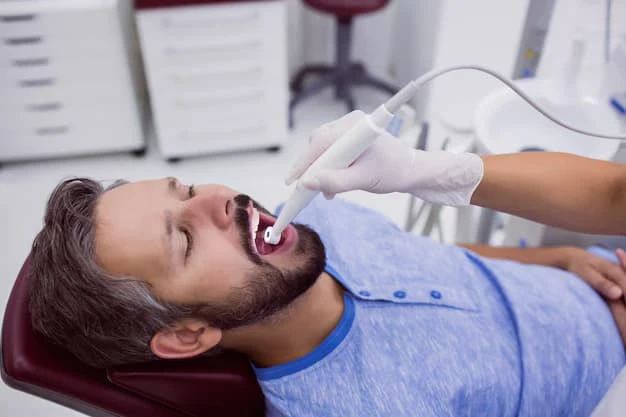

Your teeth may look clean. They may even feel smooth after brushing. Yet within hours, a microscopic layer begins to form again.
This layer is called biofilm. It is not just food debris. It is a living colony of bacteria that attaches to enamel and gathers along the gum line. Once mature, it becomes harder to remove with a toothbrush alone.
Many people assume staining is the main issue. In reality, unmanaged biofilm is what leads to bleeding gums, bad breath, and gradual bone loss.
This is where airflow teeth cleaning plays a very specific role.
Why Biofilm Matters More Than Tartar
Tartar gets attention because you can see it. Biofilm is different. It is soft, clear, and active.
Within 24 hours, plaque bacteria begin to organise. They communicate and protect themselves with a sticky outer layer. This structure makes them more resistant to simple brushing.
If not disrupted regularly, the body reacts. The immune system triggers inflammation in the gums. Over time, this can develop into periodontal disease.
Airflow teeth cleaning is designed to break up this organised bacterial layer early. It does not wait for heavy tartar to form.
What Makes Airflow Teeth Cleaning Scientifically Different
Traditional polishing relies on contact pressure. Hand scaling relies on mechanical scraping.
Airflow cleaning works through kinetic energy. A controlled stream of air, warm water, and fine powder is delivered at a precise angle. The powder particles strike the biofilm and fracture its structure.
Glycine powder is often used because its particles are smaller and less abrasive than traditional polishing paste. This allows teeth cleaning to clean along the gum margin with reduced trauma.
It is not simply a cosmetic spray. It is a targeted biofilm management system.
Areas That Manual Tools Often Miss
Even skilled brushing leaves behind certain zones:
- Deep grooves in molars
- Around orthodontic brackets
- Along implant surfaces
- At the gum margin where plaque first gathers
- Between crowded teeth
Airflow teeth cleaning can access these areas more evenly. The fine spray adapts to surface contours. It reduces reliance on pressure.
For patients with braces or aligners, this is particularly helpful. Fixed appliances create plaque traps. Disrupting biofilm early helps limit white spot lesions.
Comfort Is Not Just About Feeling Better
Many patients avoid hygiene visits due to discomfort. This delay allows inflammation to progress.
Airflow teeth cleaning uses warmed water. The sensation is often described as a steady wash rather than scraping. For patients with dentine sensitivity, this can make regular attendance easier.
Regular attendance means earlier intervention. Earlier intervention means reduced risk of more serious periodontal damage.
Comfort supports compliance. Compliance protects long-term oral health.
The Role of Airflow Teeth Cleaning in Preventive Care Plans
Airflow teeth cleaning is often used as part of guided biofilm therapy. This approach begins with identifying plaque through disclosing solution. The coloured areas show exactly where biofilm is active.
The airflow system then removes these areas precisely. Remaining tartar, if present, can be managed with ultrasonic or hand instruments.
This staged method reduces unnecessary abrasion. It focuses on what truly needs removal.
For patients with early gum inflammation, this method can support healthier tissue response over time.
Stain Removal Without Excess Enamel Wear
Tea, coffee, and tobacco can cause external staining. Many polishing methods rely on coarse paste.
Repeated heavy abrasion may contribute to enamel thinning. While enamel is strong, it does not regenerate.
Airflow cleaning lifts stain through controlled particle impact rather than grinding friction. The goal is the removal of stain, not the removal of enamel.
This is particularly relevant for patients considering whitening. A clean enamel surface allows whitening agents to work more evenly.
Airflow Teeth Cleaning and Implant Maintenance
Dental implants require careful hygiene. The surface of an implant is different from natural enamel. It must be cleaned without scratching.
Traditional metal instruments are not always suitable around implant surfaces.
Airflow teeth cleaning, when used with appropriate powder, can clean around implants while limiting surface damage. This helps reduce the risk of peri-implant inflammation.
Long-term implant stability depends heavily on plaque control. Prevention remains more predictable than repair.
Safety and Clinical Judgement
Teeth with severe periodontal pockets may still require deeper therapy, as this approach is not a universal solution. Patients with certain respiratory conditions may need modified care, and a thorough medical history review is essential.
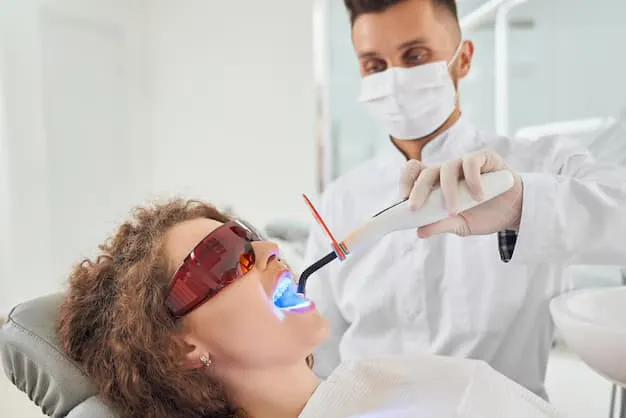
Once airflow teeth cleaning is used appropriately, it is considered safe and well-tolerated, with protective eyewear and suction applied throughout the procedure. Clinical judgement determines when additional scaling is needed.
What Patients Often Notice After Treatment
Patients commonly report:
- Smoother tooth surfaces
- Fresher breath
- Reduced gum bleeding over time
- Improved appearance without harsh polishing
The smoother surface may slow plaque reattachment in the short term. However, daily brushing and interdental cleaning remain essential.
Airflow teeth cleaning supports home care. It does not replace it.
A Preventive Mindset, Not a Cosmetic Trend
Airflow teeth cleaning is sometimes seen as a modern polishing add-on. In reality, its strength lies in early biofilm disruption.
By breaking down bacterial communities before they mature, airflow teeth cleaning supports gum stability. It encourages regular attendance through improved comfort.
Healthy gums protect the bone that holds teeth in place. Once bone loss occurs, it cannot be fully reversed.
Prevention requires consistency. Tools that make prevention easier are valuable.
Final Thoughts
The thin bacterial film on teeth may be invisible, yet its impact is significant. Airflow teeth cleaning addresses this early stage of disease development by disrupting organised biofilm with controlled precision.
It combines comfort with targeted plaque removal, supporting both patient confidence and clinical outcomes. While it does not replace every form of scaling, it reduces the need for aggressive instrumentation in many cases. Regular assessment, skilled delivery, and consistent home care remain central to oral health. Airflow teeth cleaning is not about surface shine alone.
It is about managing the root cause of gum inflammation before lasting damage occurs.





























Sign in to leave a comment.