
If you live with chronic pain, you've probably noticed a pattern. A bad night of sleep tends to make pain feel worse the next day, and a day of high pain tends to make it harder to fall asleep that night. This isn't just bad luck. Sleep and pain are closely connected, and each one has a direct effect on the other.
A Two-Way Relationship
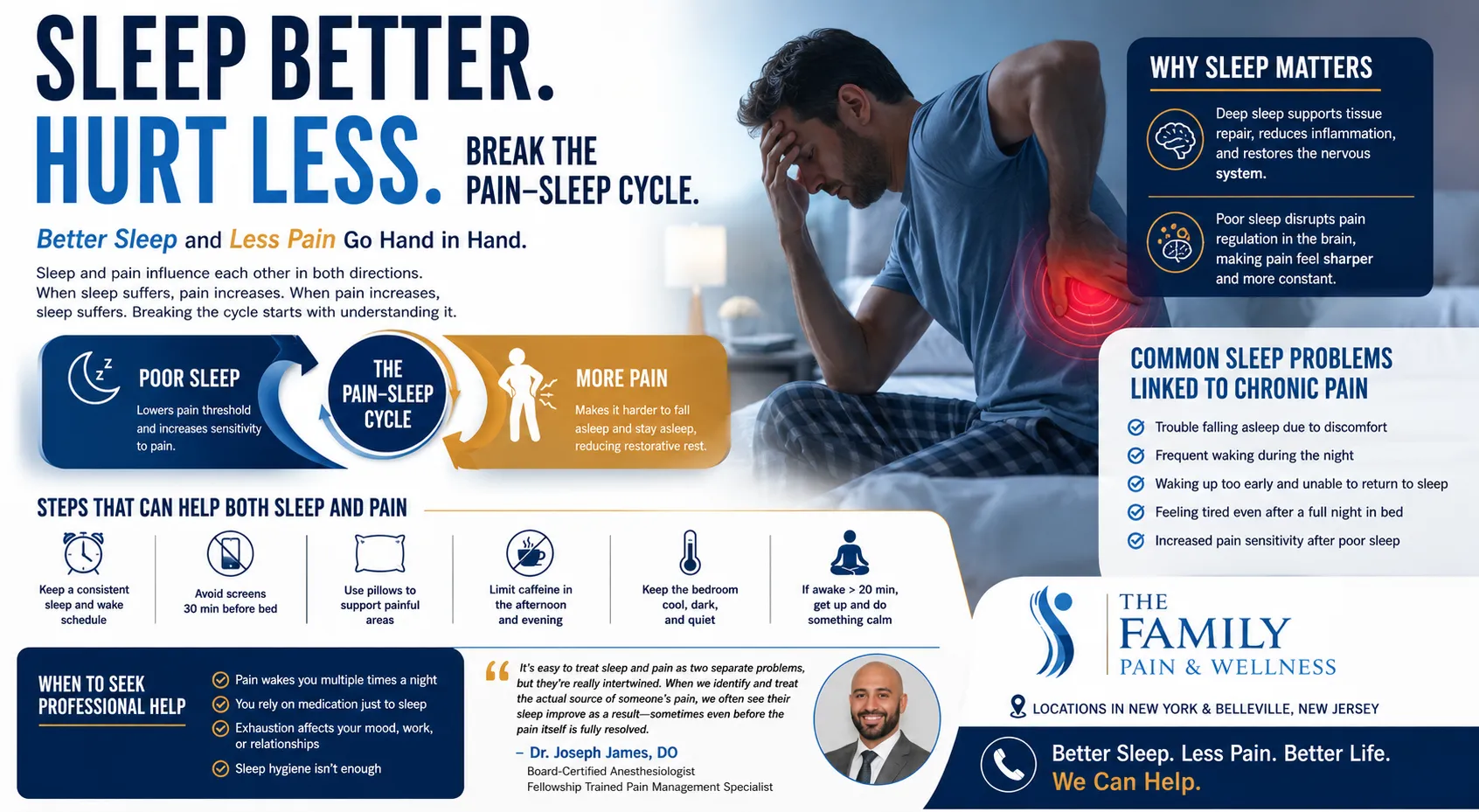
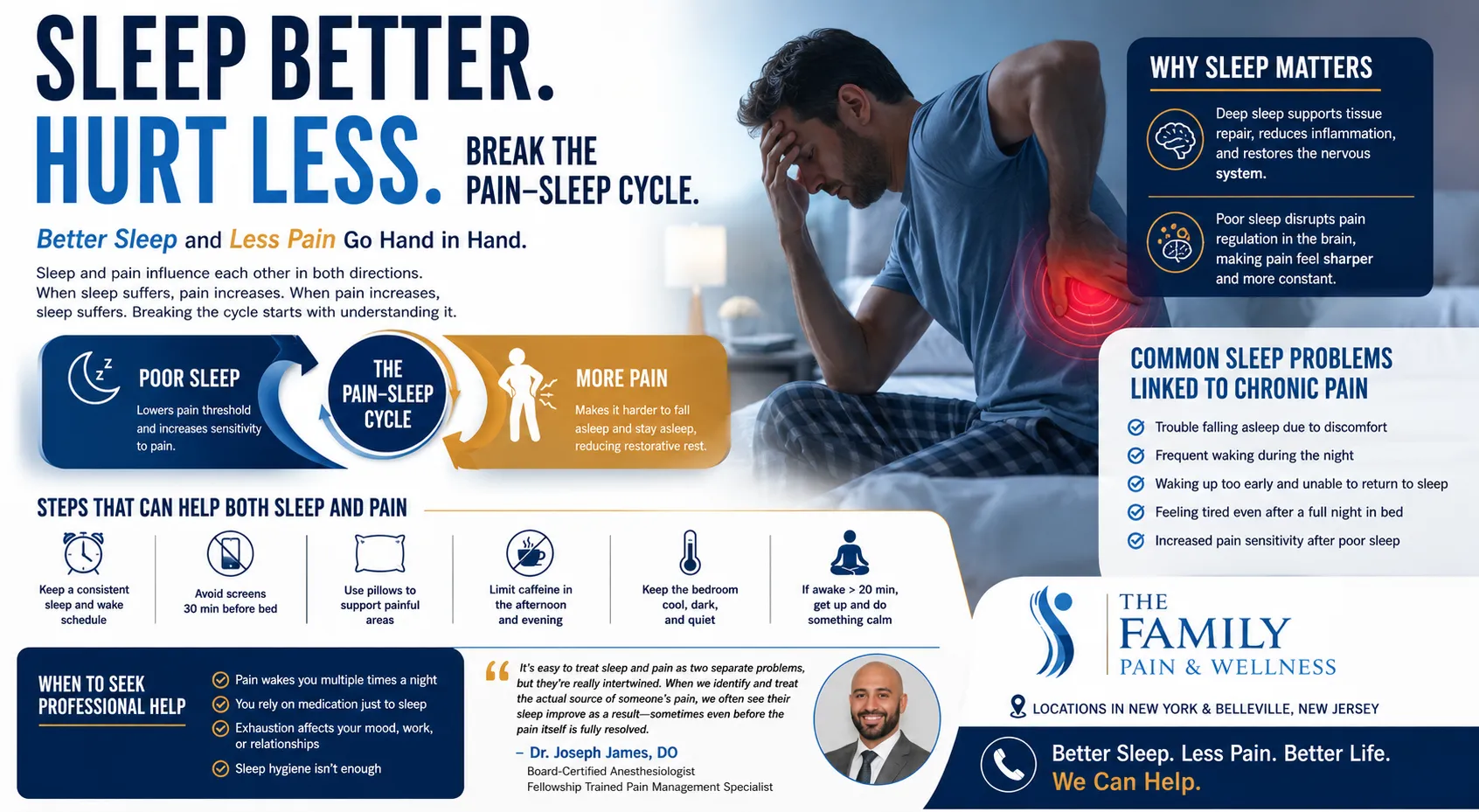
Sleep and pain influence each other in both directions. When you don't get enough quality sleep, your body becomes more sensitive to pain. Studies have shown that even one night of poor sleep can lower a person's pain threshold, meaning sensations that wouldn't normally bother you start to feel more intense.
At the same time, pain itself is one of the most common reasons people struggle to fall asleep or stay asleep. Discomfort can make it hard to find a comfortable position, cause frequent waking during the night, or lead to lighter, less restorative sleep overall. Over time, this creates a cycle. Poor sleep increases pain sensitivity, and increased pain makes sleep harder to get, which then increases pain sensitivity again.
Why Sleep Matters So Much for Pain
During deep sleep, the body goes through repair processes that affect muscles, tissues, and the nervous system. This stage of sleep also plays a role in regulating inflammation. When sleep is cut short or constantly interrupted, these repair processes don't get the time they need, and inflammation levels can rise as a result.
There's also a connection to how the brain processes pain signals. Sleep helps regulate certain chemicals in the brain that are involved in mood and pain perception. When sleep is lacking, this regulation breaks down, which can make pain feel sharper or more constant than it actually is.
Common Sleep Problems Linked to Chronic Pain
People dealing with chronic pain often experience one or more of the following:
- Trouble falling asleep due to discomfort in certain positions
- Frequent waking during the night, especially when shifting positions
- Waking up earlier than planned and being unable to fall back asleep
- Feeling tired and unrested even after a full night in bed
- Increased pain sensitivity the day after a poor night of sleep
These issues can show up with almost any type of chronic pain, including back pain, arthritis, nerve pain, and fibromyalgia.
Steps That Can Help Both Sleep and Pain
While there's no single fix that works for everyone, certain habits tend to help both sleep quality and pain levels over time.
- Keep a consistent sleep and wake schedule, even on weekends
- Avoid screens for at least 30 minutes before bed, since blue light can delay the release of melatonin
- Use pillows to support painful areas, such as placing one between the knees for hip or lower back pain
- Limit caffeine in the afternoon and evening, as it can stay in the system longer than expected
- Keep the bedroom cool, dark, and quiet to support deeper sleep stages
- Avoid lying in bed awake for long periods. If sleep isn't coming after about 20 minutes, getting up briefly and doing something calm can help reset the body's signals
These changes won't eliminate chronic pain on their own, but they can reduce how much pain interferes with sleep, and how much poor sleep amplifies pain.
When Sleep Problems and Pain Need Professional Attention
Sometimes sleep hygiene alone isn't enough, especially when pain is severe or constant. If pain is regularly waking you up multiple times a night, if you're relying on medication just to fall asleep, or if exhaustion is starting to affect your mood, work, or relationships, it may be time to look at the underlying pain itself rather than just the sleep side of the equation.
In many cases, treating the source of the pain, rather than only managing the sleep symptoms, can break the cycle in a way that lifestyle changes alone cannot.
"It's easy to treat sleep and pain as two separate problems, but they're really intertwined," says Dr. Joseph James, DO, a board-certified anesthesiologist and fellowship trained pain management specialist. "When we identify and treat the actual source of someone's pain, we often see their sleep improve as a result, sometimes even before the pain itself is fully resolved." Dr. James is the founder of The Family Pain & Wellness, a pain management practice with locations in New York and Belleville, New Jersey.
The Bottom Line
Sleep and chronic pain feed into each other more than most people realize. Improving sleep habits can help reduce how intense pain feels day to day, but if pain itself is keeping you up at night despite good sleep habits, that's a sign worth paying attention to. Addressing the root cause of the pain often improves sleep too, and breaking the cycle from either direction can make a real difference in how someone feels day to day.






























Sign in to leave a comment.