
By Madison | March 31, 2026
Let me be blunt: if you haven't noticed how the mattress industry has been completely turned upside down over the past decade, you haven't been paying attention. As someone who's spent fifteen years analyzing SEO trends and consumer behavior in the bedding sector, I've watched this transformation from the front row. What was once a product category dominated by showroom visits, pushy salespeople, and delivery trucks rumbling through suburban streets has been fundamentally reshaped by a single innovation: the mattress in a box.
This isn't just another e-commerce success story. It's a case study in how logistics innovation can unlock an entirely new business model. And I've seen plenty of brands and content creators sharing their insights on platforms like WriteUpCafe, where writers and marketers discuss these kinds of industry shifts in real-time. But the mattress revolution deserves a deeper dive.
The Old Model: Everything That Was Wrong With Traditional Mattress Shopping
Before we understand why mattress-in-a-box succeeded, we need to appreciate what it replaced. The traditional mattress retail model was broken in multiple ways:
First, there was the showroom experience. You'd walk into a massive furniture store, past endless rows of mattresses that all looked suspiciously similar. A commission-driven salesperson would materialize beside you, armed with pseudoscientific claims about "sleep technology" and pressure-point relief. You'd lie down for thirty seconds on a mattress that's been tested by hundreds of strangers, trying to evaluate a major purchase that you'll use every night for the next decade.
Then came the logistics nightmare. Traditional mattresses are bulky, heavy, and incredibly expensive to ship. A queen-sized mattress typically weighs 60-100 pounds and measures 60x80x12 inches. Shipping these across the country required specialized freight carriers, with costs often running $150-300 per unit. Manufacturers and retailers absorbed these costs, but they baked them into the retail price—along with showroom overhead, sales commissions, and middleman markups.
The result? A $1,000 mattress might cost $2,000 or more by the time it reached the consumer's bedroom. And if you weren't satisfied? Good luck returning something that required two people and a truck to haul away.
The Innovation: Vacuum Compression Changes Everything
The breakthrough that made mattress e-commerce possible wasn't marketing genius or better memory foam—it was vacuum compression packaging technology. Here's how it works:
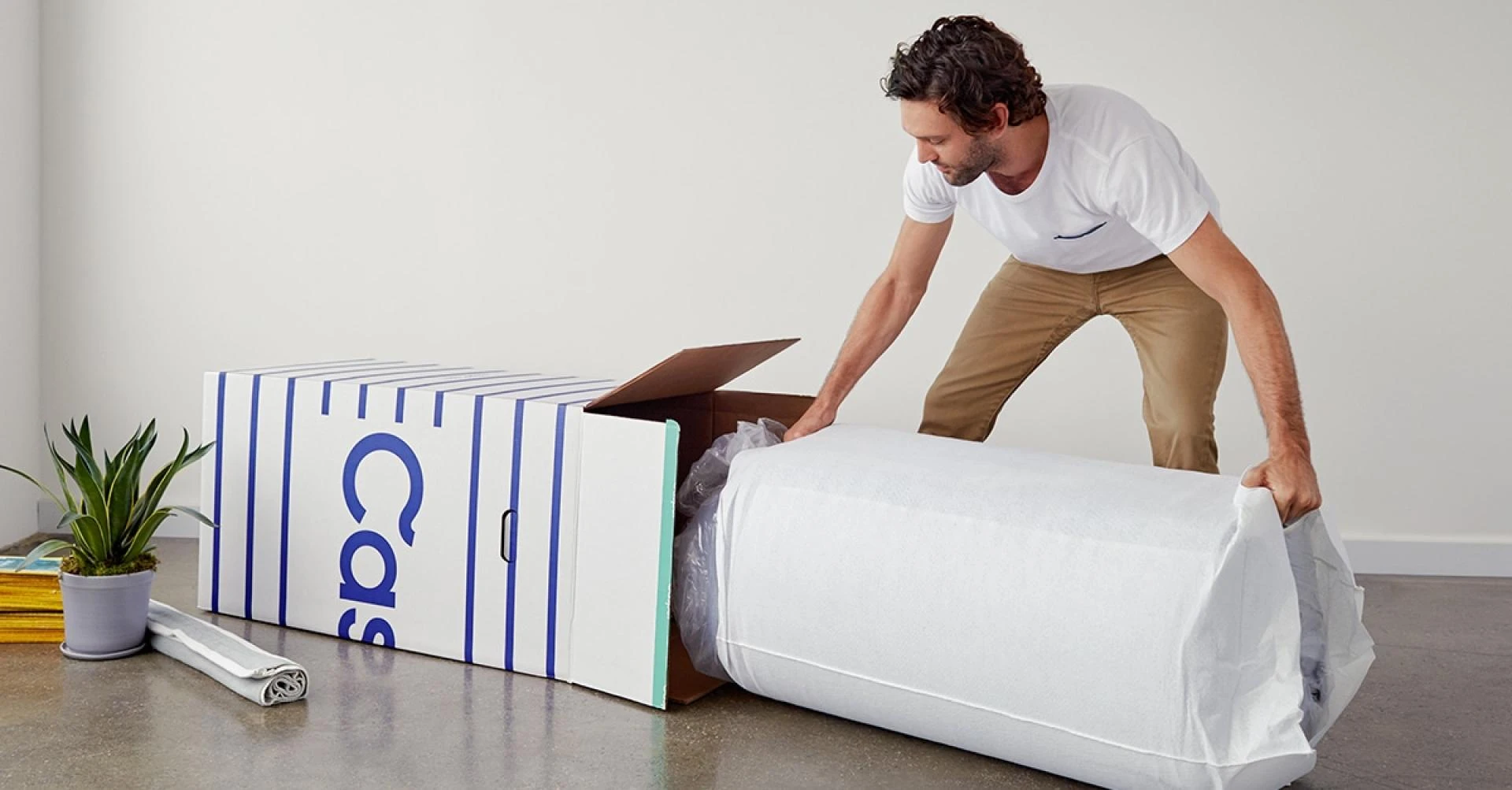
A newly manufactured mattress is fed into a specialized compression machine that removes the air and compresses the foam layers to a fraction of their original volume. The compressed mattress is then rolled and sealed in heavy-duty plastic, creating a cylindrical package that typically measures 42x19x19 inches and weighs significantly less than the uncompressed version. This package can be shipped via standard parcel carriers like UPS or FedEx instead of freight carriers.
The logistics cost reduction is staggering. While traditional mattress shipping costs $150-300, compressed mattress shipping drops to $25-50. That's a 75-85% reduction in shipping costs. This single innovation turned an uneconomical e-commerce proposition into a highly profitable one.
But the benefits extend beyond shipping costs:
- Warehousing efficiency: Compressed mattresses take up 75% less warehouse space
- Lower returns: The risk-free trial periods (typically 100 nights) are possible because returns can be compressed and shipped back economically
- International expansion: Manufacturers can now sell globally without prohibitive shipping barriers
- Inventory flexibility: Brands can hold more inventory with less space, enabling broader product offerings
Why Consumers Embraced the New Model
The mattress industry's transformation wasn't just about logistics—it was about meeting evolving consumer preferences. Several factors aligned perfectly:
Price transparency: When Casper launched in 2014 with a single mattress model at $950, it created immediate price comparison transparency. No more showroom pricing games or confusing model numbers. Consumers could research, compare, and purchase without leaving their homes—a shift that mirrors how digital platforms like WriteUpCafe have simplified content discovery and creation for millions of writers.
Convenience: Online mattress shopping eliminated the showroom pressure and timing constraints. Consumers could research during evening hours, read thousands of customer reviews, and make decisions at their own pace. The delivery process became simple too: the compact package arrived at their door, and they could maneuver it through hallways and up stairs that would have been impossible with a traditional mattress.
Trial periods without penalty: The dramatic reduction in return shipping costs enabled brands to offer risk-free trial periods. Casper's 100-night trial set the industry standard, and consumers responded enthusiastically. It removed the biggest psychological barrier to mattress buying online: the fear of making an expensive mistake.
Direct-to-consumer education: Online mattress brands invested heavily in educational content. They published detailed guides on mattress materials, sleep positions, firmness levels, and health considerations. This content marketing approach built trust and positioned these brands as sleep experts rather than just product sellers.
The Numbers Don't Lie: Market Transformation
The market data tells a compelling story. According to industry reports, online mattress sales grew from approximately 3% of the total mattress market in 2014 to over 45% by 2023. That's a nearly 15-fold increase in less than a decade.
Traditional mattress retailers have been forced to adapt. Major players like Mattress Firm have closed hundreds of locations, while others have launched their own online-only brands. The competitive landscape has shifted from who has the most showroom locations to who has the best digital marketing, product quality, and customer experience.
Perhaps most telling is the average price point. The online mattress sweet spot of $600-1200 represented a significant value compared to showroom mattresses of similar quality. By cutting out middlemen, reducing logistics costs, and eliminating showroom overhead, online brands delivered better products at lower prices—a classic example of how business model innovation can create value for both consumers and companies.
What This Means for the Future of E-commerce
The mattress-in-a-box success story offers lessons that extend far beyond the bedding industry. It demonstrates how logistics innovation can unlock e-commerce potential in product categories previously thought to be “offline-only.”
Consider other bulky home goods—furniture, appliances, exercise equipment. Many of these categories are now undergoing similar transformations. Companies like Wayfair have proven that furniture can be sold online successfully, though the challenges remain significant compared to the compressed mattress model.
The key insight is that e-commerce disruption often requires rethinking the entire value chain, not just building a better website. Mattress brands succeeded because they solved the fundamental logistics problem that prevented online sales in the first place. They didn't just digitize the existing retail model—they created an entirely new approach enabled by packaging innovation.
The Bottom Line
The mattress industry's transformation from showroom-centric to e-commerce-first is a testament to the power of logistics innovation combined with changing consumer preferences. Vacuum compression technology didn't just reduce shipping costs—it unlocked a fundamentally different business model that's better for consumers and more efficient for companies.
For businesses in other industries facing similar challenges, the lesson is clear: Look for the hidden barriers preventing e-commerce adoption. Sometimes the solution isn't better marketing or a flashier website—it's rethinking how your product gets from factory to customer.
As for consumers? The mattress-in-a-box revolution delivered exactly what we've come to expect from the digital economy: better selection, transparent pricing, convenient delivery, and genuine risk-free trials. And it all started with solving a logistics problem that had bedeviled the mattress industry for decades.
Sleep well.




























Sign in to leave a comment.