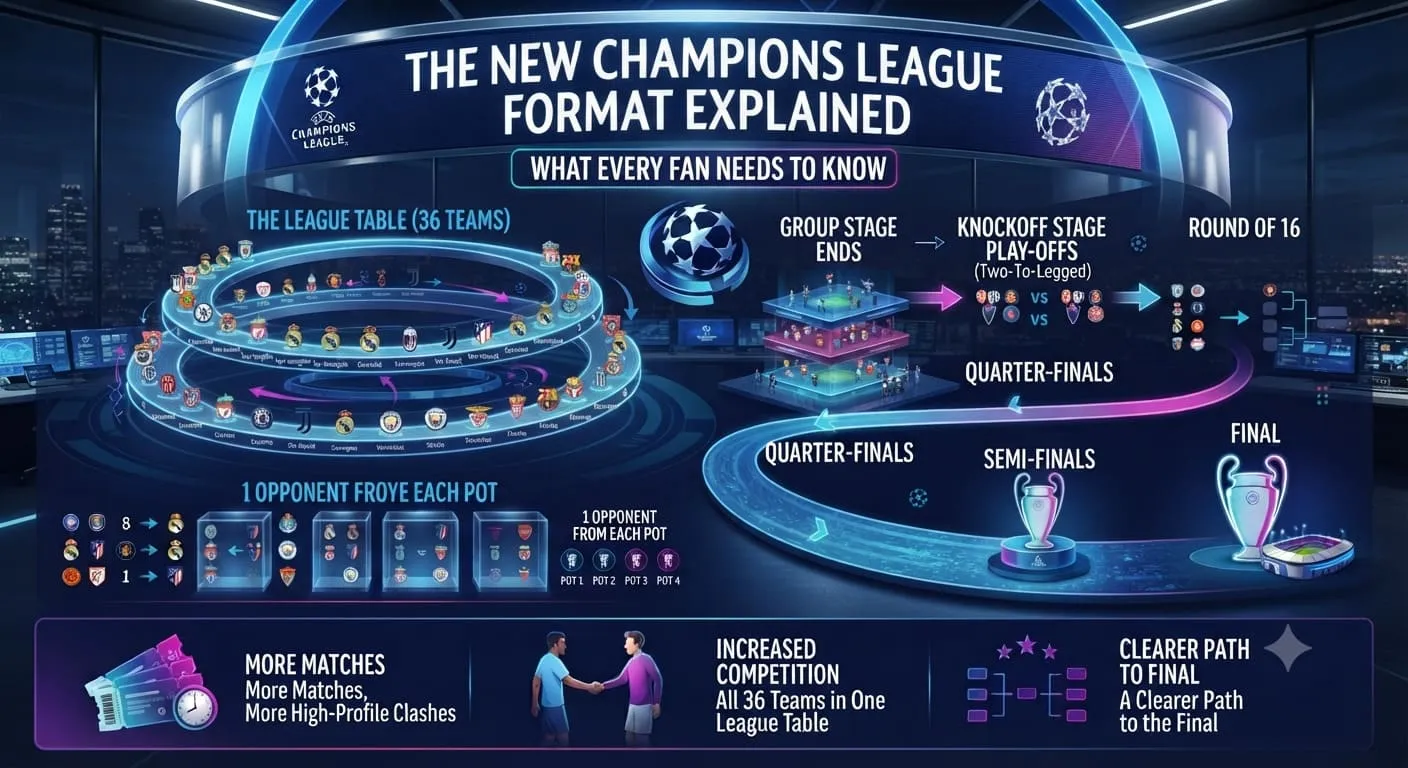

If you tuned into the Champions League after a season or two away, you probably noticed something felt different. The familiar group-of-four format is gone, replaced by a single, sprawling league phase that's changed not just how the competition is structured, but how fans need to follow it.
For anyone trying to make sense of the new system or just trying to figure out why their club's group-stage exit suddenly feels more complicated here's a breakdown of what changed, and why it matters more than ever to keep an eye on the table.
From Groups to a Single League Table
Under the old format, 32 teams were split into eight groups of four, playing six matches each before the top two advanced. It was simple, predictable, and easy to follow with minimal effort you knew your club's three rivals, and that was basically it.
The new "Swiss-style" league phase throws that out. All participating clubs now sit in a single table and play eight matches each against eight different opponents, drawn from different seeding pots to ensure a spread of stronger and weaker sides. There are no traditional groups anymore just one long table that determines who advances automatically, who enters a knockout playoff round, and who's eliminated entirely.
This means a club's Champions League campaign can no longer be judged in isolation. Results elsewhere in the tournament directly affect where your team lands, because everyone is competing against the same shared standings.
Why the Table Now Matters Every Single Week
Under the old format, a team could relax slightly after wrapping up qualification with a game to spare. That's much harder to do now. With eight matches determining a position among 36 clubs, tiebreakers like goal difference and head-to-head results carry real weight and they can shift dramatically from one matchday to the next.
A win in week five might move a club up ten places. A loss in week seven might push them from an automatic qualification spot into the dreaded playoff zone. This volatility is exactly why fans now need a reliable way to check the table regularly, rather than assuming their club's position is safe just because they won their last match.
Sites and apps built for football tracking have adjusted accordingly, offering live-updating tables so fans can see exactly how a result elsewhere in the competition affects their own team's standing. Checking a resource like PitchSide's Champions League standings and fixtures page after each matchday gives a clearer picture than trying to calculate scenarios manually.
The Knockout Playoff Round: A New Layer of Drama
One of the more interesting additions is the knockout playoff round, sitting between the league phase and the traditional round of 16. Teams finishing between 9th and 24th in the table are drawn into two-legged playoff ties, adding an extra hurdle and an extra week of high-stakes football before the competition reaches its familiar knockout structure.
This round has already produced its share of surprises, with mid-table finishers from the league phase pulling off unexpected results against sides that looked far stronger on paper. It's a reminder that under this format, finishing "safely" in the league phase doesn't guarantee an easy route forward.
What This Means for How Fans Watch
The practical impact of all this is simple: passive following doesn't really work anymore. Under the old group format, you could catch a highlights package once a week and still understand exactly where your team stood. Under the new system, missing a few results elsewhere in the table can leave you completely lost about your own club's qualification chances.
A few adjustments make this easier to manage:
- Check the full table, not just your club's results since qualification now depends on how the whole field performs.
- Pay attention to goal difference early it becomes a bigger factor with eight matches instead of six.
- Follow the playoff draw closely if your club finishes in the middle of the pack the opponent drawn can make or break the tie before a ball is even kicked.
- Use a live table tracker during matchdays, since positions can shift multiple times as games finish across Europe on the same night.
Wrapping Up
The expanded Champions League format has made the competition more unpredictable and, in many ways, more entertaining but it's also raised the bar for fans who want to actually understand what's happening. A club's fate is no longer decided in a neat little group; it's shaped by results happening simultaneously across the continent.
Keeping up with that requires more than watching your own team's matches. It means checking the table regularly, understanding the tiebreakers, and following the competition as the single, interconnected tournament it's now become.





























Sign in to leave a comment.