

Walk past a bakery and suddenly you're five years old again, watching your grandmother roll pie dough. Catch a whiff of sunscreen and you're transported to childhood beach vacations. Smell a particular perfume and you're back in high school, nervous about a first date. Scent memories arrive unbidden, complete and vivid, triggering emotions as intense as the original experience. This powerful connection between smell and memory makes therapeutic essential oils for healing uniquely effective for emotional and psychological support.
The explanation lies in neuroanatomy. Smell is the only sense that bypasses the thalamus, the brain's relay station, and connects directly to the limbic system. This primitive brain region processes emotions, forms memories, and regulates autonomic functions like heart rate and breathing. When you inhale an essential oil, aromatic molecules bind to receptors in your nose that send signals straight to the amygdala and hippocampus, the emotional and memory centers of your brain.
This direct pathway explains why scent can trigger emotional responses faster and more powerfully than any other sensory input. A song might remind you of a person, but a smell makes you feel like you're actually with them again. An image might trigger a memory, but a scent brings you fully into the remembered moment. This immediacy and completeness make aromatherapy particularly effective for addressing emotional issues, trauma, and psychological states that resist purely cognitive interventions.
The phenomenon works in both directions. Not only can familiar scents trigger established memories, but you can deliberately create new associations between scents and desired states. This process, called anchoring in psychology, allows you to use essential oils for stress relief and sleep to train your nervous system into healthier patterns.
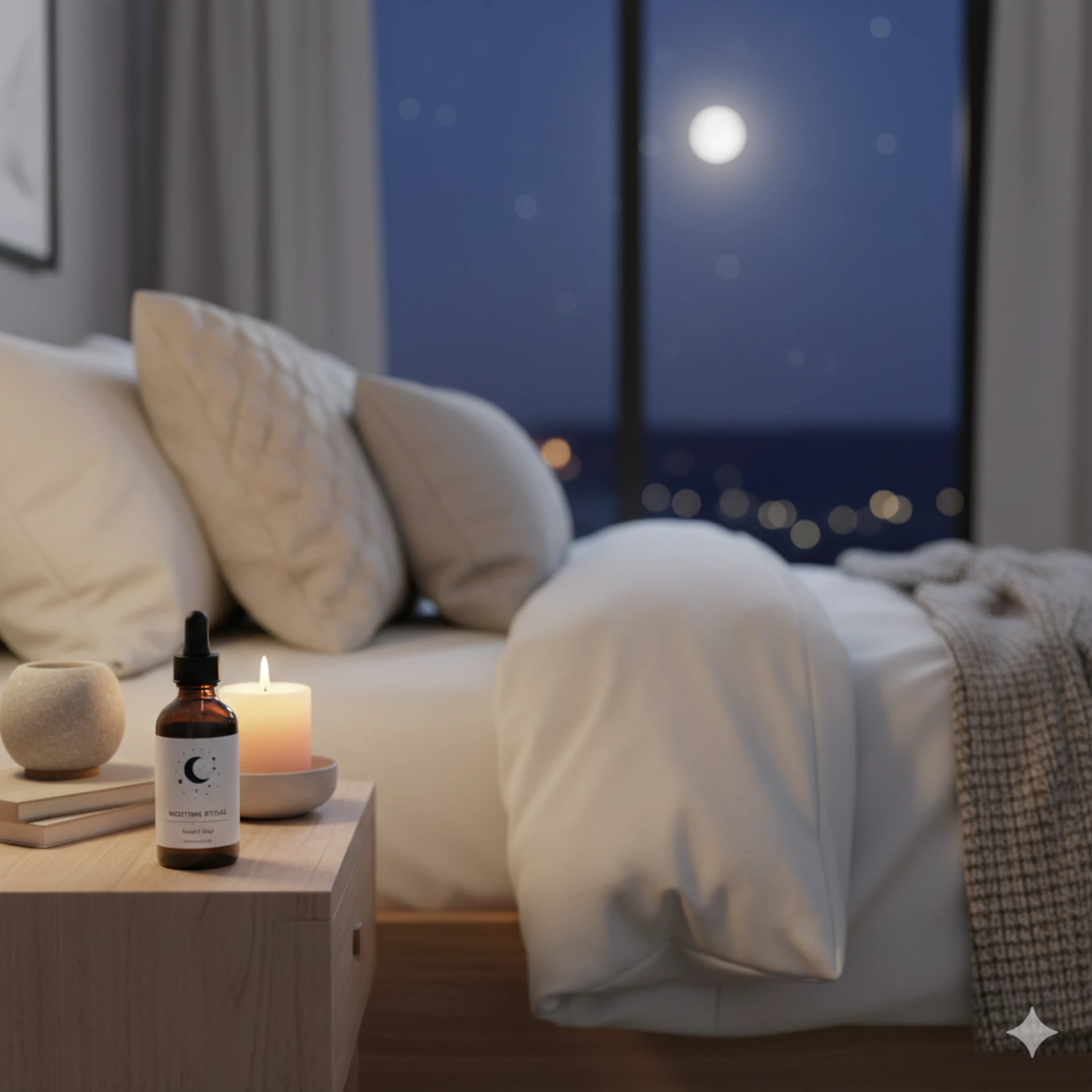
Consider creating a sleep anchor. Choose an essential oil or blend you find pleasant but don't already have strong associations with. Perhaps a combination of lavender, Roman chamomile, and cedarwood. Use this blend exclusively during your bedtime routine for several weeks. Diffuse it while you prepare for bed, dim lights, and wind down. Apply it topically after your bath or shower. Keep the scent present as you settle into sleep.
Your brain learns to associate this specific aroma with the transition into rest. The neural pathways connecting scent receptors to sleep-regulation centers strengthen through repetition. After sufficient pairings, simply smelling your chosen blend begins triggering relaxation responses. Your breathing slows, muscles release tension, and your mind quiets, all before you consciously try to relax. The scent itself becomes a cue that tells your nervous system it's safe to rest.
This same principle applies to any state you wish to cultivate. Create a focus blend for work or study time. Use it consistently while engaged in concentrated mental effort. Your brain learns to associate that scent with alert, focused attention. Eventually, diffusing the blend helps you drop into flow states more easily. The scent cuts through distraction and mental clutter, signaling your brain to engage.
For anxiety management, select calming oils like bergamot, frankincense, or ylang ylang. Keep a personal inhaler or roll-on blend with you. Whenever you feel anxiety rising, use your chosen scent while practicing breathing exercises or other anxiety-reduction techniques. The pairing of scent with effective coping strategies creates a portable tool. In stressful moments, your scent anchor provides immediate access to the calm state you've practiced, even when circumstances prevent other interventions.
Trauma therapy has begun incorporating scent anchoring as part of comprehensive treatment. Survivors work with therapists to identify moments of safety and empowerment within their healing journey. These positive states are paired with specific scents. Later, when trauma memories surface or triggers appear, the carefully chosen scent helps access the resourced state even in the midst of difficulty. While this work requires professional guidance, it demonstrates the profound power of scent-emotion connections.
The specificity of scent memory means you should choose different oils for different purposes. Don't use your sleep blend for anything except sleep preparation. If you also diffuse it during the day for relaxation, you dilute the specific association with bedtime. Similarly, keep your focus blend separate from your meditation blend. Each scent should have a clear, consistent purpose. This specificity strengthens the neural pathways you're creating.
Children respond particularly well to scent anchoring because their brains are actively forming new neural pathways. Creating positive scent associations early in life gives children tools they can use throughout their lifetimes. A calming blend used consistently during bedtime stories becomes a self-soothing tool they can access independently as they grow. A confidence blend worn before challenging situations builds neural patterns linking that scent to courage and capability.
The negative side of scent memory deserves acknowledgment too. Scents present during traumatic events can become triggers that bring back difficult emotions and memories. A particular cologne might trigger anxiety because it's what someone threatening wore. A cleaning product might cause distress because it's associated with a difficult time in institutional care. Understanding these negative associations helps explain unexpected emotional reactions to seemingly neutral scents.
Fortunately, scent associations can be updated and revised. Working gently and gradually, you can create new, positive associations with scents that previously triggered difficulty. This work often requires professional support, especially for trauma-related associations, but the possibility of revision means we're not forever bound by past negative experiences. The same neuroplasticity that allowed problematic associations to form also enables healing through new patterns.
Quality matters enormously when creating scent anchors. Synthetic fragrances don't create the same neural effects as pure essential oils. The complex, multi-compound nature of genuine plant oils engages the limbic system in ways that single-molecule synthetics cannot. When you're deliberately creating neural pathways to support wellbeing, use the most effective tools available. Choosing aromas from pure, therapeutic sources ensures your brain receives genuine plant intelligence rather than chemical approximations.
The practice of working consciously with scent memory transforms aromatherapy from occasional pleasant experience into powerful psychological tool. Rather than randomly using oils as mood strikes, you become intentional architect of your own neural landscape. Each time you pair scent with desired state, you're literally rewiring your brain for greater wellbeing. The invisible pathways connecting nose to emotional centers become highways carrying you more efficiently toward calm, focus, joy, or whatever state you're cultivating.
This understanding elevates essential oils from air fresheners or bath additives to genuine therapeutic agents worthy of respect and intentional use. When you recognize that the lavender you diffuse isn't just making your room smell nice but is actually changing your brain's structure and function, you approach aromatherapy differently. Choices become more deliberate. Consistency becomes easier because you understand you're building something significant over time. The practice deepens from casual interest into committed wellness tool.
As neuroscience continues revealing the mechanisms behind aromatherapy's effects, ancient practices receive modern validation. What traditional healers knew intuitively, researchers now map and measure. Scent changes brain state. Memory and emotion intertwine with smell in ways unique among our senses. Essential oils, used skillfully and consciously, harness these connections for healing and growth. In a world full of pharmaceutical interventions that often override natural processes, aromatherapy offers gentler path that works with the brain's own wisdom, strengthening inherent capacities rather than replacing them.











Sign in to leave a comment.