
Schistosomiasis remains one of the most persistent and widespread parasitic diseases across tropical and subtropical regions. Caused by parasitic flatworms of the genus Schistosoma, the disease affects millions of people each year, particularly in areas with limited access to clean water and sanitation systems.
While the biological mechanisms of infection are well understood, the environmental factors that drive transmission are equally important. These factors shape where the disease thrives, how quickly it spreads, and the intensity of infection within communities.
Understanding the environmental context of Schistosoma infections is essential for developing effective control and prevention strategies. Public health measures must therefore address not just the parasite and its hosts, but also the ecosystems that support transmission.
Water Sources and Human Contact Patterns
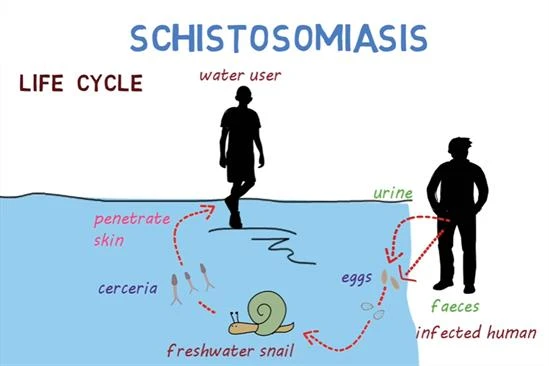
One of the most significant environmental factors influencing schistosomiasis is access to freshwater bodies where the parasite’s larval forms, released by infected snails, reside. Rivers, lakes, irrigation canals, and small ponds serve as the primary habitats for the snails that host Schistosoma larvae. In many endemic regions, these same water sources are vital for daily tasks such as bathing, washing clothes, collecting drinking water, and irrigation.
Human contact with contaminated water is the primary route of infection. In communities without adequate sanitation infrastructure, people are forced into frequent direct contact with natural water bodies. This increases the likelihood of encountering the free-swimming cercariae, which penetrate human skin and initiate infection. Thus, environmental dependence on open water sources directly influences disease prevalence.
Seasonal variation also plays a role. During rainy seasons, water bodies expand and create more habitat for snails. Conversely, in dry seasons, limited water availability can intensify human contact with specific high-risk sites. This cyclical pattern helps explain the fluctuations in infection rates throughout the year.
Snail Ecology and Habitat Suitability
The intermediate host snails, primarily of the genera Biomphalaria, Bulinus, and Oncomelania, are central to schistosomiasis transmission. Environmental conditions such as temperature, vegetation, pH, and water flow determine snail population density and distribution.
Temperature is a critical factor, as both snail reproduction and parasite development are temperature-dependent. Warm, tropical climates create ideal conditions for snails to thrive, accelerating the life cycle of the parasite. Even slight increases in ambient temperature can expand snail habitats into previously unaffected areas.
Aquatic vegetation also shapes snail habitats. Plants provide shelter, food, and breeding grounds. Agricultural expansion and irrigation projects often increase aquatic vegetation unintentionally, enhancing conditions for snail proliferation. For example, irrigation canals that lack proper flow management tend to accumulate vegetation, creating stagnant, snail-friendly environments.
Water quality and chemical composition influence snail survival as well. Polluted water may reduce snail numbers, but moderate nutrient enrichment common in agricultural runoff can actually promote snail population growth. Thus, human environmental impact indirectly affects schistosomiasis risk through ecological changes.
Agricultural Practices and Irrigation Systems
Agriculture-driven environmental modifications are closely linked to schistosomiasis transmission. Large irrigation schemes, designed to increase agricultural productivity, often create extensive networks of slow-moving or stagnant water the optimal habitat for intermediate host snails.
In many regions, irrigation canals serve as year-round water sources, enabling perennial parasite transmission rather than seasonal cycles. Farmers, field workers, and children spend significant time near these canals, increasing their exposure risk.
Additionally, dam construction can alter river flow patterns, leading to downstream conditions favorable to snail colonization. Some historically low-risk regions have become endemic following major hydrological projects. This highlights the need for environmental assessment in agricultural planning to limit unintended public health consequences.
Urbanization and Changing Landscapes
Urbanization affects schistosomiasis transmission in complex ways. On one hand, expanding urban infrastructure typically improves access to clean water and sewage systems, reducing reliance on natural water bodies. This can significantly decrease infection rates.
On the other hand, rapid urban growth in resource-limited settings often leads to informal settlements without proper sanitation. Wastewater discharge into surrounding waterways may create polluted yet suitable environments for snails. Unplanned urban expansion can therefore maintain or even exacerbate schistosomiasis risks.
The interaction between urban development and environmental change underscores the importance of coordinated urban planning, particularly in regions where schistosomiasis remains endemic.
Climate Change and Future Transmission Patterns
Climate change is expected to influence the geographical distribution and intensity of schistosomiasis. Rising temperatures may expand snail-friendly habitats into higher elevations and latitudes previously unsuitable for transmission. Altered rainfall patterns can change water availability, affecting both snail breeding and human water contact patterns.
More frequent flooding may create temporary breeding grounds for snails, while extended droughts may force communities to concentrate their activities around limited water sources, heightening exposure. Predicting how climate change will reshape schistosomiasis requires ongoing environmental monitoring and flexible public health strategies.
Human Behavior and Socioeconomic Factors
Although not purely environmental, human behavior is deeply shaped by environmental conditions. Communities with poor access to infrastructure often have limited choices regarding water use. Poverty, lack of education, and cultural practices all influence exposure risk.
Where sanitation systems are inadequate, contamination of water sources with parasite eggs is more likely, perpetuating the cycle. Environmental improvements, coupled with educational programs, can significantly reduce infections by empowering communities with safer alternatives.
Environmental Management as a Control Strategy
Given the strong environmental drivers of schistosomiasis, control efforts often incorporate ecological approaches alongside medical treatment.
Snail control is one such method. This may involve molluscicides, environmental modification (such as reducing vegetation or improving water flow), or the introduction of natural snail predators. Although chemical control can be effective, it requires careful ecological evaluation to avoid unintended harm.
Infrastructure development, including piped water systems, protected wells, and improved sanitation facilities, reduces the need for direct contact with natural water bodies. Such interventions address the root environmental causes of transmission.
Medical treatment campaigns using antiparasitic medications are essential for managing infection rates. In discussions of access to treatment within broader supply chains, references to pharmaceutical networks such as mebendazole distributors sometimes arise, although schistosomiasis itself is typically treated with praziquantel. Still, understanding medication supply chains helps contextualize how drug availability intersects with environmental and public health efforts.
Conclusion
Environmental factors are at the heart of Schistosoma transmission. Freshwater reliance, snail ecology, agricultural practices, urban growth, and climate change all interact to shape infection patterns. Effective control strategies must therefore extend beyond medical treatment to address environmental conditions and community-level infrastructure. Sustainable environmental management, combined with education and public health interventions, offers the most comprehensive path toward reducing the global burden of schistosomiasis.




























Sign in to leave a comment.