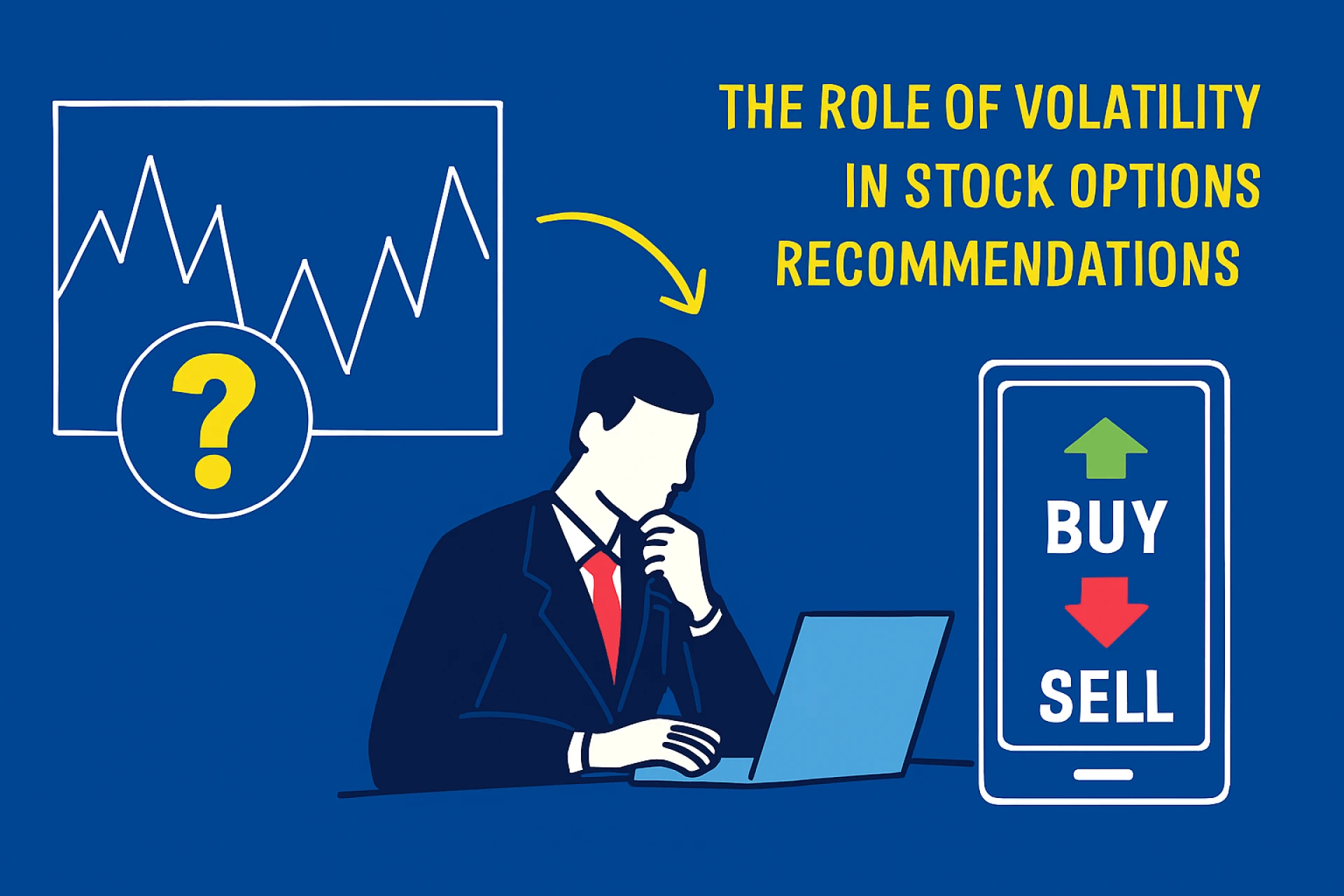

In the world of stock option recommendations, volatility plays a key role in shaping strategies, determining premiums, and influencing entry and exit timing. Whether you’re a beginner or a part-time trader, understanding volatility helps you interpret how prices might behave in the short term. As The Trade Bond focuses on guiding traders with research-driven insights, let’s explore how volatility impacts option trading and why it matters in your decision-making process.
1. What Is Volatility in Options?
Volatility represents the rate at which the price of a stock or index moves up or down. In simple terms, it measures market movement intensity.
- High volatility means prices fluctuate more, leading to higher option premiums.
- Low volatility means limited movement, resulting in lower premiums.
This is why many traders closely monitor volatility before following any stock option tips and recommendations. It helps them gauge potential risk and reward in a trade setup.
2. How Volatility Affects Option Premiums
Volatility directly influences the price of an option, known as the premium. When markets are uncertain, option sellers demand higher premiums due to increased risk. Conversely, in calm markets, premiums tend to be cheaper.
For example, during earnings announcements or key economic events, implied volatility often rises, making both call and put options more expensive.
To learn how traders manage this fluctuation, check out our post on Option Trading Tips for Beginners, where we explain volatility adjustments in simple terms.
3. Using Implied Volatility (IV) for Better Decisions
Implied Volatility (IV) is a forecast of how much the market expects prices to move in the future. Traders often use IV to identify whether options are overvalued or undervalued:
- High IV may indicate overpriced options, favoring sellers.
- Low IV may suggest underpriced options, favoring buyers.
Understanding IV helps traders refine their stock option recommendations and align them with realistic market expectations rather than emotions or speculation.
4. Volatility and Timing in Option Trades
Volatility also impacts timing. Entering trades when volatility is high can result in quick price swings, while low volatility periods may require more patience. Part-time traders often prefer moderate volatility levels where the risk is balanced with manageable movement.
You can explore our article on Option Trading for Part-Time Traders to learn how timing and volatility go hand in hand.
5. Balancing Risk with Volatility Awareness
Every trader should remember that volatility is a double-edged sword. While it offers opportunities, it also brings uncertainty. The goal is not to avoid volatility but to understand it and plan trades accordingly. Following structured option trading tips can help traders manage volatility effectively while maintaining discipline.
Conclusion
In stock option recommendations, volatility acts as the backbone of trade planning. It shapes premium pricing, entry timing, and overall strategy design. A trader who understands volatility can adapt better to changing markets and make informed choices rather than emotional ones.
At The Trade Bond, we emphasize awareness and education to help traders read volatility, apply smart strategies, and approach every market phase with confidence. Whether you are exploring Option Trading Tips or seeking advanced insights on Stock Option Tips and Recommendations, mastering volatility is your first step toward building consistency in your trading journey.








Sign in to leave a comment.