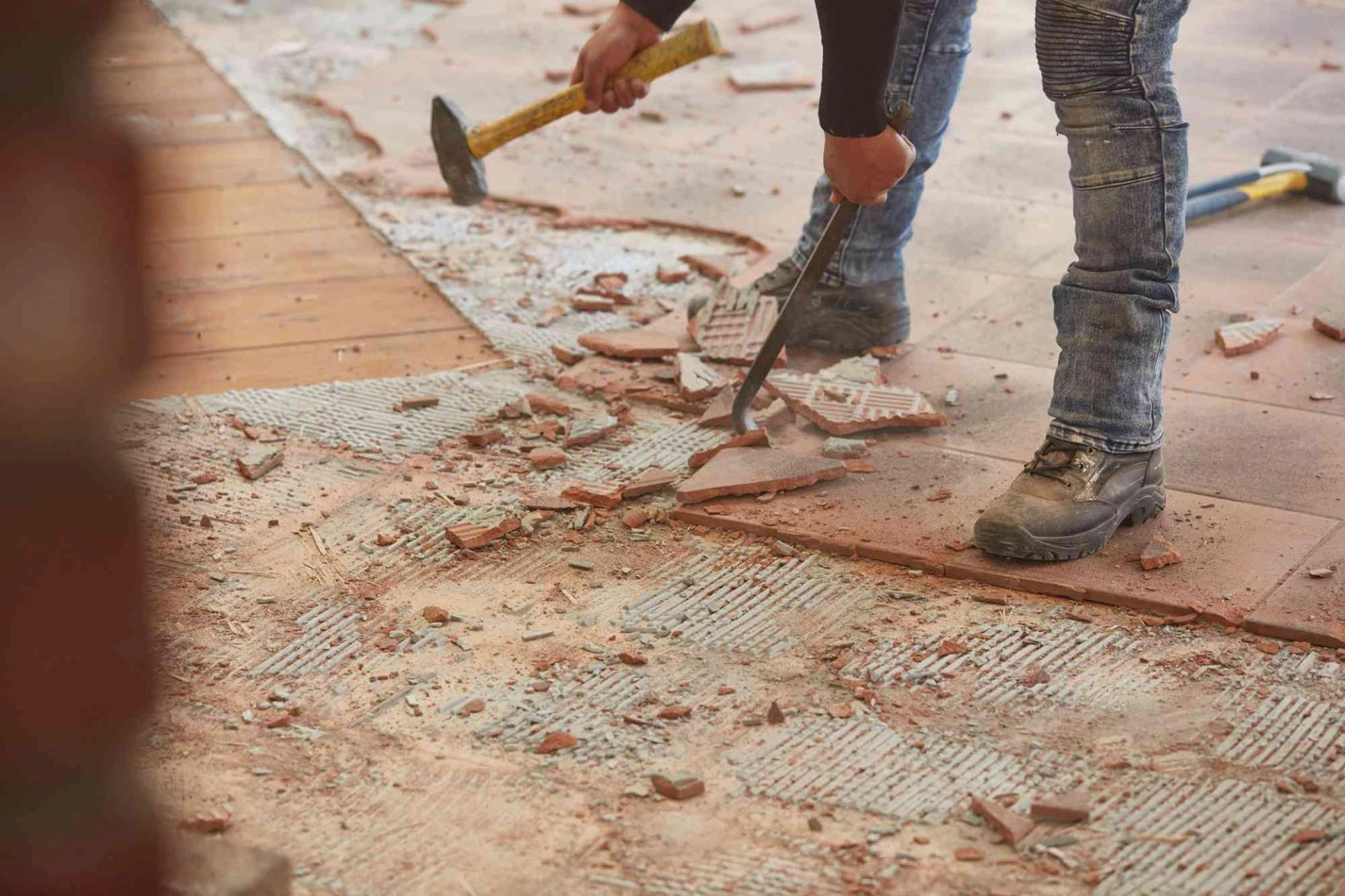

Tile removal may seem like a straightforward demolition project, but what most homeowners don’t realize is that the biggest danger isn’t the broken tiles—it’s the dust. Tile removal dust isn’t just messy; it can pose serious health risks and cause lasting damage to your home if not managed properly.
If you’re planning a renovation, it’s important to understand exactly what tile dust is, why it’s so dangerous, and what steps you can take to keep your home and family safe.
What Really Is Tile Removal Dust?
When tiles are pried, chipped, or smashed from the floor or wall, they break into tiny fragments. Along with this comes fine dust from:
- Tile material itself (ceramic, porcelain, or stone).
- Mortar and thinset adhesive that bonds tile to the subfloor or wall.
- Grout that fills in between the tiles.
The result? A cloud of sharp, microscopic particles that spread far beyond the work area.
Why Tile Dust Is So Dangerous
The shocking truth is that tile removal dust isn’t just a nuisance—it can be harmful to your health and home.
1. Health Risks
- Respiratory Problems – Fine dust particles can irritate your lungs, leading to coughing, wheezing, or asthma flare-ups.
- Silica Exposure – Many tiles and mortars contain crystalline silica. Prolonged exposure can cause silicosis, a serious lung disease.
- Eye and Skin Irritation – Dust can scratch your eyes and cause skin irritation if you’re not protected.
2. Home Damage
- Clogged HVAC Systems – Dust can enter vents and ducts, spreading throughout your home.
- Lingering Residue – Even weeks later, you might find dust settling on furniture, floors, and shelves.
- Difficult Cleanup – Once dust gets into fabrics and carpets, it’s hard to remove completely.
How Far Does Tile Dust Spread?
Here’s the shocking part: tile removal dust doesn’t stay contained in one room. Even if you’re only working in a small bathroom, dust can drift into hallways, bedrooms, and even kitchens.
Without proper containment, it can settle into every corner of your home—turning a renovation project into a whole-house cleanup nightmare.
How to Protect Your Home from Tile Dust
The good news? You don’t have to let dust take over. With the right precautions, you can keep your home and family safe.
1. Seal Off the Work Area
- Use plastic sheeting and painter’s tape to cover doorways.
- Block off vents and ducts to prevent dust circulation.
- Close all nearby doors and keep windows shut during removal.
2. Use Proper Dust Control Tools
- Rent or buy tools with dust shrouds that connect to a shop vacuum.
- Invest in a HEPA filter vacuum designed to trap fine particles.
- Mist tiles lightly with water before chiseling to keep dust down.
3. Wear Protective Gear
- Always wear a respirator or N95 mask—a simple dust mask isn’t enough.
- Use safety goggles to protect your eyes from tiny shards.
- Wear long sleeves and gloves to avoid skin irritation.
4. Work in Small Sections
Don’t attack the entire floor at once. Break the job into manageable sections, cleaning as you go. This prevents dust from building up into a giant mess.
5. Clean Up Immediately
- Vacuum debris with a HEPA filter vacuum.
- Wipe down surfaces with damp cloths to trap dust.
- Wash work clothes separately to avoid spreading dust to other laundry.
Professional Dust-Free Tile Removal
If the thought of clouds of dust makes you nervous, here’s some good news: many professional contractors now offer dust-free tile removal.
They use specialized equipment with industrial-grade vacuums that capture dust at the source. While more expensive than DIY, this option is worth it if you:
- Have kids, pets, or family members with asthma/allergies.
- Want to avoid a massive cleanup.
- Are working on a large project where dust would be overwhelming.
The Cost of Ignoring Tile Dust
Skipping dust protection might save time upfront, but it often leads to higher costs in the long run, including:
- Professional duct cleaning.
- Replacing damaged HVAC filters or components.
- Medical bills from respiratory issues.
- Extra cleaning and restoration of carpets, curtains, and upholstery.
In short, ignoring tile dust can be more expensive than handling it correctly from the start.
Conclusion: Don’t Let Dust Ruin Your Renovation
The truth about tile removal dust is simple: it’s not just a mess, it’s a health hazard and a home hazard. But with the right preparation—sealing off rooms, using proper tools, and wearing protective gear—you can control it. For expert guidance or a cleaner approach, visit Tile Setters Vancouver.
And if you’d rather skip the stress altogether, professional dust-free tile removal services may be the smartest investment for a clean, safe renovation.

























Sign in to leave a comment.