

Healthcare facilities across the country are under increasing pressure to deliver safe, clean, and infection-free environments for patients, visitors, and staff. While advanced medical equipment and rigorous sanitation protocols often take centre stage, one frequently overlooked element plays a critical role in patient safety — the humble privacy curtain. Today, more healthcare administrators and procurement professionals are making the shift to disposable medical curtains, and the reasons behind this growing trend are both compelling and well-supported by evidence.
Cube Care supplies disposable cubicle curtains hospitals rely on for trauma centers, ICUs, and isolation wards — fire-retardant, color-rich, and engineered for rapid, hassle-free replacement.
The Problem With Traditional Fabric Curtains
Walk through any hospital ward, emergency department, or outpatient clinic and you will almost certainly see privacy curtains hanging around patient beds and examination areas. These curtains serve an important purpose — they offer patients dignity, reduce anxiety, and define personal space within shared environments. However, traditional fabric curtains carry a serious downside that is easy to overlook: they are a proven breeding ground for dangerous pathogens.
Clinical research has consistently shown that fabric curtains in healthcare settings become contaminated with harmful bacteria within days of being laundered and rehung. Pathogens including MRSA, VRE, and Clostridium difficile have been detected on curtain surfaces at levels capable of causing hospital-acquired infections. The laundering process itself, while necessary, is disruptive — it requires staff to remove curtains, transport them off-site or to facility laundry services, and then reinstall them, consuming significant time, labour, and resources. In many cases, by the time the curtain is back in place, recontamination begins almost immediately.
Why Disposable Medical Curtains Are the Logical Solution
The shift to disposable medical curtains addresses this cycle of contamination at its root. Rather than relying on periodic laundering to maintain hygiene, these curtains are manufactured with antimicrobial technology embedded directly into the fabric. This means they actively inhibit bacterial growth throughout their entire period of use, not just immediately after installation.
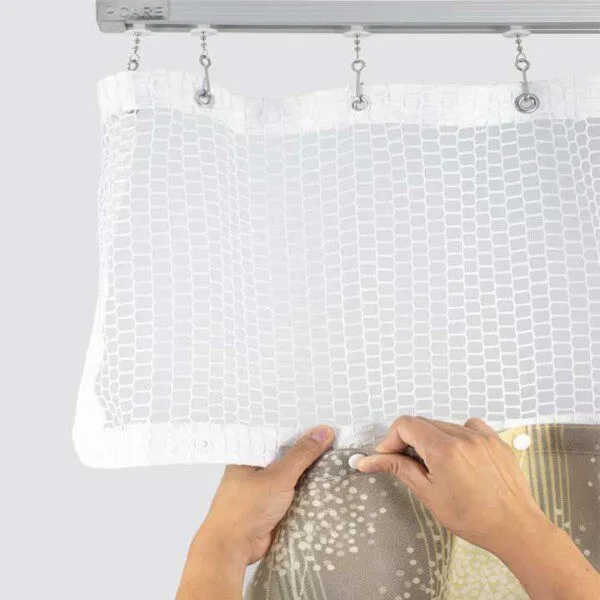
From a practical standpoint, disposable medical curtains offer healthcare facilities a number of significant advantages. They are lightweight and designed for rapid installation, allowing maintenance or nursing staff to complete a full curtain changeover in under a minute. This dramatically reduces the operational disruption that accompanies traditional curtain maintenance schedules. There is no need for off-site laundering, no waiting period, and no risk of recontaminating a freshly cleaned area by handling soiled curtains.
Design, Compliance, and Sustainability
A common concern among facility managers considering the switch is whether disposable options can match the aesthetic quality and compliance standards of traditional curtains. The answer, increasingly, is a clear yes. Modern disposable medical curtains are available in a wide range of colours, patterns, and sizes, allowing facilities to maintain a welcoming and professional environment that supports patient wellbeing alongside clinical function.
From a compliance perspective, quality disposable curtains are manufactured to meet fire retardancy standards required in healthcare environments. Many are also produced from recyclable materials, meaning facilities can reduce landfill impact while still benefiting from single-use hygiene advantages. This combination of sustainability and infection control makes them an attractive choice for facilities seeking to align with both environmental and patient safety goals.
The Financial Case for Making the Switch
When evaluating the true cost of any curtain system, it is important to look beyond the initial purchase price. The operational costs associated with traditional curtains — laundering, transportation, labour for repeated installation and removal, and the potential financial burden of treating hospital-acquired infections — can be substantial. Disposable medical curtains, by contrast, consolidate many of these costs and reduce the frequency of changeovers significantly.
For healthcare administrators managing tight budgets without compromising on care quality, this is a meaningful distinction. Fewer changeovers mean fewer staff hours diverted from patient care, and a continuously hygienic environment means a lower risk of costly infection outbreaks.
A Simple Change With Lasting Impact
In the broader effort to improve patient outcomes and reduce hospital-acquired infections, no single solution works in isolation. However, replacing traditional curtains with disposable medical curtains is one of the most straightforward, evidence-backed changes a healthcare facility can make. It is a decision that benefits patients, supports staff, and strengthens the overall culture of cleanliness and care that every modern healthcare environment should aspire to maintain.






























Sign in to leave a comment.