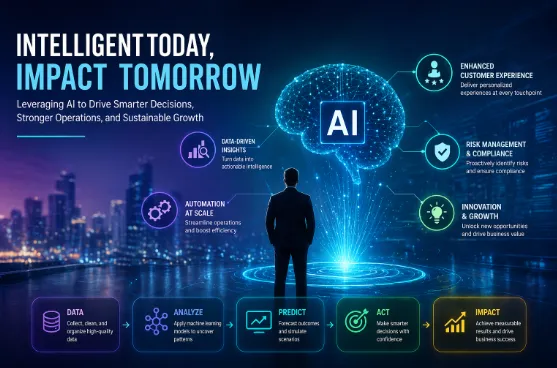

Artificial intelligence is no longer a futuristic concept confined to research labs or science fiction. It has become a defining force behind how businesses operate, compete, and innovate. Across industries—from healthcare and finance to manufacturing and retail—organizations are embracing intelligent systems to unlock efficiencies, reduce costs, and create entirely new value streams.
What sets this era apart is not just the adoption of AI but the strategic integration of it into core business functions. Companies are moving beyond experimentation and entering a phase where AI is embedded into everyday workflows, decision-making processes, and long-term strategies. Strategies, planning. This shift marks the beginning of a new operational paradigm—one driven by data, automation, and continuous learning.
From Automation to Augmentation
Early implementations of artificial intelligence focused heavily on automation—replacing repetitive human tasks with algorithms. While automation remains a critical benefit, today’s AI systems are increasingly designed to augment human capabilities rather than replace them.
For example, in customer service, AI-powered chatbots handle routine inquiries, freeing human agents to tackle complex or emotionally sensitive issues. In marketing, machine learning models analyze consumer behavior to provide insights, but human creativity still shapes campaigns. This hybrid approach creates a powerful synergy between human intuition and machine precision.
The real value lies in how AI enhances decision-making. By processing vast amounts of data in real time, AI systems can identify patterns and trends that would otherwise go unnoticed. This allows businesses to make more informed, proactive decisions rather than reactive ones.
The Role of Data as a Strategic Asset
At the heart of any AI system is data. Organizations that succeed with AI are those that treat data not just as a byproduct of operations but as a strategic asset. High-quality, well-structured data enables AI models to deliver accurate predictions and actionable insights.
However, managing data effectively is no small feat. Businesses must invest in data governance, security, and infrastructure to ensure their AI initiatives are built on a solid foundation. This includes cleaning and organizing data, ensuring compliance with regulations, and establishing clear protocols for data usage.
Moreover, the rise of real-time analytics means that data must be processed quickly and efficiently. Cloud computing and edge technologies are playing a crucial role in enabling this capability, allowing organizations to scale their AI efforts without significant infrastructure constraints.
Transforming Operations with Intelligent Procurement
One area where AI is making a significant impact is procurement. Traditionally, procurement processes have been manual, time-consuming, and prone to inefficiencies. Today, AI procurement software is revolutionizing how organizations source, negotiate, and manage suppliers.
These systems use advanced algorithms to analyze supplier performance, predict demand fluctuations, and optimize purchasing decisions. By automating routine tasks such as invoice processing and contract management, businesses can reduce operational costs and minimize human error.
More importantly, AI-driven procurement enables strategic sourcing. Organizations can identify the best suppliers based on a combination of factors, including cost, reliability, and sustainability. This not only improves efficiency but also strengthens supply chain resilience—a critical factor in today’s unpredictable global environment.
Scaling Innovation with Enterprise-Wide Intelligence
As businesses mature in their AI journey, they begin to adopt a more holistic approach—integrating AI across multiple departments and functions. This is where enterprise AI comes into play.
Unlike isolated AI initiatives, enterprise-level implementations focus on creating a unified ecosystem where data and intelligence flow seamlessly across the organization. This enables cross-functional insights and more coordinated decision-making.
For instance, sales data can inform production planning, while customer feedback can influence product development. By breaking down silos, enterprise AI fosters collaboration and alignment across teams, leading to more cohesive strategies and better outcomes.
Implementing AI at this scale requires careful planning and governance. Organizations must establish clear objectives, invest in the right technologies, and ensure that employees are equipped with the necessary skills. Change management also plays a critical role, as adopting AI often involves redefining workflows and organizational structures.
Ethical Considerations and Responsible AI
As AI becomes more deeply embedded in business operations, ethical considerations are gaining prominence. Issues such as data privacy, algorithmic bias, and transparency must be addressed to ensure responsible use of AI.
Organizations have a responsibility to ensure that their AI systems are fair, unbiased, and aligned with societal values. This involves नियमित auditing of algorithms, diverse data representation, and clear communication about how AI-driven decisions are made.
Building trust is essential—not only among customers but also within the organization. Employees must feel confident that AI is being used to support their work, not undermine it. Transparent policies and open dialogue can help foster this trust.
The Human Element in an AI-Driven World
Despite the rapid advancement of AI, the human element remains irreplaceable. Creativity, empathy, and ethical judgment are qualities that machines cannot replicate. Successful organizations recognize this and focus on empowering their workforce rather than replacing it.
Training and upskilling are critical components of this strategy. Employees need to understand how to work alongside AI systems, interpret their outputs, and apply insights effectively. This requires a shift in mindset—from viewing AI as a tool to seeing it as a collaborative partner.
Leadership also plays a vital role in this transition. Leaders must champion AI initiatives, communicate their value, and ensure that the organization is aligned with its strategic goals. A clear vision and strong leadership can make the difference between successful adoption and failed implementation.
Future Trends Shaping AI Adoption
Looking ahead, several trends are set to shape the future of AI in business:
- Hyper-personalization: AI will enable businesses to deliver highly tailored experiences to individual customers, enhancing engagement and loyalty.
- Autonomous systems: From self-driving vehicles to automated supply chains, AI will continue to drive autonomy across industries.
- Explainable AI: As decision-making becomes more automated, the need for transparency will grow, leading to more interpretable AI models.
- AI democratization: Tools and platforms will become more accessible, allowing smaller businesses to leverage AI without extensive technical expertise.
These trends highlight the ongoing evolution of AI and its expanding role in shaping the business landscape.
Challenges and How to Overcome Them
While the benefits of AI are significant, the journey is not without challenges. Common obstacles include high implementation costs, lack of skilled talent, and resistance to change.
To overcome these challenges, organizations should start with clear, achievable goals. Pilot projects can help demonstrate value and build momentum. Partnering with technology providers and investing in employee training can also accelerate adoption.
Additionally, businesses must remain flexible and adaptable. The AI landscape is constantly evolving, and organizations must be willing to iterate and refine their strategies as new technologies emerge.
Conclusion
Artificial intelligence is transforming the way businesses operate, offering unprecedented opportunities for growth and innovation. By embracing intelligent systems, organizations can enhance efficiency, improve decision-making, and create more meaningful customer experiences.
However, success requires more than just technology. It demands a strategic approach, a commitment to ethical practices, and a focus on empowering people. As AI continues to evolve, those who adopt it thoughtfully and responsibly will be best positioned to thrive in the future.




























Sign in to leave a comment.