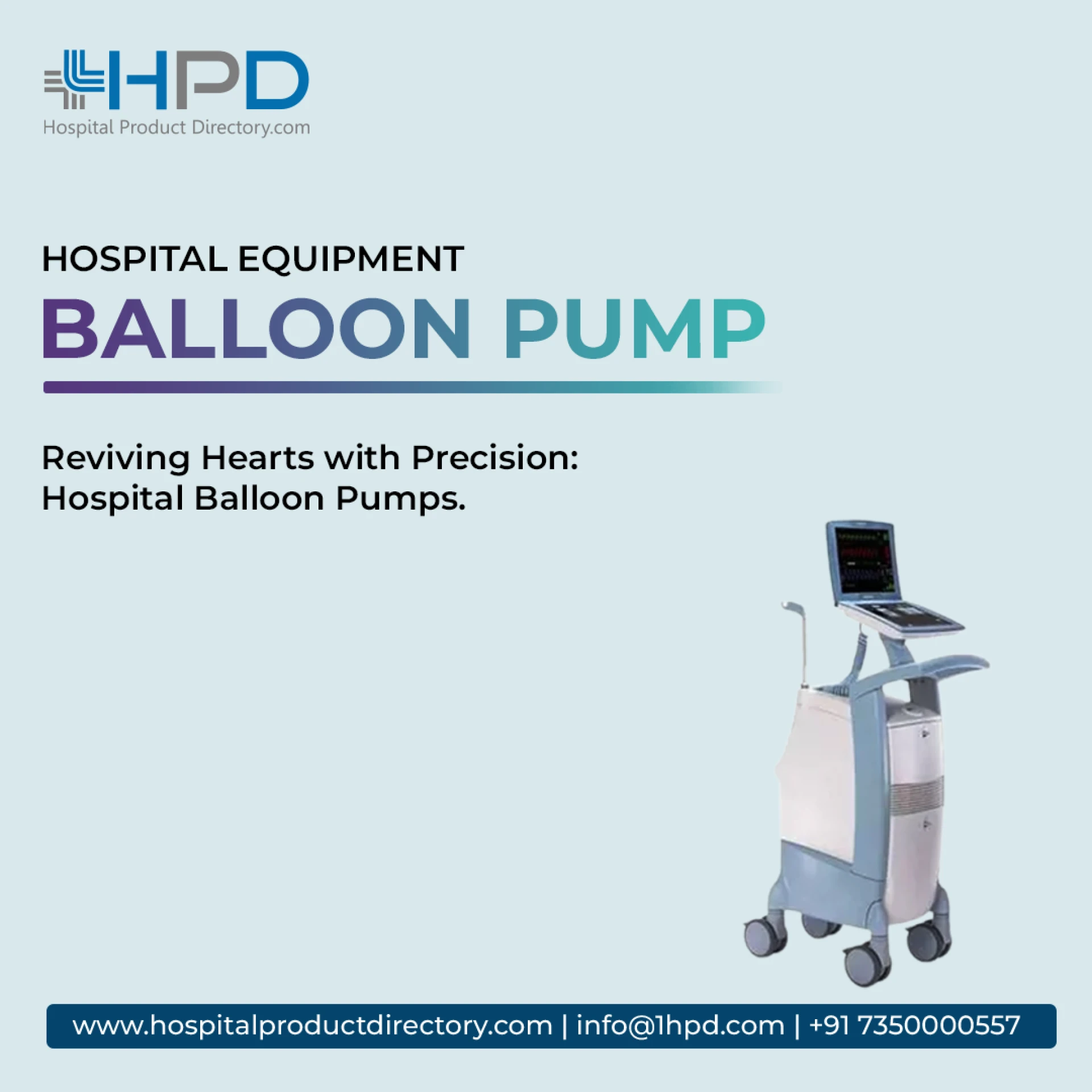

The healthcare industry is continually developing, with new technologies budding every day to develop patient care. One such technology is the intra-aortic balloon pump. This device is a mechanical device used to assist the heart in pumping blood to the body.
Introduction to Intra-Aortic Balloon Pumps (IABP)The IABP is a mechanical device designed to provide temporary circulatory support to patients experiencing cardiac complications. It consists of a long, flexible catheter with an inflatable balloon attached to its tip. The catheter is inserted into the aorta, the main artery of the body, and the balloon is positioned in the descending aorta, just below the left subclavian artery. The primary function of the IABP bought from Balloon Pump Dealers is to augment coronary perfusion and reduce cardiac workload by synchronizing with the patient's cardiac cycle. During the inflation phase, the balloon inflates rapidly, increasing the pressure within the aorta. This inflation occurs just before the onset of systole, effectively reducing afterload and improving coronary blood flow. As the heart enters diastole, the balloon deflates, allowing unobstructed blood flow from the left ventricle into the aorta.
By providing these timed counter pulsations, the IABP helps to increase myocardial oxygen supply and decrease myocardial demand, ultimately improving cardiac output and enhancing patient perfusion. This mechanism is particularly beneficial in various cardiac conditions, including acute myocardial infarction, cardiogenic shock, unstable angina, and high-risk coronary interventions.
Understanding the mechanism and function of IABPs
An intra-aortic balloon pump is a mechanical device used to assist the heart in pumping blood and improving coronary artery perfusion. It consists of an inflatable balloon, which is inserted into the aorta, one of the major blood vessels that carry oxygenated blood from the heart to the rest of the body.
The balloon is synchronized with the patient's heartbeat through electrocardiogram (ECG) monitoring. It inflates during diastole, the resting phase of the cardiac cycle, to increase blood flow to the coronary arteries and major organs. This inflation increases coronary artery perfusion, ensuring that the heart receives an adequate supply of oxygen and nutrients.
During systole, the contraction phase of the cardiac cycle, the balloon deflates, allowing the heart to pump out blood more effectively. This deflation reduces the afterload on the heart, which is the resistance that the heart must overcome to eject blood. By reducing the afterload, the heart's workload is decreased, allowing it to function more efficiently.
The benefits of using IABPs in patient care
One of the key advantages of using IABPs is their ability to augment cardiac function. By synchronizing with the patient's heartbeat, these pumps inflate and deflate during specific phases of the cardiac cycle. This action assists in increasing coronary blood flow, reducing myocardial oxygen demand, and enhancing oxygen delivery to the heart muscle. As a result, IABPs can significantly improve cardiac output, which is especially beneficial for patients with heart failure or those recovering from cardiac surgery.
Furthermore, IABPs play a crucial role in stabilizing hemodynamics. By reducing afterload, these devices relieve pressure on the left ventricle, allowing the heart to efficiently pump blood throughout the body. This hemodynamic support is particularly valuable in critical situations such as cardiogenic shock or during high-risk interventions like percutaneous coronary intervention (PCI). By maintaining stable blood pressure and optimizing organ perfusion, IABPs contribute to a more favorable patient prognosis.
Indications and contraindications for IABP therapy
Indications for IABP therapy typically include patients with severe heart failure, cardiogenic shock, or unstable angina. These individuals often exhibit reduced cardiac output, low blood pressure, or compromised coronary artery perfusion. By inserting the intra-aortic balloon pump, healthcare professionals can augment cardiac function, improve coronary blood flow, and alleviate symptoms in these critical cases. The IABP acts as a mechanical support system, synchronizing with the patient's heartbeat to inflate during diastole and deflate during systole, assisting the heart in pumping blood more effectively.
However, it is equally important to recognize the contraindications of IABP therapy. Certain conditions or situations may prevent the safe usage of this device. Contraindications may include severe peripheral vascular disease, aortic insufficiency, aortic dissection, or coagulopathy. Patients with severe aortic valve regurgitation, for instance, may experience worsening symptoms due to the increased volume of blood being retrogradely ejected into the left ventricle during balloon inflation. Additionally, patients with limited peripheral arterial circulation may face complications such as limb ischemia or embolism when undergoing IABP therapy.
Potential complications and considerations when using IABPs
One potential complication of IABPs is limb ischemia, which occurs when blood flow to the lower extremities is compromised. The placement of an IABP catheter within the aorta can impede blood flow, leading to reduced perfusion in the legs. Regular assessments of peripheral pulses, capillary refill, and skin temperature are essential to identify any signs of compromised circulation promptly. If limb ischemia is detected, adjustments to the device settings or repositioning of the catheter may be necessary to restore proper blood flow.
Another consideration when using IABPs is the risk of vascular injury. The insertion of the catheter into the femoral artery can potentially cause damage to the vessel, leading to bleeding or hematoma formation. Close monitoring of the insertion site for any signs of bleeding, swelling, or hematoma is crucial.




























Sign in to leave a comment.