

Here's something a lot of buyers don't think about until it's too late. You've spent good money on beautiful stone, the flooring crew shows up, and within a day you're looking at lippage — those annoying edges where one tile sits higher than its neighbor. It feels terrible underfoot and looks worse in photographs. Nine times out of ten, the culprit is slab thickness that was never consistent to begin with.
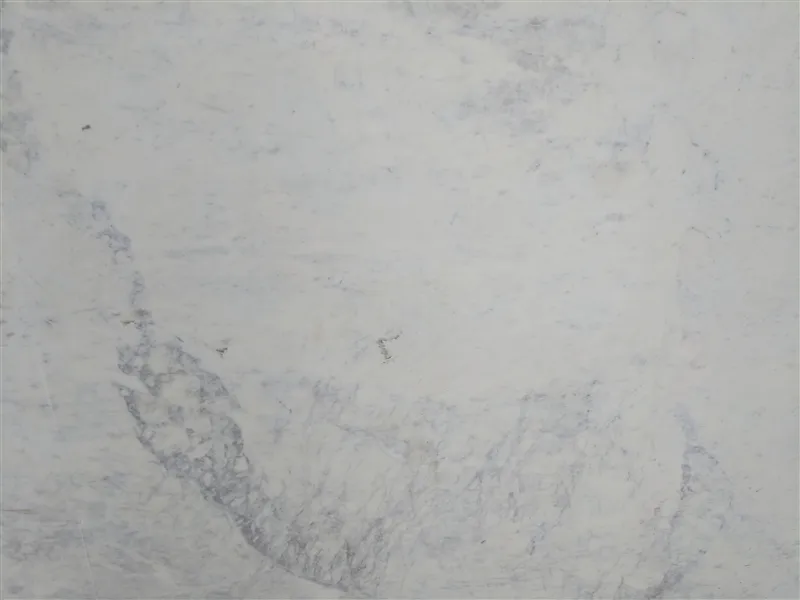
When you're working specifically with quality products like Indian Statuario Marble in India sourced from Rajasthan and Gujarat, this issue comes up more than people expect. The stone itself is gorgeous — white base, grey and gold veining, the kind of look that costs three times more in imported Italian versions. But inconsistent thickness during cutting and processing is a real problem in the domestic supply chain, and buyers who don't know what to check get burned.
What Thickness Inconsistency Actually Means
A marble slab is cut from a block using wire saws or gang saws. Ideally, every slab from that block comes out at 18mm, or 20mm, or whatever the specification says. In practice, the tolerance varies.
Reputable processors keep variation within ±1mm. That's acceptable. When variation hits ±3mm or more across a single batch — or worse, within a single slab — you have a serious problem. The slab is thicker on one end than the other, or it bows slightly in the middle.
This doesn't always show up when you're standing in a warehouse looking at stacked stone. You need to check it properly, which most buyers never do.
How It Affects Your Installation
The problems show up in three main ways.
First, leveling becomes a nightmare. Your installer uses a standard mortar bed depth. If slabs vary by 3–4mm, some tiles sit high, some sit low. Adjusting the mortar for each piece takes far longer than a normal installation — and adds cost you didn't budget for.
Second, grout lines behave badly. Uneven thickness means uneven edges. You end up with grout lines that aren't uniform, which ruins the look you were going for, especially in large-format installations.
Third, and this is the one that keeps people up at night — stress fractures. Marble isn't flexible. When a slab with uneven thickness is forced into a level installation, it bends slightly. That stress concentrates in the thinner areas. Over time, or sometimes immediately, cracks appear. You can't fix them without removing and replacing the entire tile.
What Good Quality Control Looks Like
A supplier that takes thickness consistency seriously does a few specific things.
They calibrate slabs after cutting. Calibration is a grinding process that brings every slab to a precise, uniform thickness. It's an extra step that costs money, which is why some suppliers skip it. Ask directly: are these slabs calibrated or raw-cut?
They measure and document. Serious suppliers check thickness at multiple points — center, corners, midpoints of each edge — and keep records. If a supplier can't tell you the tolerance range on a batch, that's useful information.
They separate batches that don't meet spec. Not every slab gets calibrated perfectly. The ones that don't should be graded accordingly or not sold as premium material. Mixing substandard slabs into a premium order is where disputes start.
Why This Matters More With Statuario
Indian Statuario is a harder marble than many domestic varieties. That hardness is part of what makes it attractive — it's more scratch-resistant and holds its polish longer. But harder stone is also less forgiving when a slab bows or varies in thickness. The stone doesn't flex. It either installs flat or it doesn't install well.
On top of that, Statuario is usually specified for high-visibility spaces: hotel lobbies, luxury apartment floors, feature walls. These are places where a 2mm lippage issue isn't hidden by furniture. Everyone sees it. The tolerance for error is lower exactly where the stakes are highest.
Why Shree Abhyanand Handles This Differently
Shree Abhyanand sources directly from quarries and processes slabs in-house, which means quality control isn't delegated to a third party. Every slab goes through calibration before it leaves the facility. Thickness is checked at seven points per slab, not just the corners. Batches that don't meet a ±1mm tolerance don't get shipped as standard grade.
The company has been doing this specifically with Statuario for years. The team understands that an installer's problems become the buyer's problems, and those become the supplier's problems eventually. Getting the thickness right at the source is just cheaper for everyone than sorting out warranty disputes later.
If you're specifying Indian Statuario for a project and you want slabs that actually behave the way marble should during installation, that's the conversation worth having before you place an order.
Conclusion
Thickness inconsistency is one of those problems that's invisible until it isn't, and by the time it shows up on your floor it's expensive to fix. The checks aren't complicated — ask about calibration, ask about tolerance, ask to see documentation. Suppliers who have the answers ready are the ones who've built their process around it. The ones who get vague are telling you something too.
Good marble installations start with consistent slabs. Everything else follows from that.
FAQs
What is the acceptable thickness tolerance for marble slabs used in flooring? Most professional installers work with a tolerance of ±1mm. Anything beyond that starts creating leveling problems, especially in large-format installations. Always confirm the tolerance before ordering.
Can a good installer fix problems caused by uneven marble thickness? To an extent, yes — experienced installers can adjust mortar depth to compensate for minor variation. But this adds labor time and cost, and it doesn't fully eliminate lippage risk if the variation is significant.
How do I check if marble slabs have been calibrated before buying? Ask the supplier directly whether slabs are calibrated post-cutting. Calibrated slabs will have a uniform thickness throughout. You can also bring a digital caliper to a warehouse and spot-check several points on each slab.
Does thickness inconsistency affect wall cladding the same way it affects flooring? It affects wall installations too, but differently. On walls, uneven thickness shows up as surface waviness when viewed at an angle. It's less of a safety issue than flooring lippage, but it's visually obvious in any well-lit space.
Is Indian Statuario marble more prone to thickness inconsistency than other marble types? Not inherently — it depends on the supplier's processing standards. However, because Indian Statuario is a harder stone, it's less forgiving when installed with thickness variation, which makes consistency more critical compared to softer marble varieties.



























Sign in to leave a comment.