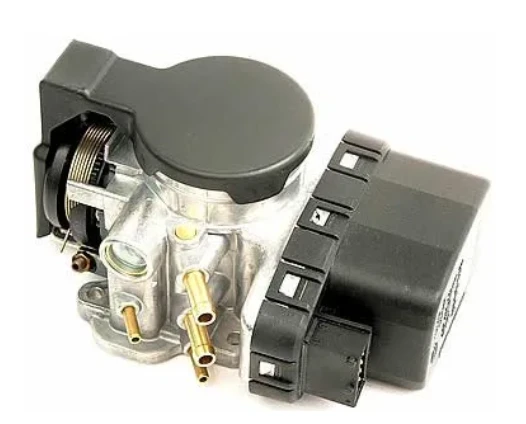

Every car engine relies on the perfect balance of air and fuel to generate power. Too much of one or too little of the other, and performance suffers. At the center of this balancing act is the throttle body, a small but critical component that controls how much air enters the combustion chambers. Although it’s often hidden away in the engine bay, the throttle body’s job is essential to how your vehicle runs every single day.
What Does the Throttle Body Do?
The throttle body sits between the air filter and the intake manifold. Its role is to regulate airflow into the engine. When you press the accelerator pedal, the throttle plate inside the throttle body rotates, allowing more air to pass through. The engine control unit (ECU) then adds the right amount of fuel to match that airflow, creating the ideal conditions for combustion.
Without the throttle body, the engine would struggle to maintain a stable idle, accelerate smoothly, or deliver efficient fuel economy.
Mechanical vs. Electronic Designs
Not all throttle bodies work the same way. There are two main designs you’ll find in vehicles:
- Mechanical (Cable-Driven): In older cars, a steel cable connected the accelerator pedal directly to the throttle plate. When you pressed the pedal, the cable physically pulled the plate open. This system was simple and effective but lacked precision.
- Electronic (Drive-By-Wire): Most modern vehicles use electronic throttle bodies. In these systems, the pedal sends an electrical signal to the ECU. The ECU then tells an actuator motor how much to open the plate. This setup improves accuracy, helps reduce emissions, and works seamlessly with features like stability control and cruise control.
This shift from mechanical to electronic control has made the throttle body more complex but also more effective at managing airflow.
Main Components of a Throttle Body
Though it may look straightforward from the outside, the throttle body contains several important parts:
- Throttle Plate (Butterfly Valve): The disc that opens and closes to regulate airflow.
- Throttle Position Sensor (TPS): Monitors the angle of the throttle plate and sends data to the ECU.
- Actuator Motor: In electronic systems, this motor moves the plate instead of a cable.
- Idle Air Control Valve: Maintains airflow at idle to prevent stalling.
- Housing: The casing that holds everything together and channels air into the intake manifold.
Each piece must work properly for the throttle body to do its job.
Why the Throttle Body Is So Important
Drivers often underestimate just how much the throttle body impacts their vehicle. It influences:
- Throttle Response: How quickly the car reacts when you press the accelerator.
- Fuel Efficiency: Balanced airflow ensures the engine doesn’t waste fuel.
- Idle Quality: Prevents rough idling or stalling when the car is at rest.
- Emissions: Helps keep combustion clean and efficient.
- Driving Experience: Smooth acceleration depends on accurate airflow control.
In other words, the throttle body has a direct effect on how enjoyable—and economical—your car is to drive.
Warning Signs of Throttle Body Issues
Like any part of the engine, throttle bodies can develop problems over time. Common symptoms include:
- Irregular or rough idling.
- Reduced fuel economy.
- Engine stalling, especially at low speeds.
- Hesitation or lag when accelerating.
- The check engine light turning on.
If you notice any of these signs, it’s worth having the system checked before the problem worsens.
Causes of Throttle Body Problems
Several factors can interfere with proper throttle body operation:
- Carbon Build-Up: Sticky residue can coat the throttle plate, restricting airflow.
- Sensor Malfunctions: A faulty throttle position sensor may send inaccurate signals to the ECU.
- Actuator Failures: In electronic systems, the motor that moves the plate can wear out.
- Wiring Issues: Loose connections or damaged wiring can disrupt communication with the ECU.
- General Wear: Like any moving part, throttle bodies degrade over years of use.
Even minor disruptions in airflow can have major effects on performance.
Preventive Maintenance
The good news is that you can help extend the life of your throttle body with simple maintenance habits:
- Replace air filters regularly to prevent dirt and dust from entering.
- Use high-quality fuel to reduce carbon deposits.
- Pay attention to early warning signs such as sluggish acceleration.
- Have the intake system inspected as part of routine servicing.
A clean, well-functioning throttle body allows the engine to “breathe” freely, improving performance and efficiency.
Throttle Body and ECU Communication
In modern cars, the throttle body and ECU are in constant communication. The ECU monitors sensors across the vehicle—including oxygen sensors, airflow meters, and the throttle position sensor—then calculates the exact amount of fuel needed for perfect combustion.
This level of precision ensures that engines perform well while also meeting strict emissions standards. Without this partnership, efficiency and reliability would both decline.
When to Seek Professional Help
Because throttle body issues can mimic other engine problems, it’s not always easy for drivers to identify the root cause. A rough idle or poor fuel economy could be linked to spark plugs, injectors, or airflow sensors just as easily as the throttle body. For that reason, it’s best to find a specialist near you
if you suspect something is wrong. Professionals can diagnose the problem accurately and prevent unnecessary part replacements.
The Road Ahead for Throttle Bodies
As more drivers adopt electric vehicles, the role of the throttle body is changing. Fully electric cars don’t use them at all since they don’t rely on combustion. Hybrids, however, still need throttle bodies to regulate airflow for their gasoline engines.
In the near future, expect throttle bodies to become even more precise, with better coatings to resist buildup, faster sensors, and closer integration with digital engine management systems.
Final Thoughts
Though often overlooked, the throttle body is a vital component in every combustion engine. By carefully controlling airflow, it ensures smooth acceleration, efficient fuel use, and stable idle performance.
Whether you’re cruising on the highway or sitting in traffic, the throttle body is working silently to keep your car running at its best. Understanding its role—and the signs of trouble—can help you appreciate just how important this small but powerful part really is.
























Sign in to leave a comment.