Using a Tile Calculator: What Indian Buyers Should Know


Entering room dimensions into a tile calculator gives you a quick number in seconds. However, buying tiles means ordering full cartons of one specific product, and online tools often hide key assumptions. One tool adds a default waste percentage, while another assumes a generic box size that may not match your tile. Checking these details beforehand helps you avoid sudden site shortages or excess leftover stock.
Measure Properly Before Using a Tile Calculator
Measure only the actual surface you plan to tile, not the whole room footprint. Keep floors and walls separate, especially when using different tiles. For L-shaped rooms, split the area into non-overlapping rectangles so you never count a corner twice.
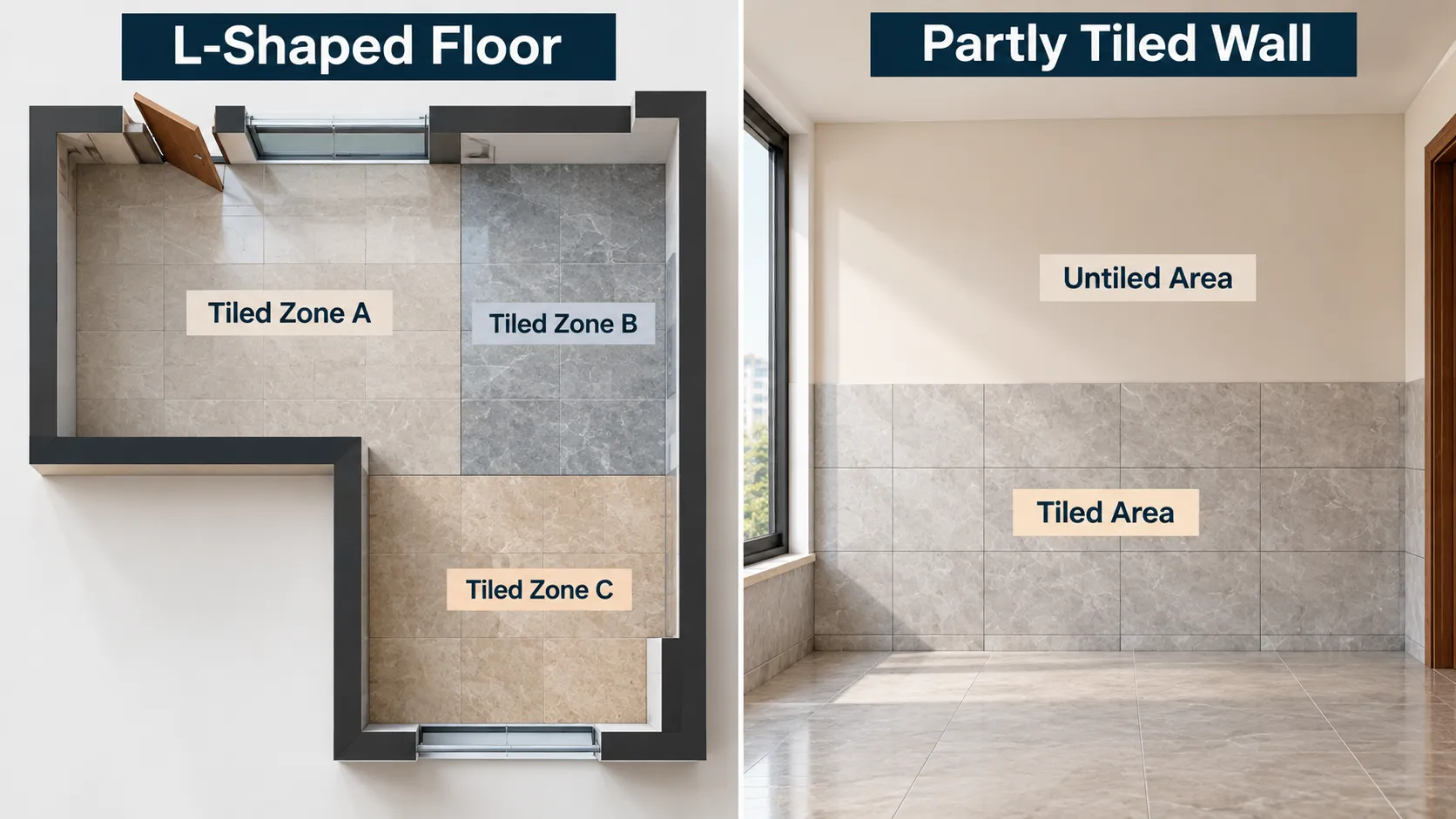
Keep every value in one unit system before dividing. In India, buyers often call a 600×600 mm tile a "2×2 ft" tile, which causes errors. Two feet equals 609.6 mm, so a 600×600 mm tile covers about 3.875 sq ft instead of 4 sq ft. Dividing by 4 creates roughly a 3% shortfall before any cutting starts.
Check Exact Carton Data Instead of Guessing by Size
Never assume box quantities from the nominal tile size. Two 600×600 mm tiles from the same brand can be packed differently—one may hold four pieces per carton while a heavier option holds only two pieces covering 0.72 m². Always verify the exact product code (SKU) and carton label.
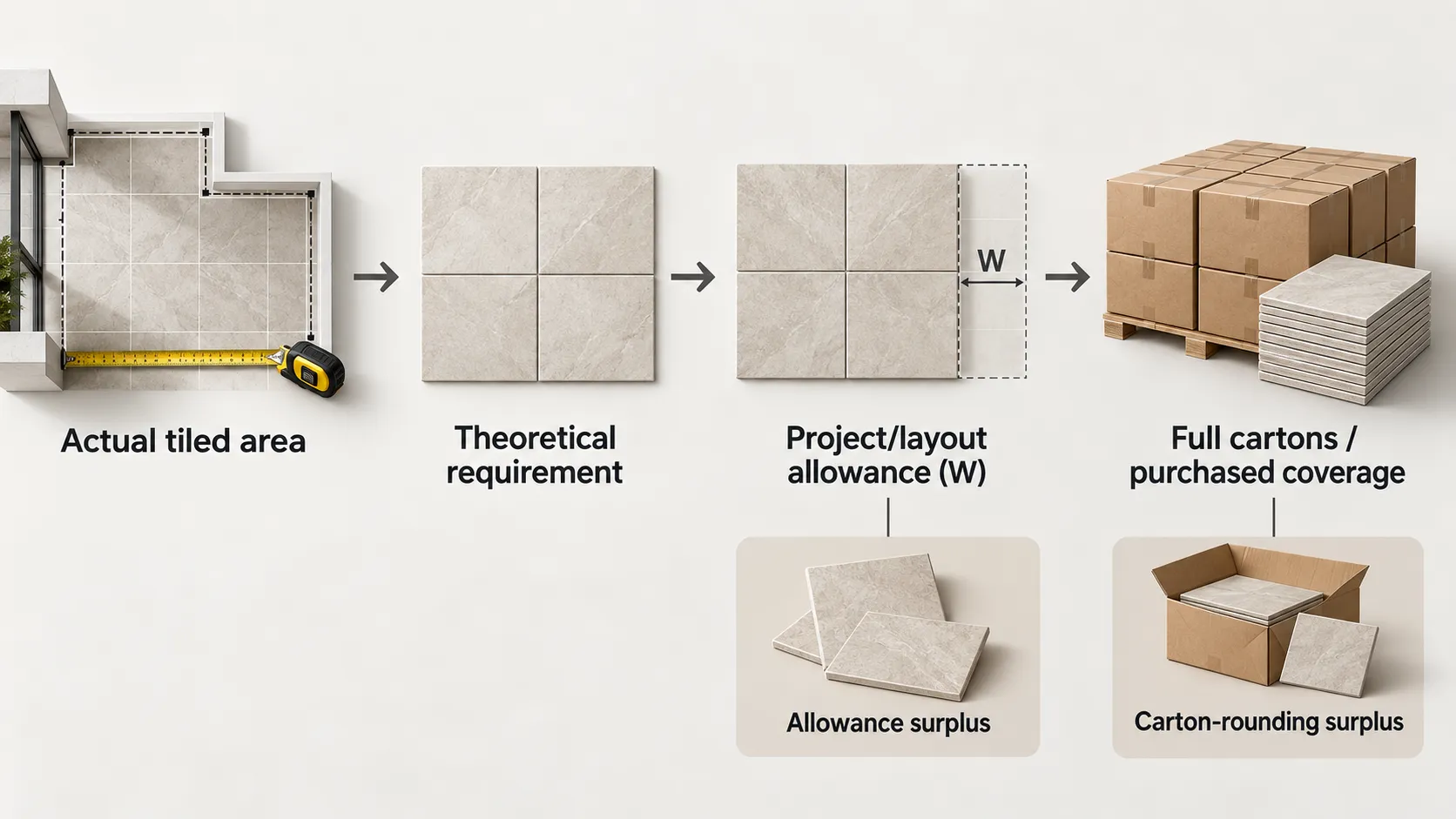
Use the packaging basis printed for your tile. Divide your adjusted area by declared square metres per carton, or calculate required tiles first and divide by pieces per carton. Remember that rounding up to whole boxes adds a separate rounding surplus beyond your cutting allowance.
Handle Wastage, Grout, and Complex Layouts Smartly
No single wastage percentage or Bureau of Indian Standards (BIS) rule fits every job, and commercial calculators often disagree. Treat wastage as a planning assumption based on your room shape, cuts, and layout pattern. Keep extra repair stock as a separate decision instead of hiding it inside installation wastage.
Simple area math also has limits. Grout gaps affect counts only in row-and-column methods, not when using declared carton coverage. Deducting a door or window area does not always save tiles if cuts around it still need full pieces. For patterned or centred layouts, ask your installer for a scaled layout count. You can review these steps in detail through this practical tile calculator and carton estimation guide from Morbi Tile Hub.
Reconcile Your Numbers Before Ordering
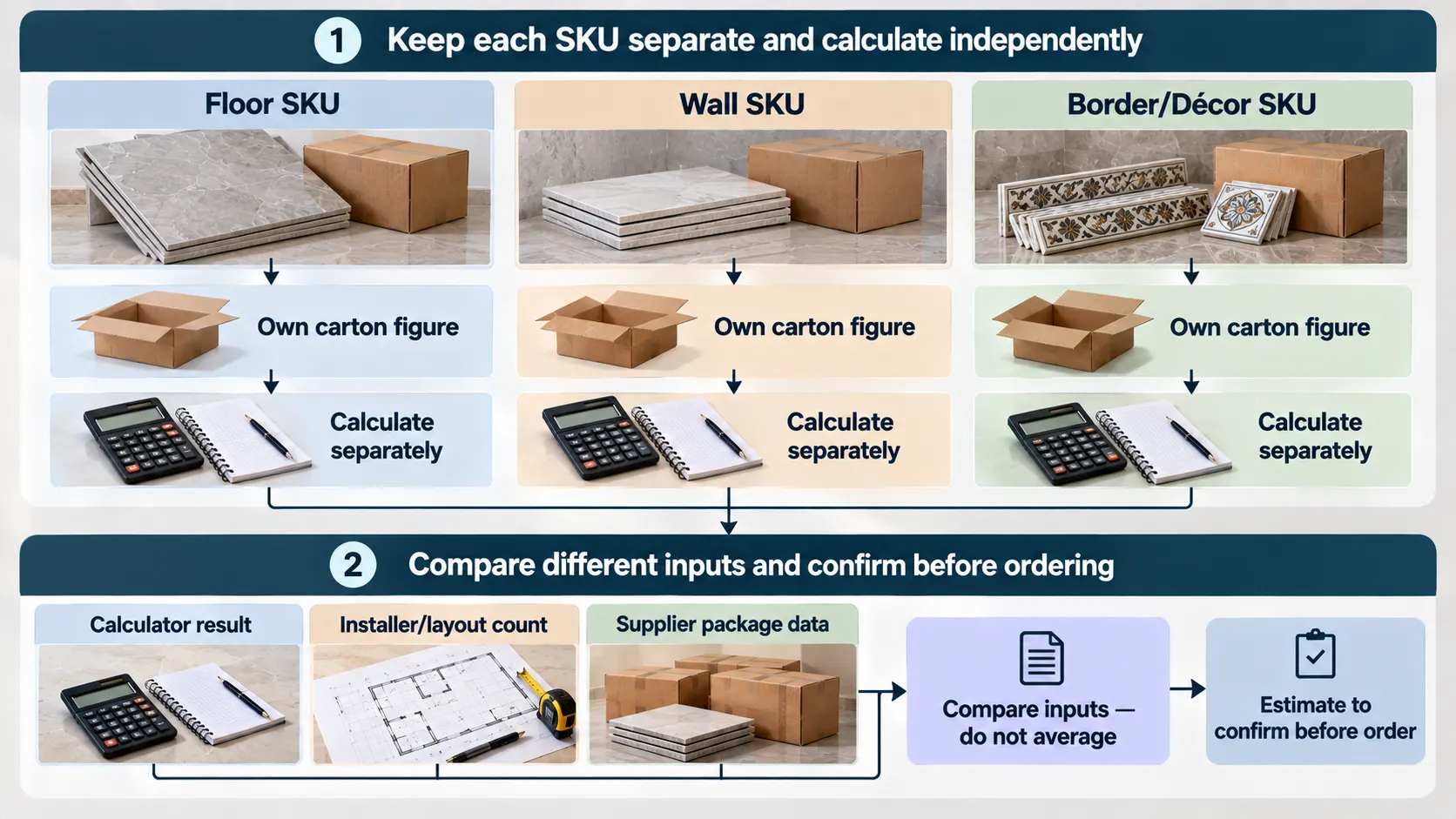
Whether buying locally or sourcing bulk orders from manufacturing hubs like Morbi, Gujarat, treat any calculator result as an estimate rather than a final dispatch quantity. Always calculate floor, wall, and border SKUs separately.
If your calculator, installer, and supplier give different totals, never average them. Compare the measured area, units, carton data, and rounding step instead. Also note the batch or lot code where provided, which helps during staged deliveries or future replacements.
Conclusion
A reliable tile order starts with transparent inputs. Measure the actual tiled surfaces in one unit system, use your chosen SKU's real carton data, and state your wastage assumption clearly. Confirming these numbers with your installer and supplier before placing the order prevents avoidable shortages and keeps your project on budget.








Sign in to leave a comment.