Tile Adhesive Guide: What Indian Buyers Should Check First

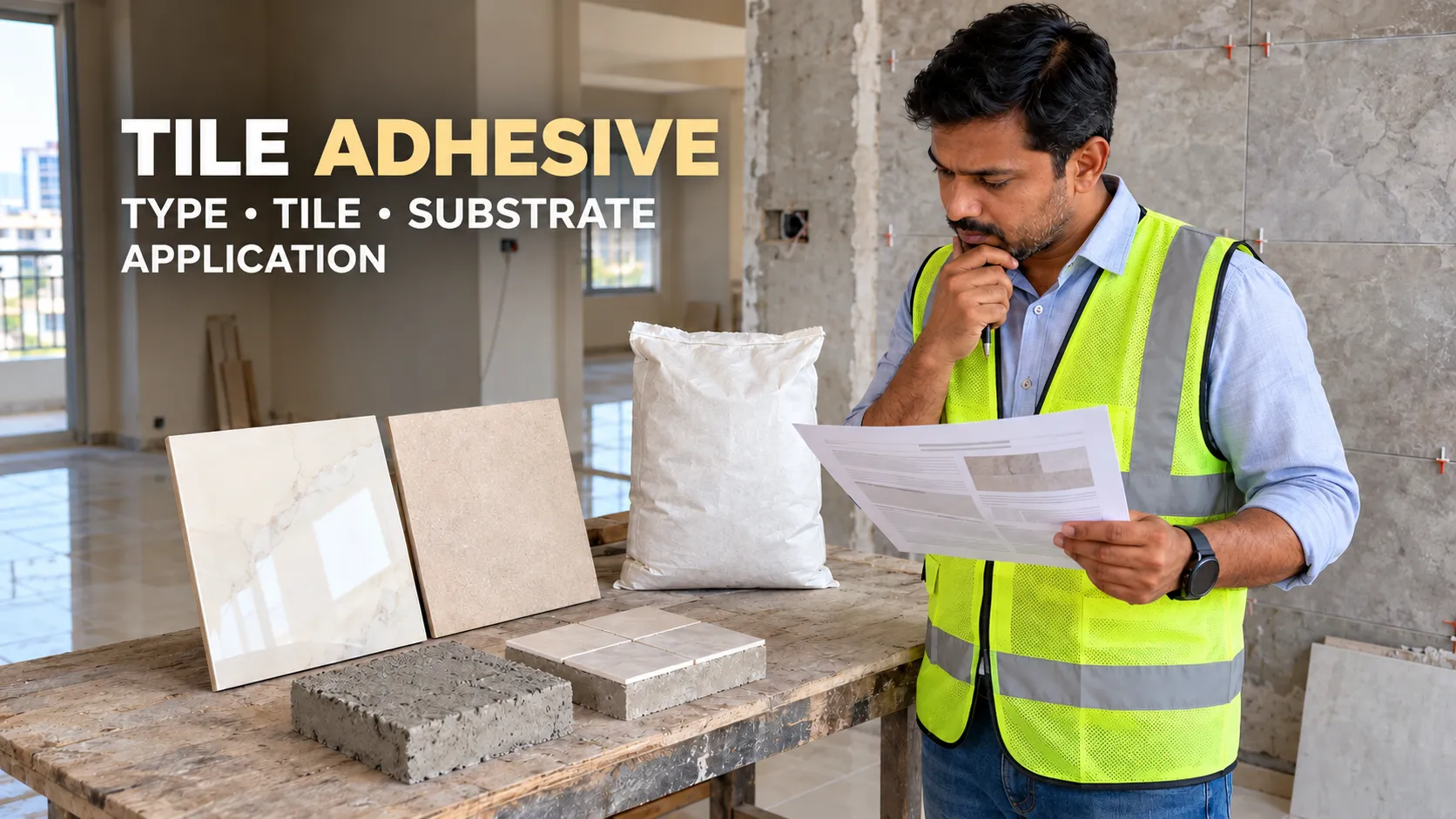
Ordering large vitrified tiles for a project often leads to one quick question: which tile adhesive should I buy? Many buyers and contractors pick a bag based only on the tile size or a Type number. That shortcut can cause tiles to loosen or debond later. A 600×1200 mm tile on a dry indoor floor has very different needs than the same tile on an exterior wall. Smart selection starts by matching the product to your complete site conditions.
Look Beyond Size and Type When Picking Tile Adhesive
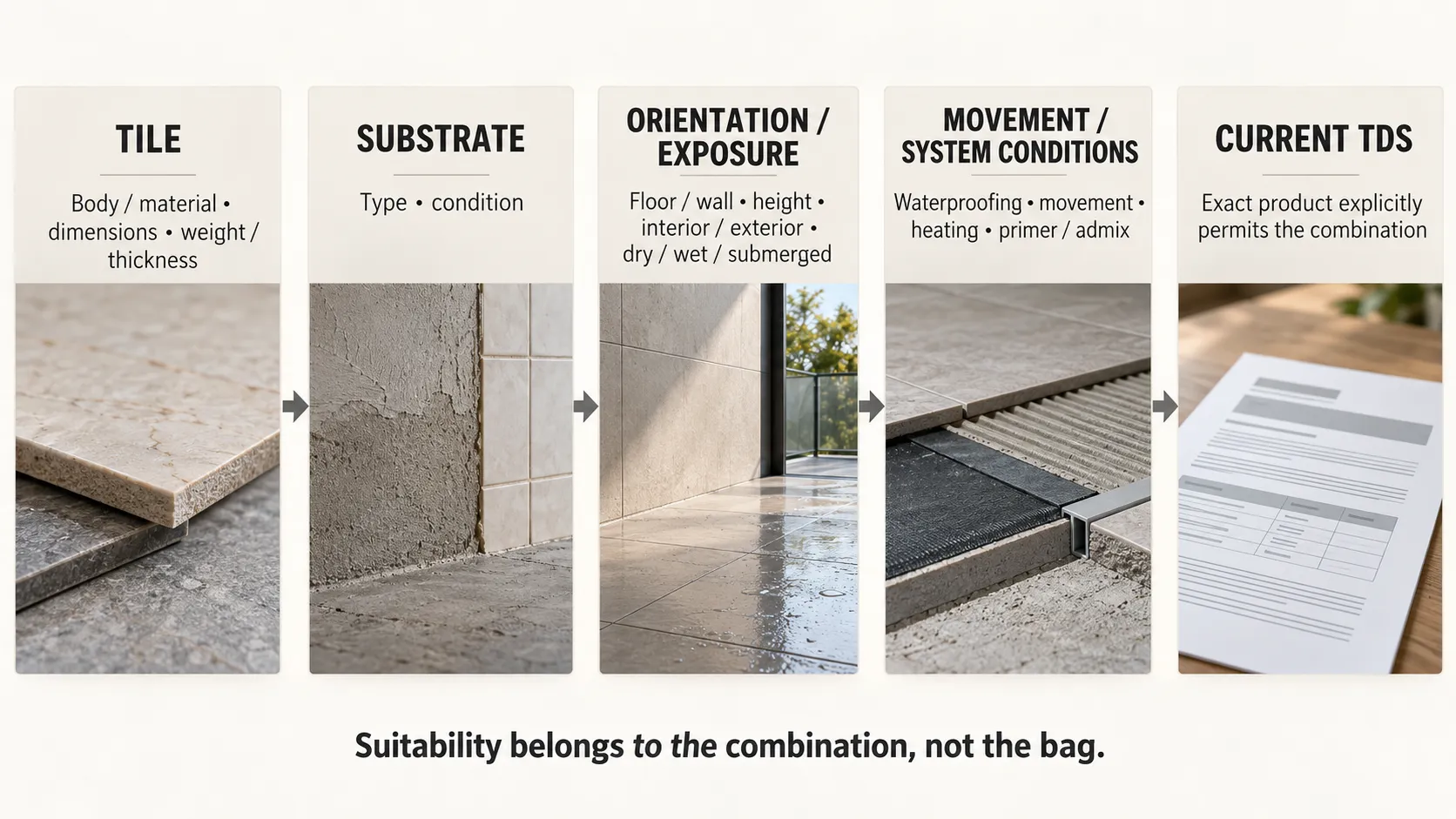
Suitability depends on the full installation setup, not just one label on the bag. Before comparing brands, note down five basic details: the tile material and weight, the base surface (substrate), whether it goes on a floor or wall, the exposure to water or weather, and the system layers like waterproofing or primers.

In India, adhesives follow the Bureau of Indian Standards specification IS 15477:2019, which groups products into Types 1 to 5. A higher Type number does not mean a product is universally better for every job. Likewise, no universal Indian rule says a 600×1200 mm tile must always use one fixed grade. Treat the Type number as a starting clue, not the final answer.
Reading Indian IS Types and International Labels Separately
Many bags in Indian showrooms display both an IS Type and an international ISO 13007 code like C1, C2, T, E, S1, or S2. Never convert one directly into the other. For example, a Type 2 product does not automatically equal C2, and two different products marked C2TE S1 can carry different IS Type declarations.
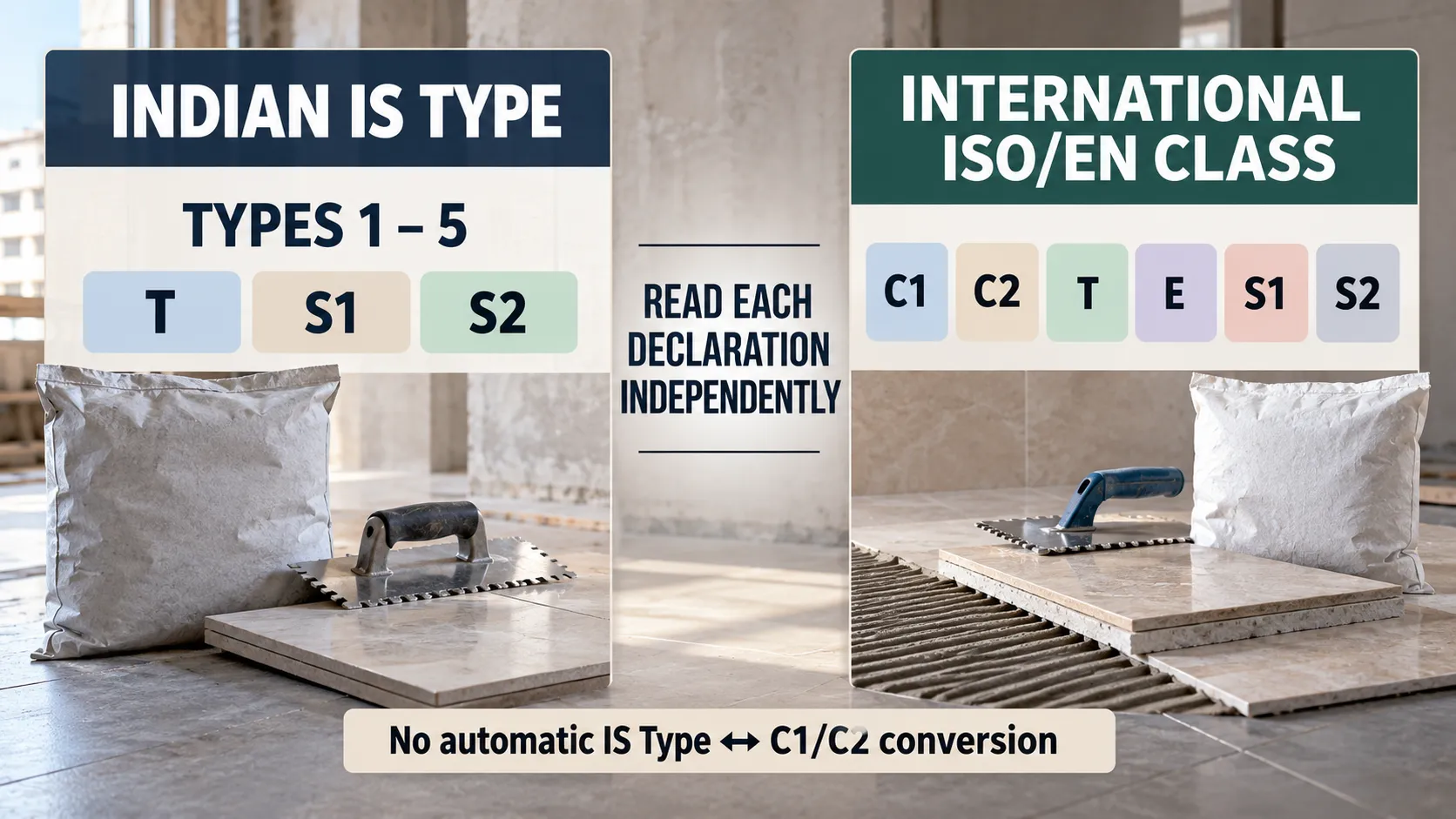
Read each label carefully within its actual scope. Under BIS testing, the letter "T" measures vertical adhesive slip so fresh wall tiles do not slide down before setting. It is not a floor slip-resistance rating. Similarly, S1 or S2 shows adhesive deformability, but it does not replace planned movement joints. Also, never assume Type 5 always means epoxy, as some Type 5 products use other resin chemistries like polyurethane.
Check the Technical Data Sheet and System Layers
Whether you buy locally or source bulk vitrified tiles from manufacturing hubs like Morbi, Gujarat, always request the current Technical Data Sheet (TDS) for the exact adhesive product. Check that the TDS explicitly approves your tile body, base surface, and location. Coverage per bag, mixing instructions, and grouting wait times vary by product, so follow the exact sheet rather than general site rules.

Keep each layer's job separate. Tile adhesive only bonds the tile to the base. It does not waterproof a bathroom, and it cannot fix a dusty or uneven plaster wall. Plan waterproofing and grouting as separate, compatible components. For a deeper breakdown of IS codes, substrate checks, and TDS verification, read this detailed tile adhesive selection guide from Morbi Tile Hub.
When to Ask for Project-Specific Technical Support
General selection advice works well for standard indoor floors and walls. However, high-risk areas need specialist technical guidance before you finalise a quotation or bulk order. Stop and consult technical experts for exterior façades, heavy tiles fixed at height, swimming pools, heated floors, or moisture-sensitive natural stone.
Special substrates also require extra care. Existing glazed tiles, gypsum boards, plywood, and metal surfaces need written product approval and specific surface preparation. If the current data sheet does not clearly cover your exact site condition, switch to a product that does.
Conclusion
Selecting the right adhesive becomes much simpler when you stop relying on size charts or bag numbers alone. Record your tile, substrate, and site exposure first. Read Indian IS Types and international codes independently, and verify every detail against the current product TDS. This practical habit protects your tiling work and prevents expensive repairs.
Frequently Asked Questions
What factors should I consider when choosing tile adhesive for large vitrified tiles?
When selecting tile adhesive, consider the tile material and weight, the surface substrate, whether it will be installed on a floor or a wall, exposure to water or weather, and any system layers like waterproofing. Each of these factors influences the adhesive's performance and suitability for your specific project.
Are higher Type numbers always better for tile adhesive?
No, a higher Type number does not guarantee better performance for every job. The Type number is just a starting point, and it's essential to assess the specific conditions of your project, such as tile size and installation environment, to determine the best adhesive.
How do I read the labels on tile adhesive products correctly?
When reading adhesive labels, be aware that Indian IS Types and international ISO codes should not be directly converted. For example, a Type 2 product does not automatically correspond to a C2 classification. Always read the labels carefully within their respective scopes and understand what each designation means.
Why is it important to check the Technical Data Sheet (TDS) for tile adhesive?
The Technical Data Sheet (TDS) provides crucial information specific to the adhesive product, including its compatibility with your tile and substrate, mixing instructions, and coverage per bag. Verifying these details ensures that the adhesive will perform as expected in your project's unique conditions.
When should I seek technical support for my tile adhesive selection?
Consult technical experts when dealing with high-risk areas that require specialized guidance, such as exterior façades, heavy tiles at height, swimming pools, or moisture-sensitive materials. This is especially important if the TDS does not clearly address your specific installation conditions.
Can tile adhesive also serve as a waterproofing solution?
No, tile adhesive is designed solely to bond tiles to the substrate and does not provide waterproofing. It's essential to plan for separate waterproofing measures to ensure proper protection, especially in wet areas like bathrooms or kitchens.
What should I do if I have an unusual substrate, like existing glazed tiles or metal surfaces?
For unusual substrates, it's critical to obtain written product approval and follow specific surface preparation guidelines. If the TDS does not address your unique conditions adequately, consider switching to a product that offers clear guidance for those surfaces.





Sign in to leave a comment.