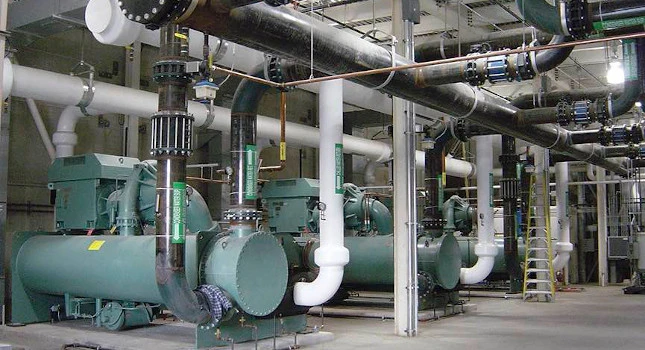

Cooling large buildings such as offices, hospitals, shopping malls and factories uses much energy. That is why most large facilities will have a chiller plant installed. These plants help to keep the air and water cool, hence the place looks comfortable for people and machines. However, chillers use huge amounts of electricity and if they are not maintained well, it results in an increase in electricity bills. To stop it, there are many simple and smart ways that can be taken to reduce energy, increase the efficiency of chiller plants, save money and protect the environment. Below, we will discuss chiller plant energy-efficiency tips and the most common causes of energy wastage.
What is a Chiller Plant?
The Chiller plant is a device that is used to remove the heat from water and then gives the cooled water to the air conditioning systems.
A chiller plant usually includes:
Chillers (machines that produce cold water)
Pumps (that move water around)
Cooling towers (control heat into the air)
Pipelines and valves usually carry and control the flow of water.
In simple words, it works like a big air conditioner for a whole building.
How a Chiller Plant Uses Energy
Chillers are driven by compressors, pumps and fans. The compressor consumes the most energy since it is responsible for completing most of the cooling work. Pumps transport chilled water and fans blow off heat. When a plant runs for extended periods of the day, even minute inefficiencies can result in a great wastage of energy and therefore, regular monitoring is required.
Benefits of Energy Efficiency
There are many benefits of using the chiller plant energy:
Lower electricity bills
Longer equipment life
Lower breakdown and repair costs
Better cooling performance
Reduced carbon footprint and pollution
Common Reasons for Energy Wastage
Many chiller plants waste energy without anyone noticing, which causes:
Dirty coils or filters that make the chiller work harder
Leaks in water or refrigerant lines
Wrong temperature settings that use extra power
Running too many chillers when fewer can do the job
Poor insulation on pipes and ducts
Lack of daily maintenance
Recommendations for Enhancing Chiller Plant Efficiency
a. Regular Maintenance
Clean all components on a regular basis. This helps in improving heat transfer and saves energy.
b. Use Clean and Treated Water
Dirty or hard water will cause rust and scale to form inside the system. Always use treated water to keep the system healthy and efficient.
c. Set the Right Temperature
Don't set the chiller temperature lower than it has to be. Increases in the set point of only 1°C can lead to significant power savings.
d. Install Variable Speed Drives (VSDs)
Variable-speed drives (VSDs) change the speed of pumps and fans according to cooling requirements. They reduce electricity consumption through lower energy use.
Conclusion
A chiller plant is used to keep large buildings cool. However, it has a high electricity use. Simple, smart steps can be taken to save energy use and through these steps, energy bills can be reduced. Clean the equipment, heat the right temperature, automate processes and change old equipment. These actions save money, protect the world and create a cleaner and greener future. You must know the requirements of the workplace you want to install the chiller plant in, so you can choose your plant accordingly. For more chiller plant energy efficiency tips, contact Stout Energy for expert energy solutions now.




























Sign in to leave a comment.