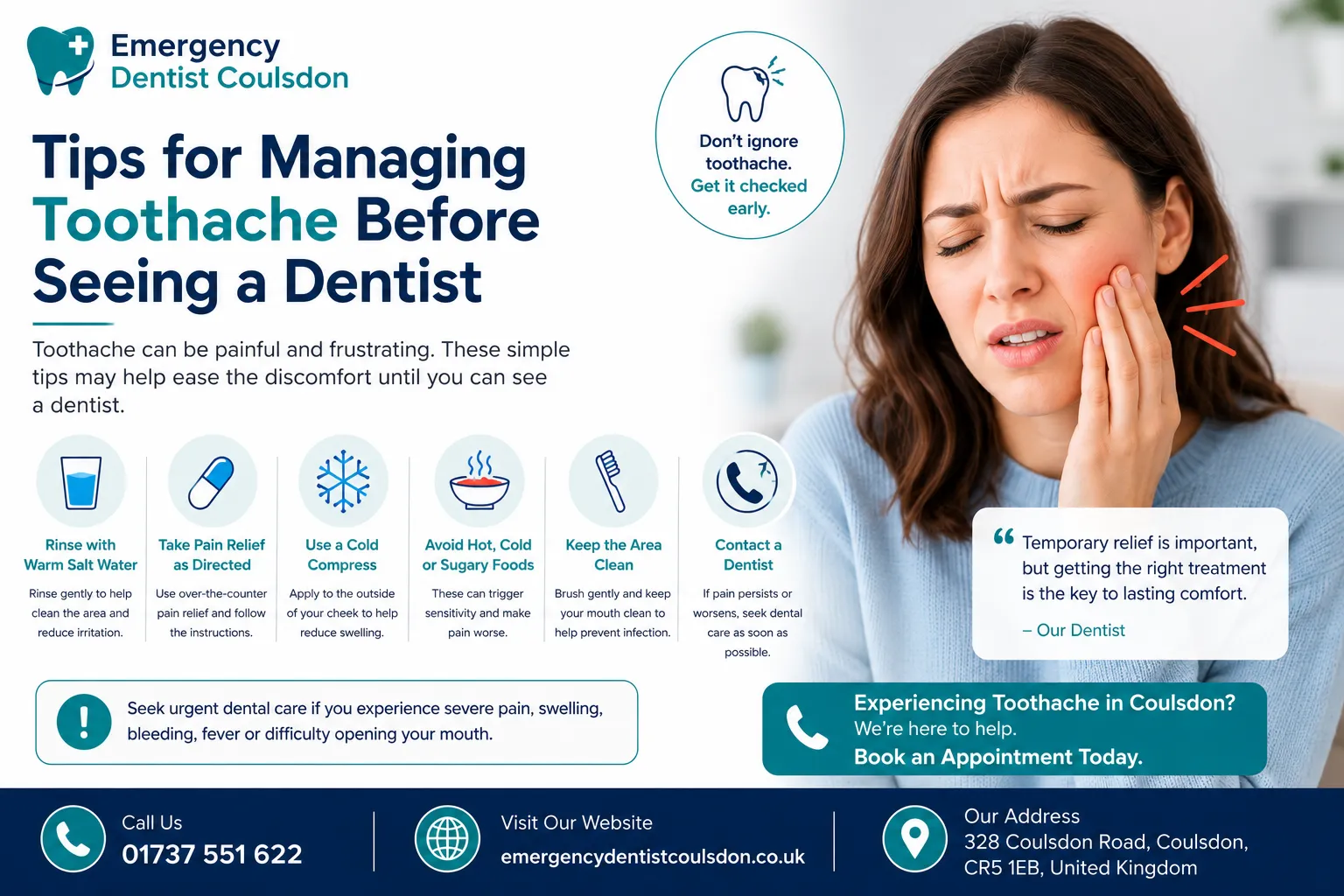

Toothache can be uncomfortable, distracting, and sometimes difficult to ignore. Whether the pain appears suddenly or gradually worsens over time, it can affect eating, sleeping, and daily activities. While professional dental care is important, there are a few practical steps that may help manage discomfort before your appointment.
If you are experiencing a Toothache in Coulsdon, understanding how to care for the area temporarily may help you feel more comfortable while arranging dental treatment.
What can cause toothache?
Toothache can happen for many reasons. Some causes are minor, while others may need urgent attention from a dentist.
Common causes include:
- Tooth decay
- Gum inflammation or infection
- Cracked or broken teeth
- Teeth grinding
- Dental abscesses
- Lost fillings or crowns
- Food trapped between teeth
The pain may feel sharp, throbbing, constant, or sensitive to hot and cold foods.
A dentist explains:
“Even mild tooth pain can sometimes point to an underlying issue. Early assessment may help prevent the problem from becoming more uncomfortable later on.”
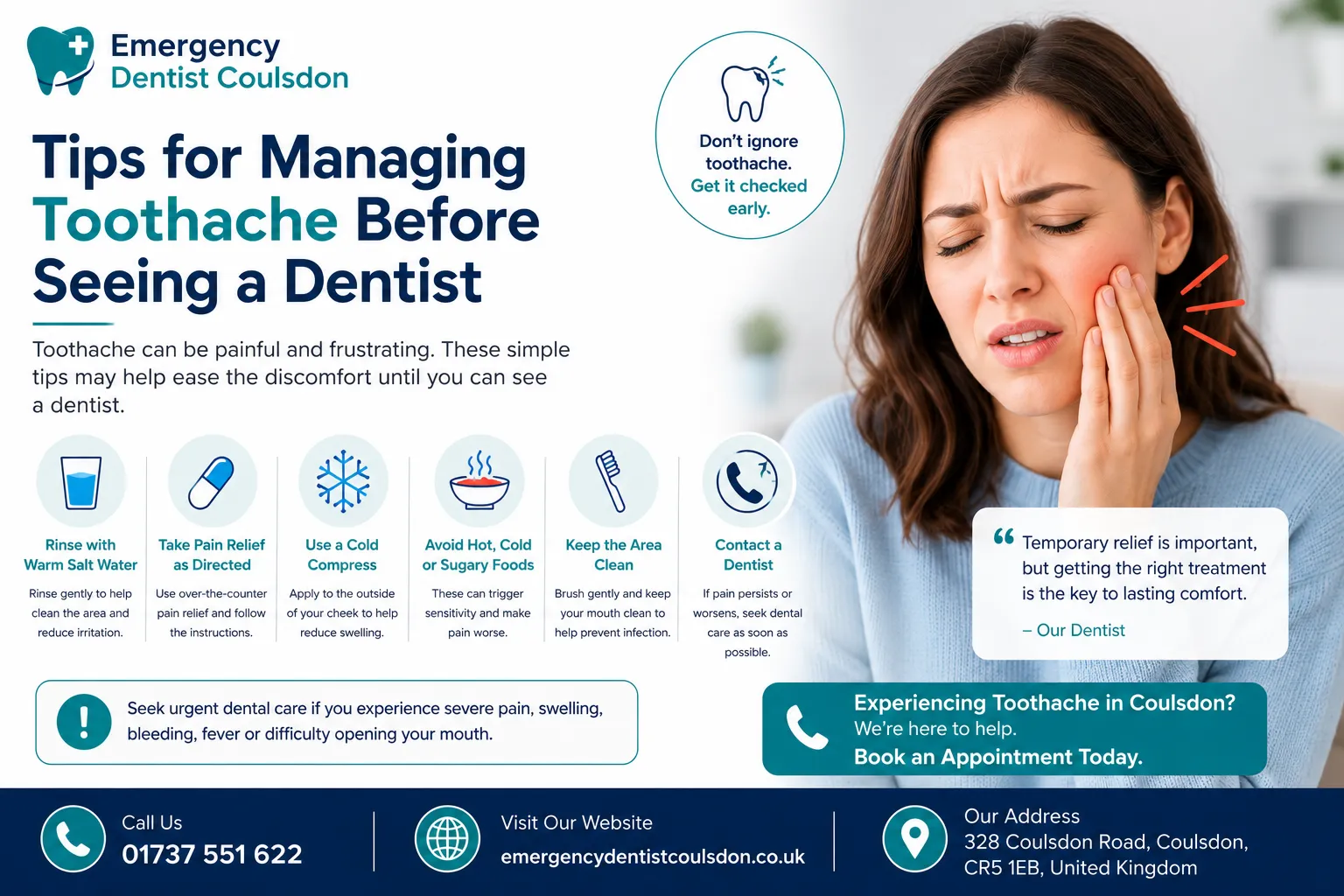
Rinse with warm salt water
One of the simplest ways to help soothe irritation is by rinsing gently with warm salt water.
This may help to:
- Reduce bacteria in the mouth
- Ease gum irritation
- Remove trapped food particles
- Provide temporary comfort
Mix a small amount of salt into a glass of warm water and rinse gently for around 30 seconds before spitting it out.
Avoid using very hot water, as this may increase sensitivity.
Take pain relief as directed
Over-the-counter pain relief may help manage discomfort temporarily while waiting to see a dentist.
Always:
- Follow the instructions on the packaging
- Avoid taking more than the recommended dose
- Speak to a pharmacist if you are unsure what is suitable for you
Do not place aspirin directly onto the gums or tooth, as this may irritate soft tissues.
Avoid foods and drinks that trigger sensitivity
Certain foods and drinks may worsen toothache symptoms.
It may help to avoid:
- Very hot or cold drinks
- Sugary snacks
- Hard or crunchy foods
- Acidic foods and drinks
Choosing softer foods and chewing on the opposite side of the mouth may reduce discomfort until your appointment.
Keep the area clean
When a tooth hurts, brushing near the area may feel uncomfortable. However, keeping the mouth clean remains important.
Try to:
- Brush gently with a soft-bristled toothbrush
- Clean between teeth carefully
- Rinse after eating
Good oral hygiene may help reduce irritation and prevent bacteria from building up further.
A hygienist shares:
“Patients sometimes avoid brushing completely when they have toothache, but gentle cleaning is usually important to help keep the area healthy until treatment is provided.”
Use a cold compress if swelling is present
If the toothache is accompanied by swelling, applying a cold compress to the outside of the cheek may help.
You can:
- Wrap an ice pack or frozen peas in a towel
- Apply it to the area for short periods
- Repeat as needed with breaks in between
Avoid placing ice directly onto the skin or inside the mouth.
Try to rest and avoid pressure on the tooth
Resting may help make discomfort more manageable, especially if pain worsens during the evening.
Helpful tips include:
- Sleeping with your head slightly elevated
- Avoiding chewing on the affected side
- Limiting clenching or grinding if possible
Reducing pressure on the tooth may help ease irritation temporarily.
When should you contact a dentist?
Toothache that lasts longer than a day or becomes more severe should be assessed by a dental professional.
You should seek dental advice if you experience:
- Swelling in the face or gums
- Fever or feeling unwell
- Pain when biting
- A broken tooth
- Difficulty eating or sleeping
- Persistent sensitivity
At Emergency Dentist Coulsdon, patients experiencing dental discomfort can receive assessment and guidance aimed at identifying the cause of pain and discussing suitable treatment options.
Why early care matters
Although home care may help manage symptoms temporarily, toothache often does not go away without treatment. Seeking dental care early may help prevent complications and support long-term oral health.
If you are dealing with a Toothache, contacting Emergency Dentist Coulsdon may help you access timely care and reassurance when you need it most.
Understanding the cause of tooth pain is often the first step towards lasting relief and a healthier smile.





























Sign in to leave a comment.