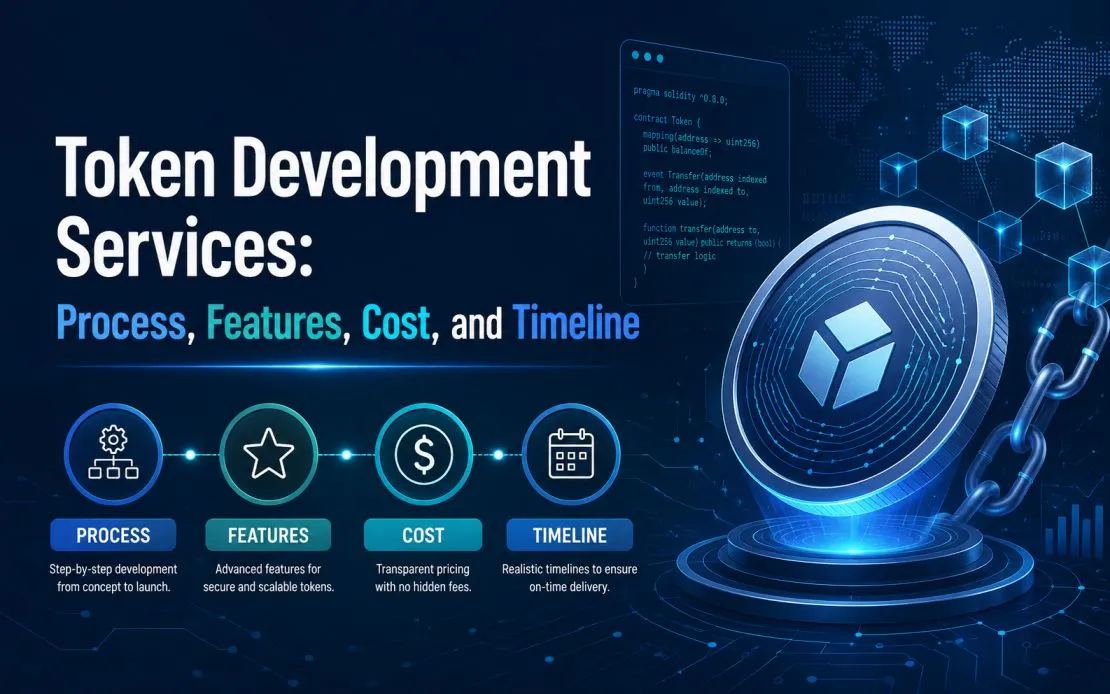

Token development has moved beyond creating a smart contract with a name, symbol, and fixed supply. Businesses now use tokens for payments, governance, rewards, memberships, gaming economies, asset representation, and access to blockchain applications. Each use case requires different technical and economic decisions.
Professional Token Development Services bring these requirements together through a structured development process. The work can include blockchain selection, tokenomics, smart contract development, security testing, wallet integration, deployment, and post-launch support.
The final cost and timeline vary based on the token's features, blockchain, security requirements, integrations, and business goals. Understanding each stage helps businesses plan a token project with fewer technical and budget surprises.
What Does Token Development Involve?
Token development is the process of designing, building, testing, and deploying a digital asset on a blockchain network. The development team creates the token according to predefined rules for supply, transfers, permissions, distribution, and utility.
Ethereum's ERC-20 standard is one of the most widely recognized examples. It defines functions for transfers, balances, total supply, approvals, and allowances. Standardized token interfaces help assets interact with wallets, exchanges, and decentralized applications across the Ethereum ecosystem.
Other networks use their own token standards and technical structures. Solana, for example, supports Token Extensions that add native functions for features such as metadata, transfer controls, privacy-related functionality, and asset management.
The development process must match the selected blockchain and the token's intended use.
The Token Development Process
Business and Use Case Planning
The first stage defines why the token exists.
A project team should identify its target users, business model, token utility, supply requirements, distribution plan, and expected transaction activity. A gaming token may need reward mechanics and frequent transfers. A governance token may focus more on voting rights. A payment token may require fast transactions and broad wallet support.
This stage prevents technical development from moving ahead without a clear purpose.
The team should document the token's role inside the broader product. This document becomes a reference for developers, designers, security teams, legal advisors, and marketing teams.
Blockchain Selection
The next decision is the blockchain.
Ethereum can suit projects that need broad EVM compatibility and access to a mature ecosystem. BNB Chain can suit projects that prioritize accessible transaction costs and EVM-based development. Solana can fit applications that need fast transactions and low network costs.
The choice should reflect actual product requirements.
Developers should examine transaction costs, network performance, wallet support, developer tooling, exchange compatibility, liquidity, security history, and ecosystem activity before making the decision.
Choosing a blockchain only because it has a popular token standard can create problems later. The network needs to support the product beyond launch day.
Tokenomics Design
Tokenomics defines how the token functions as an economic asset.
A professional token development project normally addresses:
- Total and maximum supply
- Initial circulating supply
- Token allocation
- Vesting schedules
- Emission or burn mechanisms
- Utility
- Staking or reward mechanics
- Community distribution
- Treasury allocation
- Liquidity allocation
Supply distribution needs careful planning. A large allocation to founders or early investors can create market concerns if tokens become transferable soon after launch. Vesting schedules can spread distribution across defined periods and give users clearer information about future supply.
Utility should remain central to the design. A token can provide access to services, support governance, reward users, settle payments, or coordinate activity within an ecosystem. The token should have a practical role rather than relying only on market speculation.
Core Features of a Professionally Developed Token
The feature set depends on the project's requirements. A basic fungible token can remain relatively simple. A more advanced asset can require several programmable functions.
Minting and Burning
Minting allows authorized entities to create additional tokens. Burning removes tokens from circulation.
These functions need strict access controls. The project should define who can call them, under what conditions, and whether the functions can be changed after deployment.
Transfer Controls
Standard transfers allow users to send tokens between supported addresses. Some projects need additional restrictions based on their business model or regulatory requirements.
These controls can include wallet restrictions, transfer limits, blacklists, whitelists, or transaction pauses. Each additional rule increases contract complexity and needs thorough testing.
Ownership and Administrative Controls
Administrative functions allow designated accounts to manage specific contract settings.
Projects should define these permissions carefully. Privileged functions should not remain under a single unsecured wallet. Multisignature controls can reduce the risk of one compromised key affecting critical project assets.
Staking and Rewards
Tokens linked to staking systems can reward users for locking or contributing assets to a protocol.
The reward mechanism needs economic testing. Excessive emissions can create high short-term rewards but place pressure on token supply. A sustainable design needs a clear relationship between rewards and ecosystem activity.
Governance
Governance features allow token holders to vote on defined project decisions.
A governance system requires more than a voting button. Developers need to define proposal creation, voting periods, quorum rules, execution conditions, and administrative permissions.
Security Testing Is a Core Development Stage
Smart contract security should receive attention from the start of development.
OWASP's Smart Contract Security Verification Standard provides guidelines for designing, building, and testing secure smart contracts. Its coverage includes areas such as access control, business logic, cryptographic practices, and economic risks. OWASP's 2026 Smart Contract Top 10 further identifies common critical weaknesses that security teams should understand during development.
A professional development process can include unit testing, integration testing, testnet deployment, automated security checks, manual code review, and independent audits.
The audit stage should not replace developer testing. An audit provides an external review of the code. Internal testing helps developers identify functional problems before the contract reaches an auditor.
Security work can increase project cost and time, but it protects the token's core infrastructure and user funds.
Token Development Cost
There is no fixed price for token development.
A basic token with standard functions on a single blockchain can require a smaller budget. A custom token with advanced mechanics, multiple integrations, audit requirements, and a dedicated application requires more development work.
A rough market planning range can look like this:
| Project Type | Typical Cost Range | Approximate Timeline |
|---|---|---|
| Basic token | $2,000 to $8,000 | 1 to 3 weeks |
| Custom token | $8,000 to $20,000 | 3 to 6 weeks |
| Advanced token | $20,000 to $50,000+ | 6 to 10 weeks |
| Multi-chain token ecosystem | $40,000 to $100,000+ | 8 to 16+ weeks |
These figures are planning estimates, not fixed industry prices. Development rates vary by region, team composition, blockchain, feature complexity, audit scope, integrations, and support requirements.
A project should request a detailed scope before comparing quotes. Two providers can offer very different prices for projects described as a "token development package."
The cheaper quote may exclude testing, audits, tokenomics, deployment, documentation, or post-launch support.
What Affects the Final Cost?
Several factors have a direct effect on the development budget.
Blockchain: Developing on one network costs less than creating and testing deployments across several networks.
Feature complexity: Minting, burning, staking, governance, transfer controls, and advanced permissions add development and testing work.
Tokenomics: Basic supply and allocation models require less work than complex emissions, rewards, vesting, and treasury mechanics.
Security: Independent audits, penetration testing, manual reviews, and repeated fixes add to the project budget.
Integrations: Wallets, exchanges, decentralized applications, staking dashboards, payment systems, and analytics require additional development.
Frontend development: A token contract can exist without a custom interface. Projects that need dashboards, token portals, staking pages, or governance interfaces require additional design and development.
Multi-chain deployment: Each additional network introduces deployment, testing, monitoring, and maintenance requirements.
How Long Does Token Development Take?
A basic token can reach deployment within a few weeks when the requirements are already defined.
Custom projects usually take longer. A realistic development schedule can include:
Week 1: Requirements, token strategy, blockchain selection, and technical planning.
Weeks 2 to 3: Smart contract development and initial tokenomics implementation.
Weeks 3 to 5: Testing, frontend integration, wallet connections, and testnet deployment.
Weeks 5 to 7: Security review, audit fixes, final testing, and deployment preparation.
After deployment: Verification, monitoring, integration support, and maintenance.
Complex projects can require several months. Multi-chain deployments, advanced staking systems, governance modules, custom applications, and extensive audits all increase the timeline.
Post-Launch Support Matters
Token development does not stop after the contract reaches mainnet.
Teams need to monitor contract activity, application performance, wallet interactions, and integrations. They may need technical support during exchange integration or ecosystem expansion.
Contract upgrades need special planning. Some token architectures support upgrade mechanisms. Others are designed to remain immutable after deployment. The choice affects governance, security, and long-term maintenance.
Documentation should cover contract addresses, deployment information, administrative permissions, supported networks, token supply, and integration details.
Clear documentation makes future maintenance easier and gives users better information about the asset.
Choosing the Right Token Development Partner
The right development partner should demonstrate technical depth rather than only provide a token creation package.
Before selecting a provider, businesses should review:
- Previous token development work
- Supported blockchains
- Smart contract expertise
- Security and audit practices
- Tokenomics capabilities
- Integration experience
- Development methodology
- Documentation standards
- Post-launch support
The provider should explain the technical scope in clear terms. Businesses should understand which features are included, which services cost extra, and how testing and deployment will be handled.
Conclusion
Token Development Services cover far more than smart contract coding. A complete project can involve business planning, blockchain selection, tokenomics, contract development, feature design, security testing, integrations, deployment, and post-launch support.
Cost and timeline depend on the scope. Basic tokens can take a few weeks and require a smaller budget. Advanced multi-feature or multi-chain ecosystems can require several months and substantially higher investment.
Blockchain App Factory provides token development services that cover the major stages of token creation, from blockchain selection and tokenomics to smart contract development, security, integration, and deployment. A structured development process gives businesses a clearer path from token concept to a functional blockchain asset built around a defined business purpose.

























Sign in to leave a comment.