

An Initial Coin Offering (ICO) is no longer simply a fundraising mechanism in which a project creates a token and sells it to investors. In the current Web3 market, ICO development involves a coordinated process that connects product strategy, tokenomics, blockchain infrastructure, smart-contract security, compliance, fundraising, community building, and launch execution.
The growing maturity of the crypto market is raising expectations around how token projects are designed and introduced. Chainalysis reported that India ranked first in its 2025 Global Crypto Adoption Index, while APAC recorded a 69% year-over-year increase in on-chain crypto activity in the 12 months ending June 2025. The region's transaction value increased from $1.4 trillion to $2.36 trillion.
This expanding user base creates opportunities for new token ecosystems, but it also makes preparation more important. A successful ICO needs a genuine use case, a sustainable economic model, secure infrastructure, and a launch strategy that can withstand market scrutiny. The process begins well before the token sale and continues after the Token Generation Event.
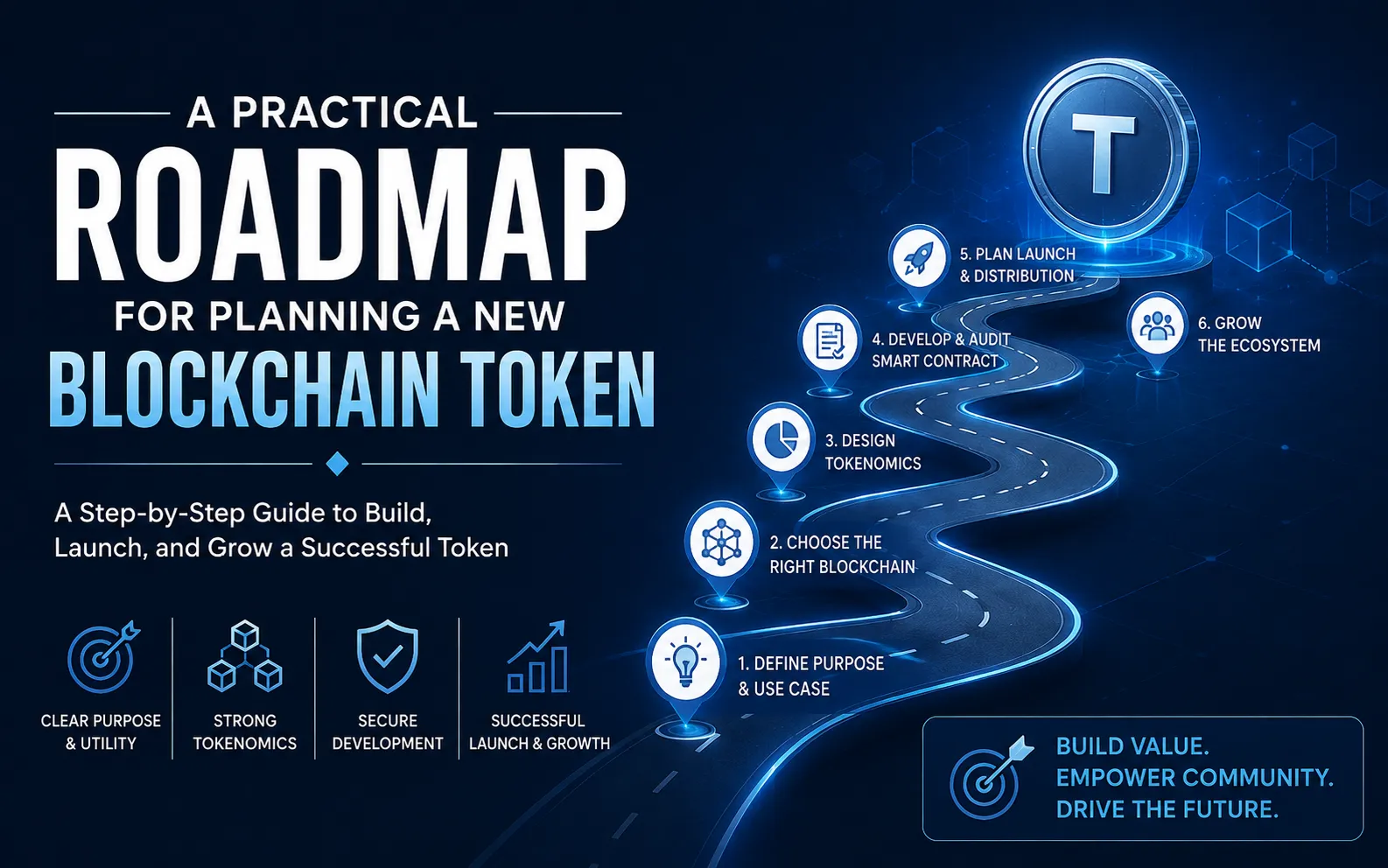
Defining the Project and Token Use Case
The first stage of ICO development is establishing the project's purpose. Before deciding how many tokens to create or how much capital to raise, founders need to determine what problem the project solves and why blockchain technology is relevant to the solution.
The token should have a clearly defined role within that ecosystem. It can support payments, access to services, governance, staking, rewards, asset representation, or other functions. The important point is that token utility should connect with actual product activity.
For example, a blockchain-based marketplace could use its token to settle transactions, reward contributors, and provide access to premium features. A decentralized infrastructure platform could use its token for network participation and governance. In both cases, the token has an identifiable relationship with the product.
This product-first approach is increasingly important because investors can distinguish between genuine utility and token models designed primarily around speculation. The project's roadmap, user journey, and economic model should all explain how token demand can develop as the product gains adoption.
Developing the Tokenomics Model
Once the token's purpose is established, the project can design its tokenomics. This is one of the most important stages because tokenomics determines how value and incentives move throughout the ecosystem.
A comprehensive model addresses the total supply, initial circulation, distribution, vesting, utility, treasury, liquidity, and mechanisms governing future supply.
Key considerations include:
- Total and maximum token supply
- Initial circulating supply
- Public-sale allocation
- Private or strategic allocations
- Team and advisor allocation
- Treasury reserves
- Ecosystem and community incentives
- Liquidity allocation
- Vesting periods
- Token unlock schedules
- Governance rights
- Minting and burning mechanisms
The relationship between circulating supply and demand deserves particular attention. A project can have an attractive total supply but still face substantial selling pressure if large allocations become liquid shortly after launch.
Vesting schedules help manage this issue by gradually releasing tokens allocated to teams, advisors, and early investors. These schedules also align stakeholder incentives with the project's longer development cycle.
The objective should not be to manufacture a particular token price. Strong tokenomics focuses on creating a functional economic system where token supply, user demand, incentives, and ecosystem growth remain connected.
Selecting the Right Blockchain
The next stage is selecting the blockchain on which the token will operate. This decision affects transaction costs, scalability, liquidity, security, wallet compatibility, development tools, and access to users.
Ethereum remains an important option because of its mature smart-contract ecosystem and broad developer infrastructure. At the same time, improvements to Ethereum's scaling architecture have changed the economics of building applications on its ecosystem. The Pectra upgrade, activated on mainnet in May 2025, increased the target number of blobs from three to six per block, with a maximum of nine, supporting greater rollup capacity.
Other networks can provide different advantages, including lower transaction costs, faster execution, or access to specific communities and applications.
The right choice depends on the project's requirements. Founders should evaluate transaction volume, user geography, smart-contract capabilities, ecosystem liquidity, security history, wallet support, interoperability, and long-term scalability instead of selecting a network solely because it is currently popular.
Projects planning a multichain ecosystem also need to consider how token balances, liquidity, governance, bridges, and contracts will operate across networks.
Developing the Smart Contract
After selecting the blockchain, developers translate the tokenomics into smart-contract functionality.
A basic token contract can handle transfers and balances, while more sophisticated projects can require additional features such as minting, burning, pausing, role-based permissions, vesting, staking, governance, or allocation controls.
Every additional feature increases the technical surface that needs to be tested. Developers need to verify that only authorized addresses can perform privileged actions and that token distribution follows the published allocation model.
Testing should cover normal transactions as well as unusual scenarios. Unit tests, integration tests, access-control checks, edge-case testing, and deployment simulations can help identify problems before the contract reaches production.
This stage should also consider operational security. A technically correct contract can still be exposed if private keys, treasury wallets, administrative roles, or deployment credentials are poorly managed.
Conducting Security Audits
Smart-contract auditing is a critical stage before an ICO reaches investors.
Independent auditors examine the code for vulnerabilities, logical errors, access-control weaknesses, economic exploits, and other security concerns. The findings are normally categorized according to severity so the development team can prioritize remediation.
An audit should not be viewed as a guarantee that a project is completely secure. It represents one part of a broader security program. Projects also need secure wallet management, controlled administrative permissions, monitoring, incident-response procedures, and careful deployment practices.
This becomes particularly important after the ICO because newly issued tokens and treasury assets can become attractive targets. A security incident immediately after launch can affect both investor confidence and the project's ability to develop its ecosystem.
Preparing the Whitepaper and Compliance Framework
The whitepaper is the document that connects the project's technology, economics, business model, and fundraising structure.
A strong whitepaper should explain the project's purpose, technology, token functionality, tokenomics, distribution, roadmap, risks, fundraising details, and use of proceeds. It should communicate the project's model clearly without relying on unsupported claims about future token value.
Regulatory requirements have made this stage increasingly important. Under MiCA, applicable crypto-asset whitepapers must contain information covering the project, offer, crypto-asset, associated rights and obligations, underlying technology, and risks. ESMA also states that the information must be fair, clear, and not misleading and must not contain material omissions.
MiCA's technical requirements have also evolved. ESMA states that the iXBRL formatting requirements for applicable crypto-asset whitepapers entered into application on December 23, 2025.
The specific regulatory requirements depend on the asset, offering structure, and jurisdictions involved. Projects should therefore obtain qualified legal advice before launching an ICO or marketing tokens to prospective participants.
Structuring the ICO Fundraising
Once the token model and documentation are established, the project can design its fundraising structure.
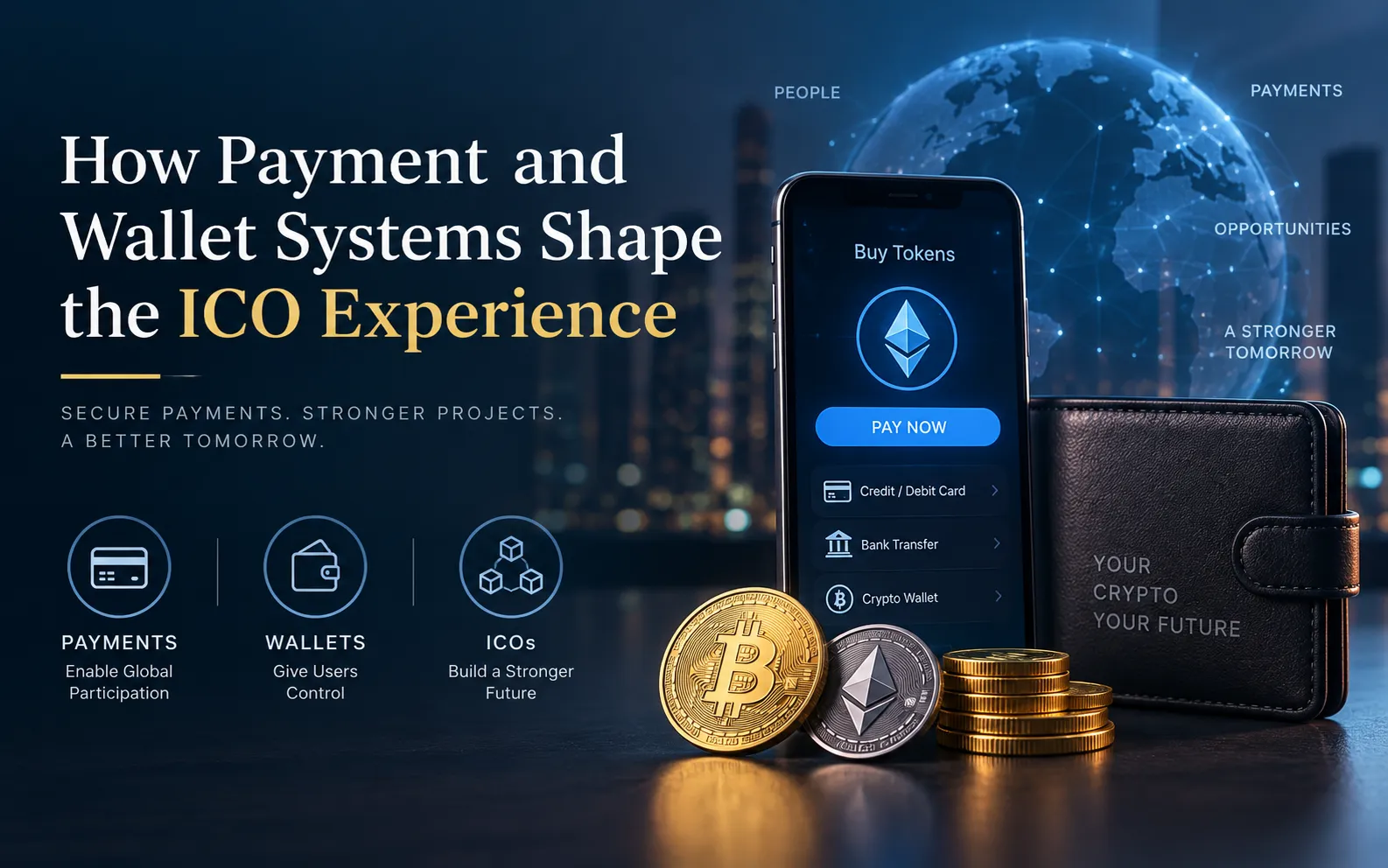
An ICO can involve different allocation stages, including strategic participation, private sales, community allocations, and public offerings. Each stage needs clear rules covering pricing, allocation limits, vesting, eligibility, payment methods, and distribution.
The fundraising target should also reflect realistic development requirements. Raising excessive capital without a clear deployment plan can create unnecessary treasury and governance challenges.
Transparency is particularly important. Participants should be able to understand how much capital the project seeks to raise, how funds will be used, what percentage of tokens is being distributed, and when different stakeholder allocations become liquid.
For offerings subject to MiCA, applicable whitepapers and marketing communications must be published publicly before the offer or admission to trading and remain available while the crypto-assets are held by the public.
This demonstrates why fundraising cannot be separated from the project's compliance and documentation strategy.
Building the Community Before Launch
A token launch needs an audience that understands the project before the fundraising event begins.
Community building should focus on educating potential participants about the product, token utility, roadmap, risks, and ecosystem. X, Telegram, Discord, newsletters, webinars, technical content, and community events can all support this process.
The objective should not be to maximize follower numbers. A smaller community of users who understand and actively engage with the product can be more valuable than a large audience attracted primarily by short-term token speculation.
The expansion of global crypto adoption makes this distinction increasingly important. Chainalysis found that APAC was the fastest-growing region for on-chain crypto activity in its 2025 analysis, while India ranked first globally in its adoption index.
Projects therefore have opportunities to reach new user groups, but their communication needs to explain practical value rather than depend entirely on market hype.
Preparing for the Token Generation Event
The Token Generation Event (TGE) is the point at which the token is created, distributed, or made available according to the project's launch structure.
By this stage, the team needs to verify that the technical and economic configuration matches the information communicated to participants. Token contracts, allocation wallets, vesting contracts, claim mechanisms, treasury controls, liquidity arrangements, and launch infrastructure should all be tested.
The TGE also needs coordination with liquidity and market access. Distributing tokens without sufficient infrastructure for users to claim, transfer, use, or trade them can create unnecessary friction.
The launch should therefore be treated as an operational event involving developers, security teams, legal advisors, marketing teams, community managers, treasury operators, and exchange or liquidity partners.
Managing Liquidity and Post-Launch Operations
The ICO process does not end when the TGE takes place. The post-launch period determines whether the project's token economy can function effectively.
Liquidity planning is one of the first priorities. The team needs to determine where liquidity will be provided, how much is appropriate, and how it will be managed over time.
Projects should also monitor circulating supply, wallet activity, trading volume, liquidity depth, token unlocks, treasury movements, user growth, and product usage.
These metrics help teams identify whether market activity reflects genuine ecosystem growth or short-term speculation. If token usage remains disconnected from product adoption, the project may need to reassess its incentives or utility model.
Post-launch transparency also matters. Major token unlocks, treasury decisions, partnerships, technical changes, and roadmap developments should be communicated consistently so the community can understand how the ecosystem is progressing.
Why Every ICO Stage Needs to Work Together
The most important principle in ICO development is that these stages are interconnected.
A token's use case influences its tokenomics. Tokenomics affects the smart-contract architecture. The blockchain affects transaction economics and user experience. The technical design influences security requirements. Regulatory considerations affect fundraising and market access. Community expectations influence launch communication. Liquidity planning affects the TGE experience.
Treating these activities as separate tasks can create inconsistencies. For example, a tokenomics model may promise a particular allocation while the deployed contracts implement something different. A project may build a technically secure token but launch without sufficient liquidity. Another project may have strong technology but discover that its intended fundraising structure does not fit the regulatory requirements of its target markets.
A coordinated development process reduces these gaps and creates a stronger foundation for launch.
Conclusion
The ICO development process has evolved into a multidisciplinary journey that extends far beyond token creation. From defining the project's use case and designing sustainable tokenomics to selecting the blockchain, developing secure smart contracts, preparing compliance documentation, structuring fundraising, building a community, and executing the TGE, every stage contributes to the project's long-term viability.
The strongest ICOs treat the token sale as one component of a broader Web3 ecosystem rather than the final objective. As crypto adoption expands and regulatory and technical standards become more sophisticated, preparation, transparency, security, and real utility will remain central to successful token launches.
Blockchain App Factory helps businesses navigate this development journey with solutions covering ICO development, token creation, smart contracts, tokenomics, security, and launch infrastructure. A carefully coordinated process from planning to launch can give a Web3 project a stronger technical and economic foundation for sustainable growth.





















Sign in to leave a comment.