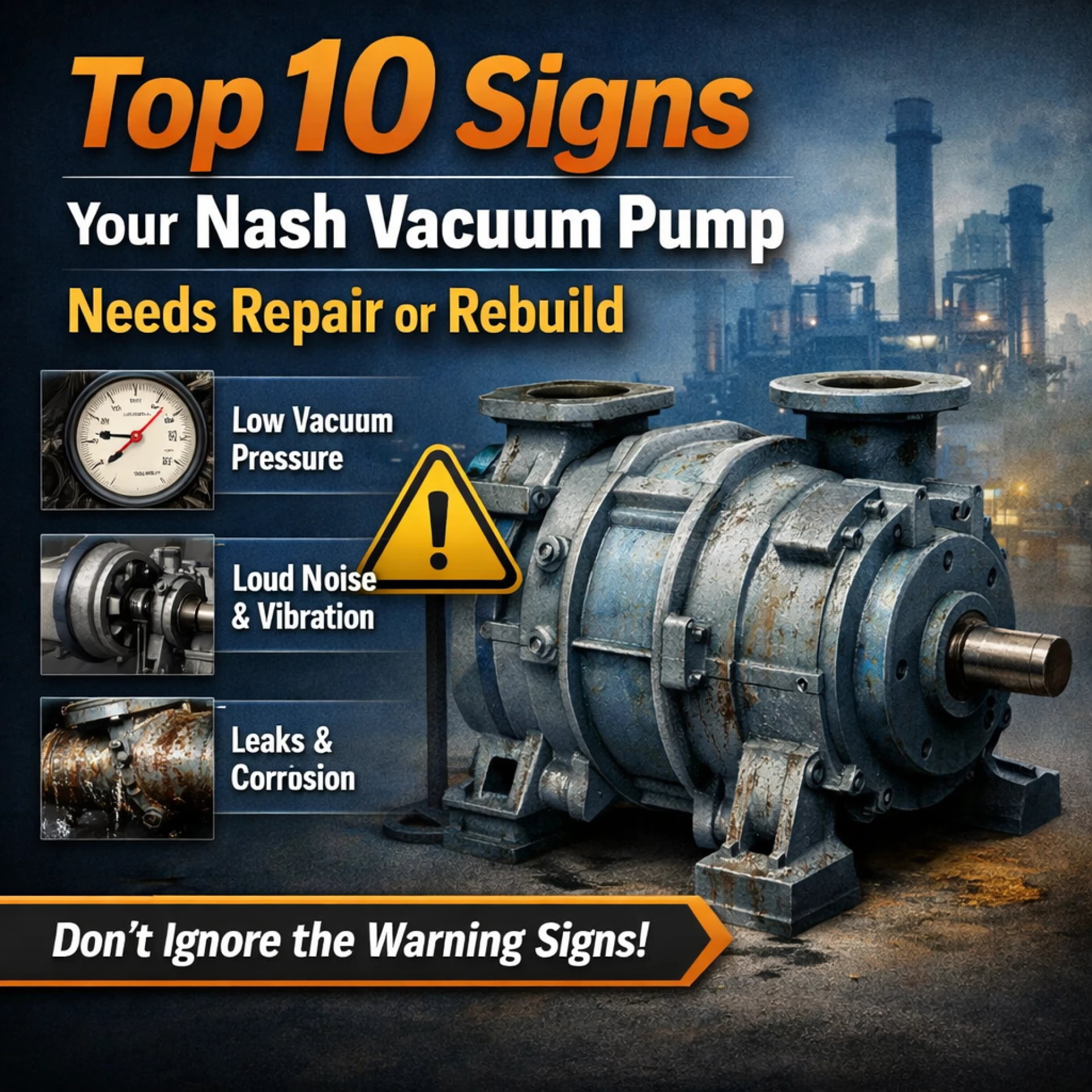
Nash vacuum pumps are widely used in chemical plants, power stations, paper mills, and food processing units. They are known for durability and stable performance. But like all industrial equipment, they wear over time. Small issues often appear before a major failure. Early action can save money, reduce downtime, and protect production schedules.
This guide explains the top 10 signs that indicate Nash vacuum pump repair or rebuild is needed, written for plant managers, maintenance engineers, and procurement teams.
1. Drop in Vacuum Level
A steady vacuum level is critical for process efficiency. If the vacuum pressure drops without a change in load, it signals internal wear.
Common causes include
- Worn impeller or casing
- Air leaks in seals
- Blocked inlet or discharge lines
According to the US Department of Energy, inefficient vacuum systems can increase energy use by 20 to 30 percent.
2. Unusual Noise or Vibration
A Nash vacuum pump should run smoothly. Loud knocking, grinding, or vibration is not normal.
This often indicates
- Bearing damage
- Shaft misalignment
- Rotor imbalance
Ignoring vibration can lead to complete pump failure.
3. Increased Power Consumption
If power usage rises while output stays the same, internal friction may be the cause.
Condition Power Impact
Worn bearings High
Internal scaling Medium
Seal damage Medium
Monitoring motor load helps detect problems early.
4. Frequent Seal Water Issues
Liquid ring pumps rely on seal water. If water usage increases or temperature rises, performance drops.
Warning signs
- Hot discharge water
- Excessive make up water
- Reduced vacuum stability
The Hydraulic Institute notes that poor water management shortens pump life.
5. Oil or Water Leaks
Leaks around the shaft, casing, or flanges show seal failure or corrosion. This can affect safety and efficiency.
Leaks also increase the risk of contamination in sensitive industries like food or pharma.
6. Corrosion and Scaling
Nash vacuum pumps often handle wet or aggressive gases. Over time, corrosion builds inside the casing.
Results include
- Reduced pumping capacity
- Poor heat transfer
- Higher energy use
Rebuilding restores internal clearances and performance.
7. Frequent Overheating
Overheating stresses bearings and seals. It often links to poor seal water flow or internal blockages.
OSHA highlights that overheating equipment raises safety risks in industrial plants.
8. Reduced Process Output
If your production slows while equipment settings remain the same, vacuum loss may be the reason.
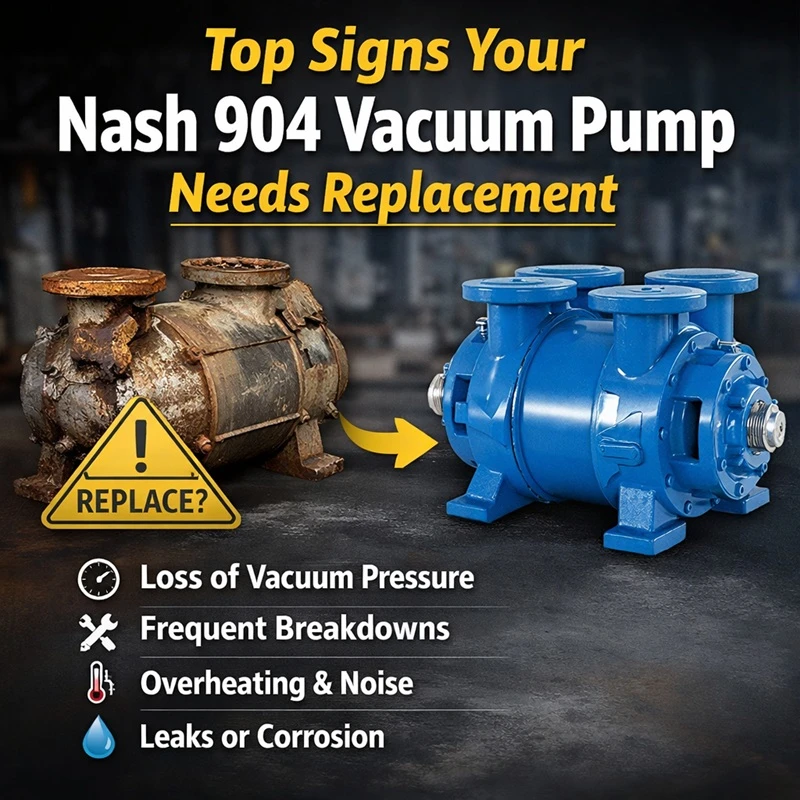
This is common in aging Nash CL 2002 vacuum pump units that have not been rebuilt on schedule.
9. Repeated Minor Repairs
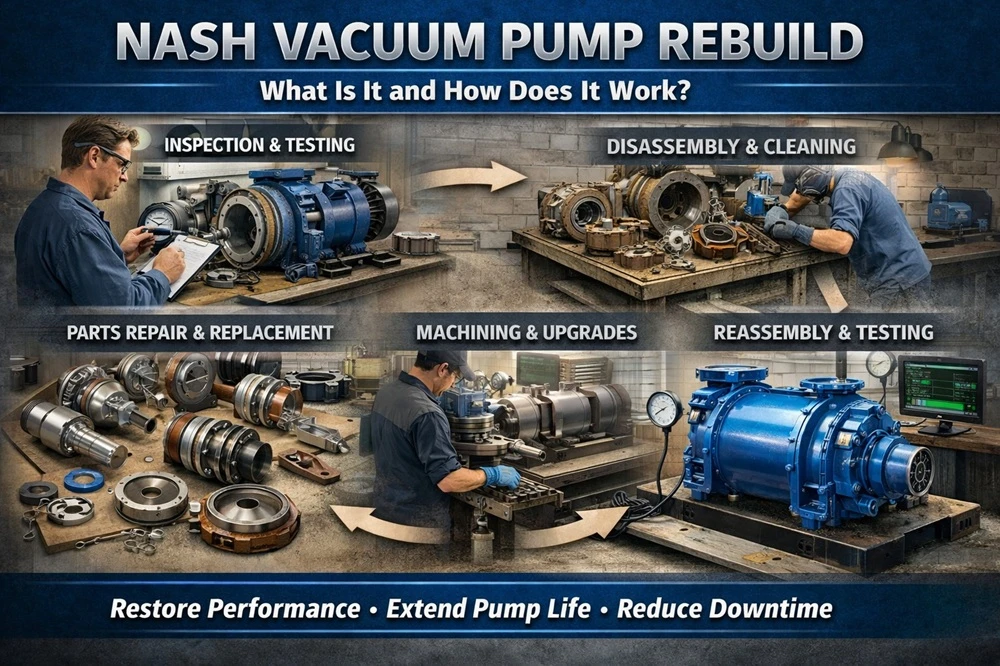
Frequent small fixes signal a deeper issue. At this stage, rebuilding is often more cost effective than repeated repairs.
Industry data shows
- Rebuild costs are often 40 to 60 percent lower than full replacement
- Downtime reduces by planned servicing
10. Pump Age Beyond Service Cycle
Most Nash vacuum pumps need a major overhaul after long service hours. If your pump is over ten years old and performance is dropping, inspection is essential.
A trusted Nash pump supplier can advise whether repair, rebuild, or replacement suits your system.
Repair vs Rebuild at a Glance
Factor Repair Rebuild
Cost Lower short term Better long term
Downtime Short Planned
Lifespan gain Limited Significant
Efficiency Partial Near original
Frequently Asked Questions
When should I rebuild a Nash vacuum pump?
Rebuild is recommended when performance drops, parts show wear, or repairs become frequent.
How long does a Nash vacuum pump last?
With proper maintenance, many Nash vacuum pumps run 15 to 20 years.
Is rebuild better than replacement?
In many cases, yes. Rebuild restores performance at lower cost.
How often should vacuum pumps be inspected?
Most experts recommend inspection every 6 to 12 months.
Conclusion
Ignoring early warning signs leads to higher costs and unexpected shutdowns. Timely Nash vacuum pump repair or rebuild protects productivity and extends equipment life. Working with an experienced service partner ensures correct diagnosis, genuine parts, and reliable results.
For professional support, inspection, and rebuild services, many industries trust Airvac Technical Services for dependable solutions and long term performance.
Original Source:- https://shorturl.at/QQDee


























Sign in to leave a comment.