Nash vacuum pumps are trusted across many industries for dependable liquid ring vacuum and compression performance. From chemical processing and power generation to pulp and paper plants, these pumps play a critical role in keeping operations running smoothly. However, like any mechanical equipment, Nash pumps experience wear over time. Corrosion, erosion, vibration, and seal degradation can all reduce performance and increase energy consumption.
Instead of replacing the entire unit, many facilities choose a Nash vacuum pump rebuild as a cost-effective alternative. Professional Nash vacuum pump repair restores efficiency, extends service life, and minimizes unplanned downtime. In this guide, we’ll explain what a Nash vacuum pump rebuild involves, how the process works, and when rebuilding makes more sense than buying new equipment.
What Is a Nash Vacuum Pump Rebuild?
A Nash vacuum pump rebuild is a comprehensive restoration process that returns worn or damaged pumps to like-new operating condition. Unlike basic repairs that only fix a single issue, a rebuild addresses the entire pump system. It includes inspecting, repairing, machining, upgrading, and testing all critical components.
A complete rebuild typically covers:
- Bearings and seals
- Impellers and shafts
- End covers and housings
- Mechanical tolerances
- Coatings and corrosion protection
- Alignment and balance
In many cases, rebuild services also include performance upgrades such as stainless steel components or ceramic coatings to improve durability. Compared to replacement, rebuilding preserves your existing infrastructure while delivering renewed performance.
Why Nash Vacuum Pump Repair Is Important
Over time, even the most reliable vacuum pumps lose efficiency. Minor problems can quickly become major failures if ignored. That’s why proactive Nash vacuum pump repair is essential for industrial operations.
Here’s why rebuilding matters:
- Performance degradation: Wear reduces vacuum levels and compression efficiency.
- Higher energy costs: Inefficient pumps consume more power.
- Unexpected downtime: Failures disrupt production and increase maintenance costs.
- Component damage: Corrosion and erosion spread to surrounding parts.
- Safety risks: Leaks and mechanical failures can affect plant safety.
By scheduling a rebuild before a significant failure, facilities protect productivity while lowering total lifecycle costs.
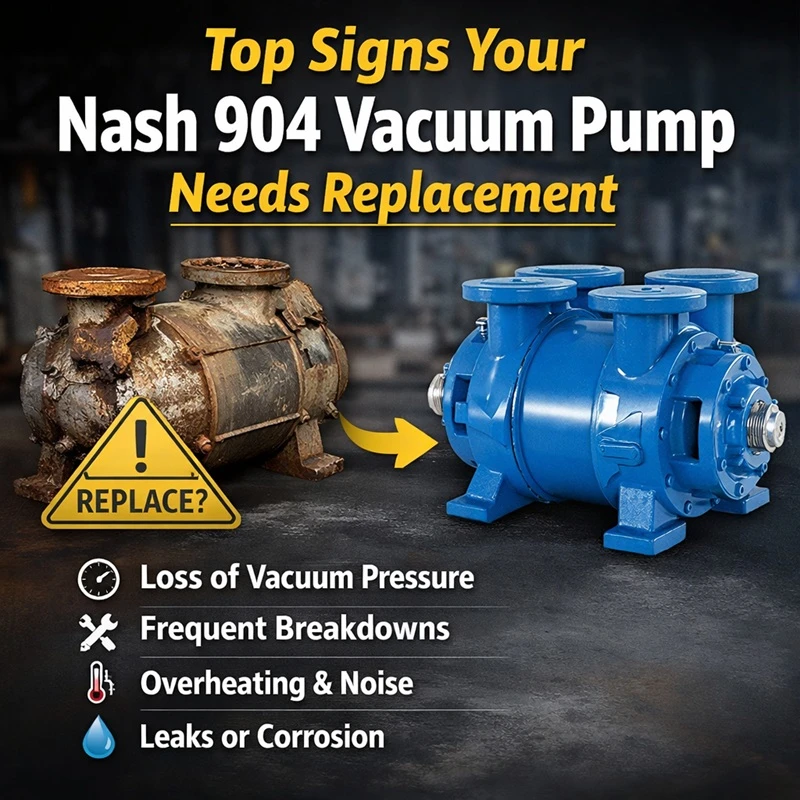
Signs Your Nash Pump Needs a Rebuild
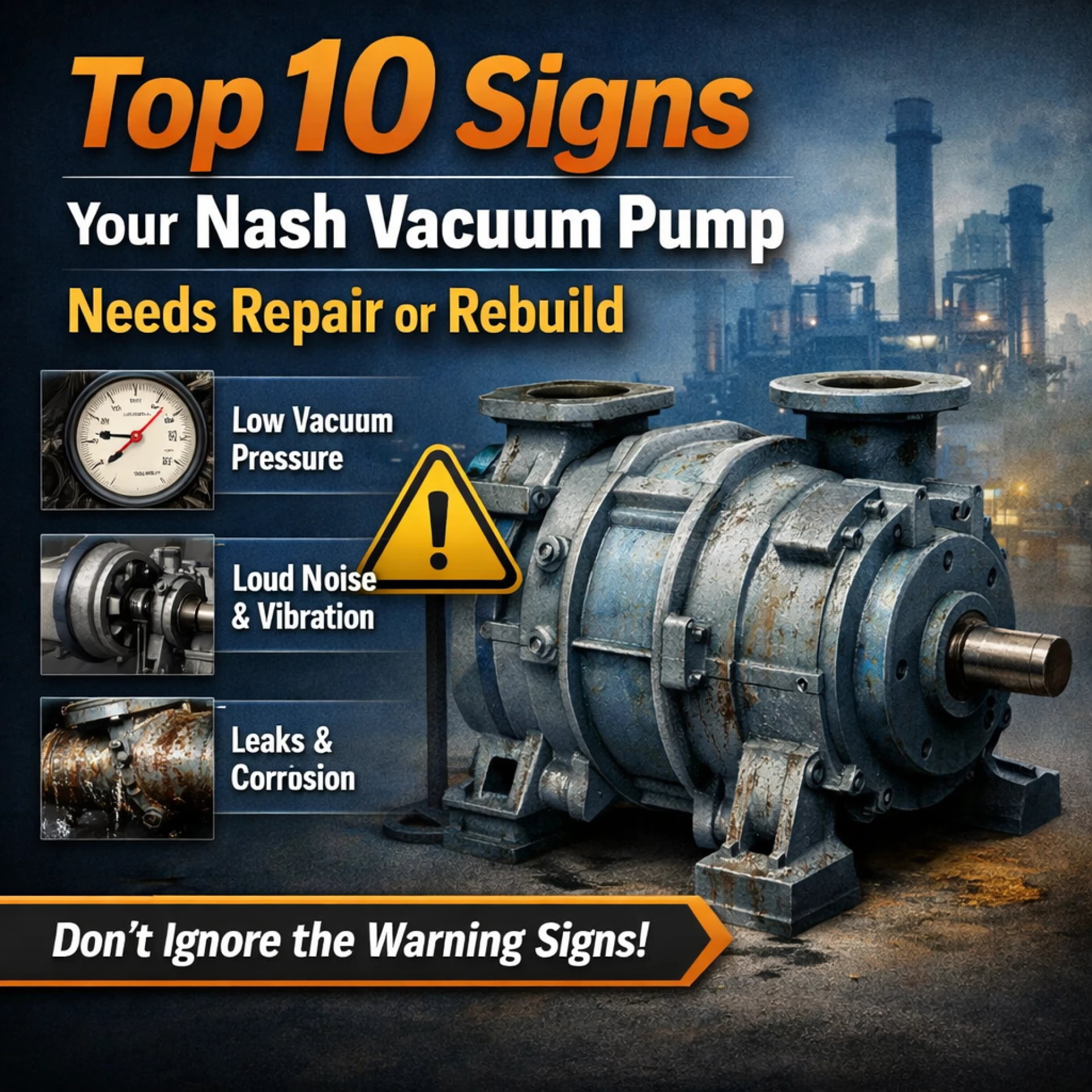
Knowing when to rebuild your pump helps prevent expensive breakdowns. Common warning signs include:
- Reduced vacuum capacity
- Excessive noise or vibration
- Increased operating temperatures
- Seal leaks or bearing failures
- Corrosion on internal components
- Rising power consumption
- Frequent maintenance interventions
If your Nash pump shows any of these symptoms, a professional evaluation can determine whether a rebuild is the best solution.
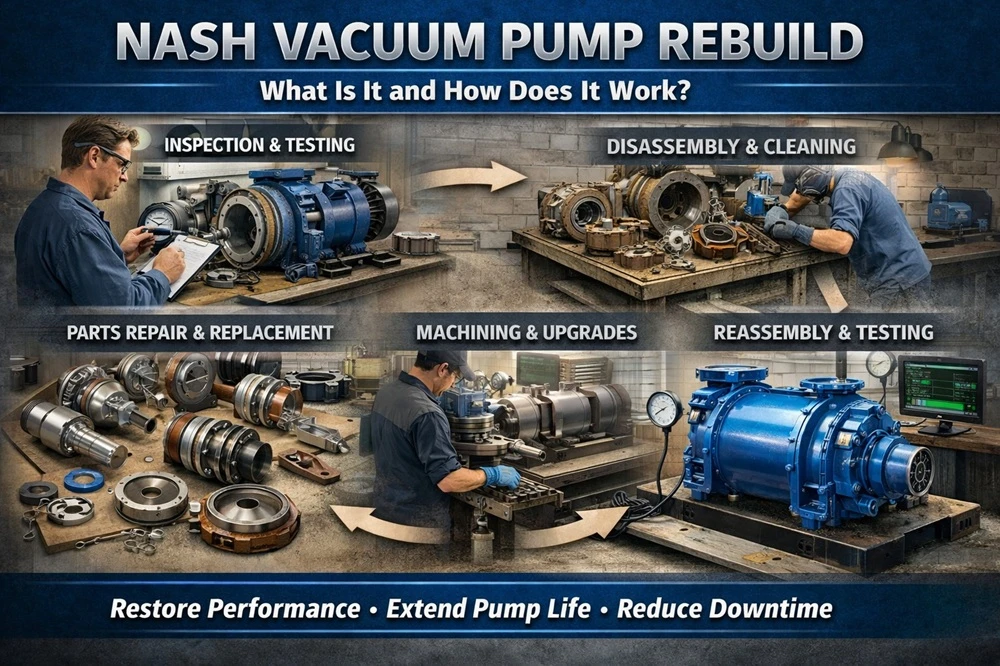
Step-by-Step Nash Vacuum Pump Rebuild Process
A proper rebuild follows a structured, quality-controlled process to ensure long-term reliability. Below is how most professional Nash vacuum pump repair services handle a rebuild.
Initial Inspection and Testing
The process starts with performance testing and inspection. Technicians measure vacuum levels, compression, vibration, and efficiency to establish a baseline. This helps identify worn components and areas needing improvement.
Disassembly and Cleaning
Next, the pump is fully disassembled. All parts are cleaned to remove scale, corrosion, oil residue, and debris. Proper cleaning allows technicians to accurately assess damage and wear patterns.
Component Repair and Replacement
Critical components such as bearings, seals, impellers, shafts, and gaskets are repaired or replaced as needed. Any parts outside tolerance are restored through machining or replaced with OEM-quality alternatives.
This stage ensures structural integrity and mechanical reliability.
Precision Machining and Upgrades
To restore performance, surfaces are machined back to original specifications. Many rebuilds also include upgrades like:
- Stainless steel internals
- Ceramic or corrosion-resistant coatings
- Improved sealing systems
These enhancements extend pump life and improve resistance to erosion and chemical attack.
Reassembly and Final Testing
Once repaired, the pump is carefully reassembled with proper alignment and balance. Final testing verifies vacuum capacity, vibration levels, and operational efficiency under load conditions. Only after passing performance checks is the pump returned to service.
Rebuild vs Replacement: Which Is Better?
When pumps fail, many operators assume replacement is the only option. In reality, rebuilding often delivers better value.
Rebuild Advantages:
- Lower cost than purchasing new equipment
- Shorter lead times
- Restored OEM performance
- Reduced installation modifications
- Sustainable reuse of assets
Replacement Makes Sense When:
- The casing is severely damaged
- Technology upgrades are required
- Capacity demands have changed
- Parts availability is limited
In most situations, a professional Nash vacuum pump repair and rebuild offers the best balance of cost, performance, and reliability.
Benefits of Professional Nash Vacuum Pump Repair
Partnering with experienced rebuild specialists delivers several long-term benefits:
- Extended pump lifespan through restored tolerances and upgraded materials
- Improved efficiency and reduced power consumption
- Lower maintenance costs from reduced failures
- Minimized downtime with fast turnaround or swap-out programs
- Verified performance through load and vibration testing
Rather than reacting to breakdowns, rebuild programs support predictive maintenance strategies that protect production schedules.
How to Choose the Right Nash Pump Rebuild Partner
Not all rebuild services offer the same quality. When selecting a Nash vacuum pump repair provider, look for:
- Experience with Nash liquid ring models
- Quality control and inspection standards
- Precision machining capabilities
- Performance testing procedures
- Warranty coverage
- Availability of swap-out inventory
A reliable partner doesn’t just fix parts—they help improve long-term pump reliability and operational efficiency.
Final Thoughts on Nash Vacuum Pump Rebuild Services
A Nash vacuum pump rebuild is more than a repair—it’s a strategic investment in equipment performance and plant reliability. Instead of replacing aging pumps, professional Nash vacuum pump repair restores efficiency, reduces downtime, and extends service life at a fraction of the cost of new equipment.
By understanding how the rebuild process works and recognizing early warning signs, facilities can plan maintenance proactively rather than reacting to failures. Whether through scheduled rebuilds or fast swap-out programs, rebuilding keeps critical vacuum systems running at peak performance.
If your Nash pump is showing signs of wear, now is the time to consider a professional rebuild solution that protects both productivity and budget.
Original Source: https://shorturl.at/DsYSi



























Sign in to leave a comment.