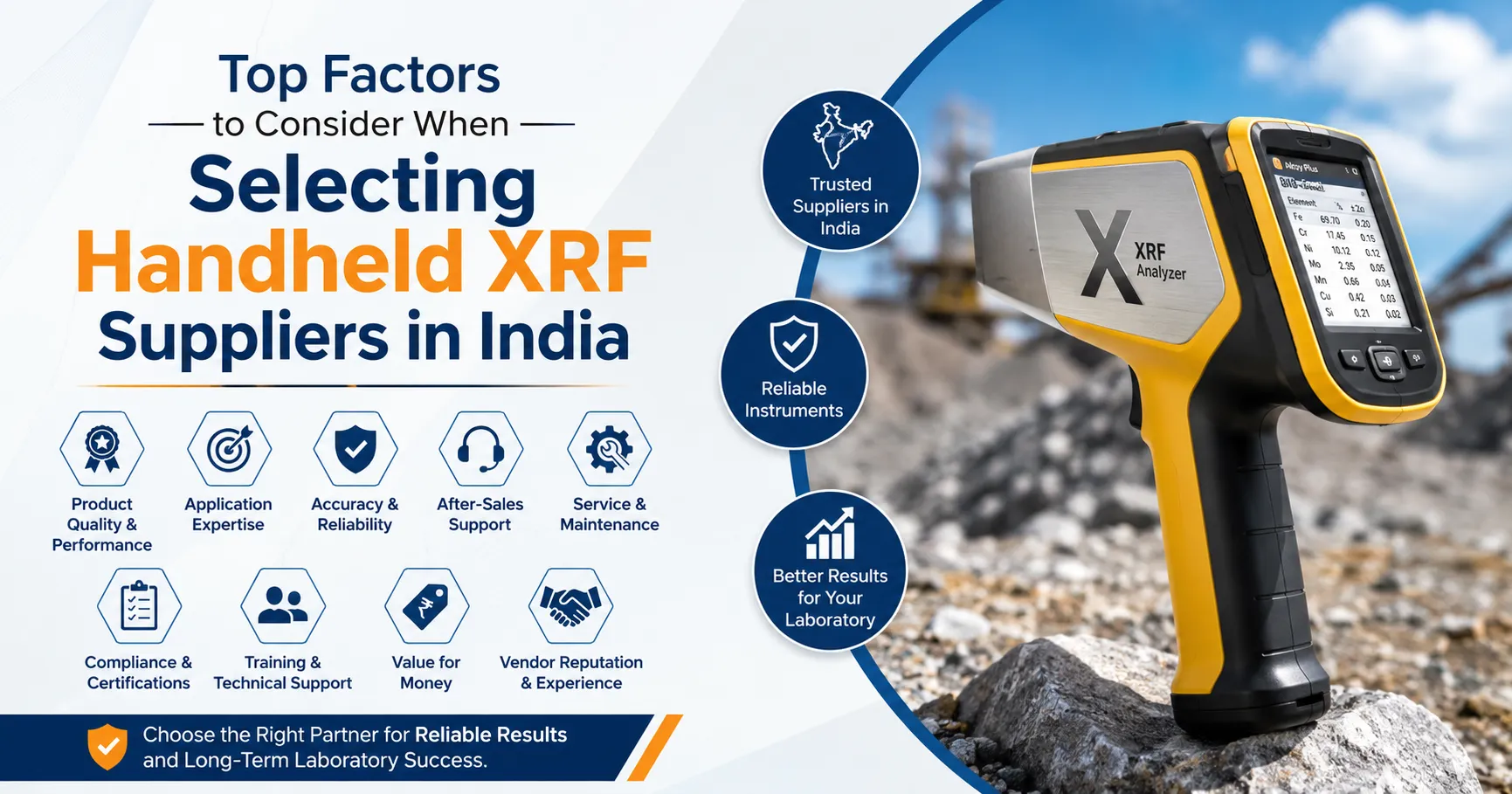

Handheld X-ray fluorescence (XRF) analyzers have become valuable tools for fast, non-destructive elemental analysis across industries such as mining, metals, manufacturing, recycling, construction, environmental testing, and research. Unlike conventional laboratory-based instruments, handheld XRF analyzers allow professionals to perform material identification and elemental analysis directly at the point of inspection.
However, choosing the right equipment is only part of the decision. Selecting a reliable handheld XRF supplier in India is equally important because the supplier can influence product quality, technical support, calibration, training, maintenance, and long-term operating costs.
With several suppliers and instrument options available, buyers should evaluate more than just the initial price. This guide explains the key factors to consider when selecting handheld XRF suppliers in India.
What Is a Handheld XRF Analyzer?
A handheld XRF analyzer is a portable analytical instrument that uses X-ray fluorescence technology to identify and quantify elements present in a material.
When X-rays interact with a sample, the atoms in the material emit characteristic secondary X-rays. The analyzer detects these signals and uses them to determine the elemental composition of the sample.
Because the technique is generally non-destructive and provides results quickly, handheld XRF instruments are widely used for applications including:
- Metal alloy identification
- Mining and mineral exploration
- Scrap metal sorting
- Soil and environmental analysis
- RoHS and hazardous-material screening
- Quality control
- Coating and plating analysis
- Geological investigations
- Cement and building-material analysis
- Precious-metal testing
The performance of the instrument depends heavily on its detector, X-ray source, calibration, software, sample requirements, and application-specific configuration.
Why Choosing the Right Handheld XRF Supplier Matters
A handheld XRF analyzer is a technical investment rather than simply another laboratory device. The supplier should be capable of supporting the instrument throughout its useful life.
A dependable supplier can help with:
- Selecting the right XRF model
- Understanding application requirements
- Instrument installation and configuration
- Calibration and verification
- Operator training
- Software support
- Troubleshooting
- Preventive maintenance
- Spare parts and accessories
- Warranty and after-sales service
Working with an experienced supplier can reduce downtime and help ensure that the analyzer continues to produce reliable results.
1. Evaluate the Supplier's Industry Experience
One of the first factors to consider is the supplier's experience with handheld XRF technology.
Look for suppliers that have a strong understanding of XRF analysis and experience serving industries similar to yours. A supplier that understands your application can recommend an instrument based on actual analytical requirements rather than simply suggesting a popular model.
For example, the requirements of a metal recycling company may be very different from those of a mining laboratory or environmental testing organization.
Ask potential suppliers about:
- Years of experience in XRF technology
- Industries they serve
- Types of handheld XRF analyzers they supply
- Application expertise
- Previous installations or deployments
- Technical team capabilities
2. Check the Instrument's Analytical Performance
The most important consideration is whether the handheld XRF analyzer can deliver the analytical performance required for your application.
Different instruments are designed for different elemental ranges, detection limits, sample types, and applications.
Before purchasing, evaluate specifications such as:
- Elemental range
- Detection limits
- Measurement time
- Accuracy and repeatability
- Detector technology
- X-ray source specifications
- Calibration options
- Available analytical modes
- Sample compatibility
Do not select an instrument solely because it has a lower purchase price. The instrument must be capable of producing useful results under your actual operating conditions.
3. Consider Your Specific Application
A good handheld XRF supplier should first understand what you intend to measure.
For instance, an analyzer used for alloy identification may require different calibration and software capabilities than one designed for soil analysis.
Discuss questions such as:
- What materials will be tested?
- Which elements need to be detected?
- What concentration ranges are expected?
- Will measurements be performed indoors or outdoors?
- Is rapid screening required?
- Are laboratory-level measurements necessary?
- How frequently will the instrument be used?
The answers can help the supplier recommend an appropriate configuration.
4. Examine Calibration and Application Support
Calibration plays a critical role in obtaining meaningful XRF results. Different materials and applications may require specific calibrations or analytical methods.
When evaluating handheld XRF suppliers in India, ask whether they provide:
- Factory calibration
- Application-specific calibration
- Calibration verification
- Reference standards
- Software updates
- Method development assistance
- Technical guidance
A supplier with strong application support can help you configure the instrument correctly for your intended materials.
5. Look at Ease of Use
Handheld XRF analyzers are often used by operators with different levels of technical experience. Therefore, usability should be considered carefully.
Look for features such as:
- Intuitive user interface
- Clear display
- Easy-to-understand analytical results
- Simple measurement procedures
- Ergonomic design
- Automated workflows
- User profiles
- Data storage and reporting
If several employees will operate the instrument, an easy-to-use interface can reduce training requirements and help minimize operational errors.
6. Assess Battery Life and Portability
One of the biggest advantages of handheld XRF technology is portability.
If the analyzer will be used for field inspections, mining sites, scrap yards, construction sites, or outdoor surveys, battery performance and ruggedness become especially important.
Ask suppliers about:
- Battery operating time
- Battery replacement options
- Charging time
- Instrument weight
- Durability
- Protection against dust and moisture
- Operating-temperature range
- Carrying and storage accessories
A lightweight and durable analyzer can make field testing significantly more convenient.
7. Check Software and Data Management Features
Modern handheld XRF instruments often include software designed to simplify analysis, data storage, reporting, and instrument management.
Depending on your requirements, useful features may include:
- Data export
- Report generation
- GPS integration
- Wi-Fi or Bluetooth connectivity
- Cloud or network connectivity
- Measurement history
- User management
- Sample identification
- Data visualization
If your organization performs a large number of measurements, efficient data management can be just as important as the instrument's analytical capabilities.
8. Evaluate Training and Technical Support
Proper operator training is essential for reliable XRF analysis.
Even an advanced analyzer may produce poor results if users do not understand correct sample positioning, measurement procedures, safety practices, calibration, and result interpretation.
Ask whether the supplier offers:
- Initial operator training
- On-site training
- Application training
- User manuals
- Demonstrations
- Troubleshooting assistance
- Refresher training
A supplier with a responsive technical support team can also help reduce downtime when problems occur.
9. Compare Warranty and After-Sales Service
After-sales support is one of the most important factors when selecting a supplier.
Before purchasing, understand exactly what the warranty covers and for how long.
Check:
- Warranty duration
- Parts coverage
- Service coverage
- Repair procedures
- Response time
- Availability of service engineers
- Preventive maintenance options
- Spare-parts availability
A supplier that provides dependable after-sales service can offer greater value over the instrument's operating life.
10. Consider Total Cost of Ownership
The purchase price should not be the only financial consideration.
The total cost of ownership may include:
- Initial instrument cost
- Calibration
- Software licenses or upgrades
- Accessories
- Batteries
- Reference standards
- Maintenance
- Repairs
- Training
- Transportation
- Annual service requirements
A slightly more expensive analyzer with strong support and lower maintenance requirements may ultimately be more economical than a cheaper instrument with limited service availability.
11. Ask for a Product Demonstration
A product demonstration can be extremely useful before making a purchase decision.
During a demonstration, you can evaluate the instrument using your actual or representative samples.
Pay attention to:
- Measurement speed
- Ease of operation
- Result readability
- Sample handling
- Software interface
- Repeatability
- Portability
- Battery performance
Ask the supplier to demonstrate the functions most relevant to your application rather than providing only a general product presentation.
12. Verify Documentation and Compliance
Before purchasing, make sure the supplier can provide appropriate technical and commercial documentation.
Depending on your organization and application, you may need:
- Product specifications
- User documentation
- Calibration information
- Warranty documentation
- Safety information
- Compliance certificates
- Service documentation
- Purchase and installation records
Proper documentation can simplify procurement, audits, maintenance, and future service requirements.
13. Compare Multiple Handheld XRF Suppliers
Avoid selecting a supplier based on a single quotation.
Instead, compare several suppliers based on a common set of criteria, including:
| Factor | What to Evaluate |
| Product quality | Instrument performance and reliability |
| Application suitability | Compatibility with your materials |
| Analytical performance | Accuracy, precision, and detection limits |
| Software | Data management and reporting |
| Training | Operator and application training |
| Warranty | Coverage and duration |
| Service | Technical support and repair facilities |
| Accessories | Availability and compatibility |
| Price | Initial and long-term costs |
| Supplier experience | Industry expertise and customer support |
This approach makes it easier to identify the supplier offering the best overall value.
Common Mistakes to Avoid When Choosing a Supplier
Buyers sometimes focus heavily on price and overlook important technical and service-related factors.
Here are some common mistakes to avoid:
Choosing Based Only on Price
The cheapest analyzer may not provide the performance, calibration, or support your application requires.
Ignoring Application Requirements
An XRF analyzer designed for one application may not be ideal for another. Always communicate your intended use before selecting a model.
Overlooking After-Sales Support
Technical equipment requires ongoing support. Limited service availability can lead to unnecessary downtime.
Not Testing the Instrument
Whenever possible, request a demonstration using representative samples before purchasing.
Failing to Compare Total Costs
Consider maintenance, accessories, calibration, training, and service costs in addition to the initial purchase price.
Conclusion
Selecting the right handheld XRF suppliers in India requires more than comparing product prices. Buyers should evaluate the supplier's technical expertise, instrument performance, application suitability, calibration support, software capabilities, training, warranty, and after-sales service.
The right supplier should be able to understand your analytical requirements and recommend a handheld XRF solution that delivers reliable results in your actual working environment.
Whether you need handheld XRF technology for metal identification, mining, recycling, environmental analysis, quality control, or material testing, taking the time to evaluate suppliers carefully can help you achieve better analytical performance and long-term value.



























Sign in to leave a comment.