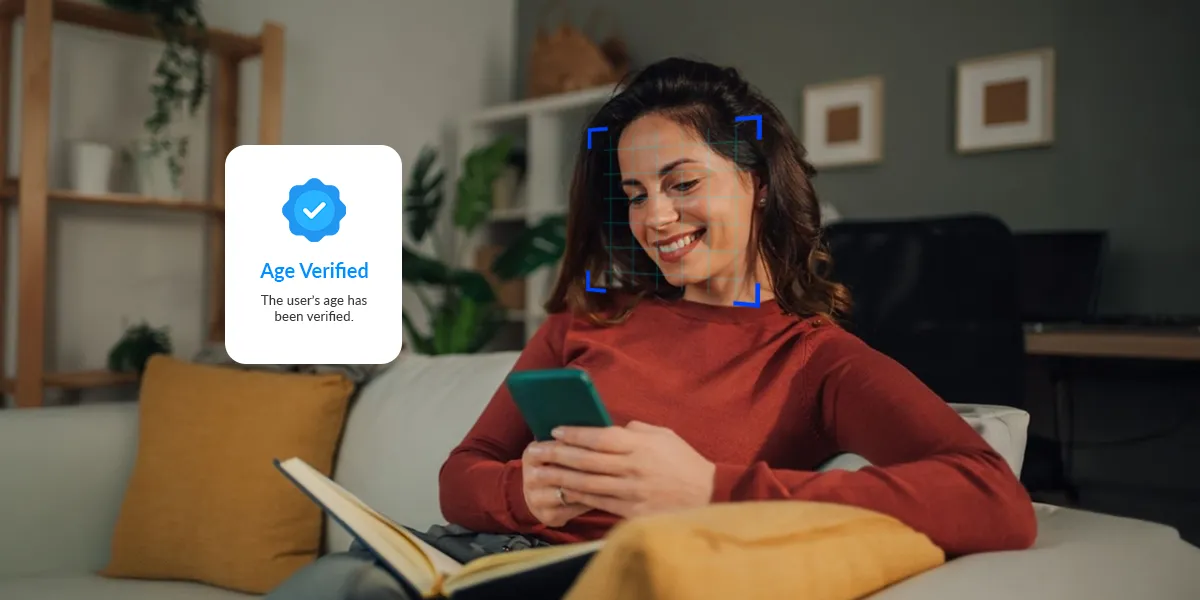

A few years ago, a cashier glancing at a driver's license was enough. Walk into a store, buy a six-pack, walk out. Simple.
That world is not gone, but it has a new sibling. Online retail for age-restricted products has exploded. Wine shipped to your door. CBD delivered in two days. Vape supplies arriving in discreet packaging. The convenience is undeniable.
But here is the catch. When you remove the human eye from the transaction, you create a gap. A gap that minors can slip through and regulators are watching closely.
For alcohol and tobacco retailers, the stakes are obvious. Vape and cannabis stores face the same scrutiny. Gaming platforms, gambling sites, and adult content providers operate under increasingly strict laws. Even industries you might not think about, like online pharmacies and crypto exchanges, have age restrictions baked into their compliance requirements.
The rules are not uniform. The United States has a patchwork of state laws, with California and Virginia leading on data privacy and age assurance. The UK's Online Safety Act demands highly effective measures. Europe's General Data Protection Regulation (GDPR) sets a high bar for handling minors' data. Navigating this landscape without a reliable system is asking for trouble.
We will walk through the top age verification online methods available today, what they offer, where they fall short, and how to choose what fits your business.
What Is Online Age Verification?
Online age verification is the process of confirming a person's age remotely, without physical interaction. It is the digital equivalent of checking an ID at the door, but it happens through a website, an app, or an ecommerce checkout flow.
The goal is simple. Ensure the person on the other end of the transaction meets the legal age requirement for whatever they are trying to buy or access. But the methods used to reach that goal vary widely, from simple database checks to sophisticated biometric scans.
For businesses selling restricted goods, age verification is not optional. It is the mechanism that keeps you compliant, protects minors, and shields you from liability.
Key Factors Retailers Should Consider Before Choosing a Method
Before diving into specific methods, it helps to step back. The right choice depends on several factors that are unique to your business. Here is what to weigh.
1. Compliance Requirements
Where do your customers live? Where do you operate? A liquor store shipping within the United States faces different rules than a gambling platform serving customers across Europe. Some regulations demand specific levels of assurance. The UK's Online Safety Act, for example, requires highly effective measures, not just a checkbox. Your method must match the legal bar in every jurisdiction you serve.
2. Security and Fraud Prevention
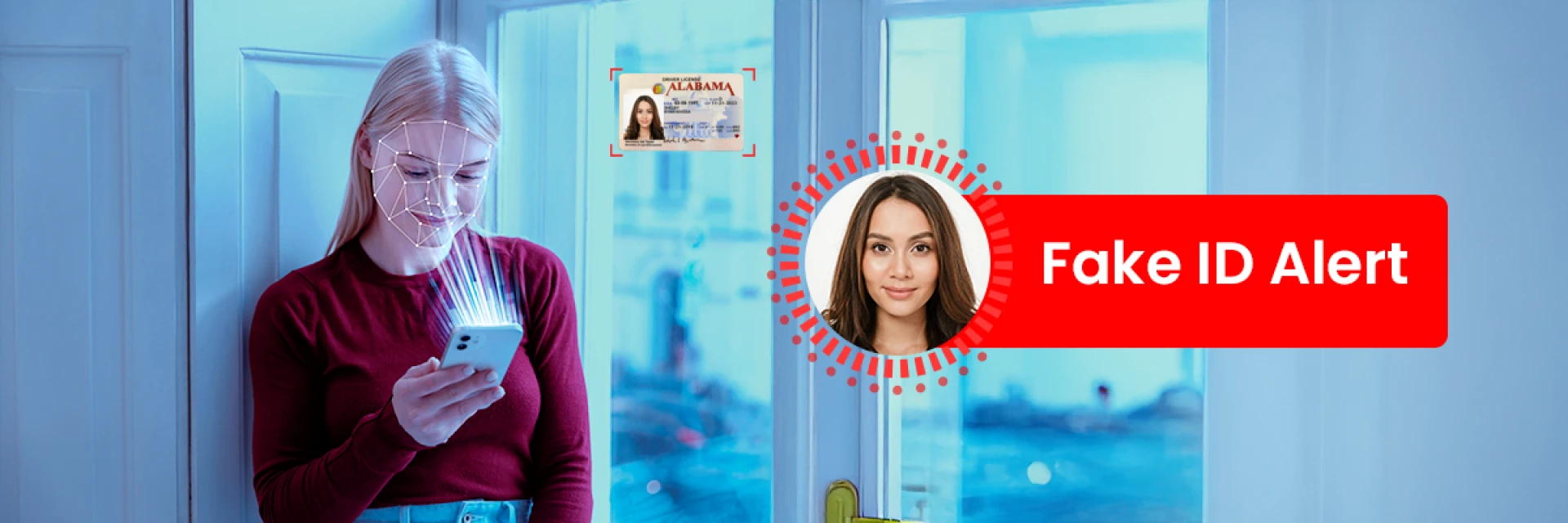
Fraudsters do not take days off. Fake IDs, stolen identities, and deepfake videos – all of these are used to bypass weak systems. A method that cannot spot a forged document or a synthetic face is not a method at all. It is a liability. Look for systems with built-in fraud detection, liveness checks, and AI-powered document validation.
3. User Experience
Every extra step in your checkout is a chance for the customer to abandon their cart. If age verification feels clunky, slow, or intrusive, people will leave. The goal is verification that happens quickly, ideally without the user feeling like they are jumping through hoops. Friction kills conversions. Balance security with smoothness.
4. Integration Capabilities
You already have an ecommerce platform, a point-of-sale system, and maybe a customer database. Your age verification tool needs to play nice with these existing systems. Application programming interfaces (APIs) matter. Pre-built plugins matter. If integration requires months of custom development, you have chosen the wrong provider.
5. Privacy and Data Protection
Biometric data, ID scans, personal information. All of this is sensitive. Customers want to know their data is handled responsibly. Regulators require it. Your chosen method must include encryption, secure storage, and clear policies on data retention. GDPR, California Consumer Privacy Act (CCPA), and similar laws have teeth. Ignoring them is expensive.
Method 1: Government ID Document Verification
This is the most direct approach, the digital version of what happens at a physical register. The user provides an official document, and the system checks it.
How It Works
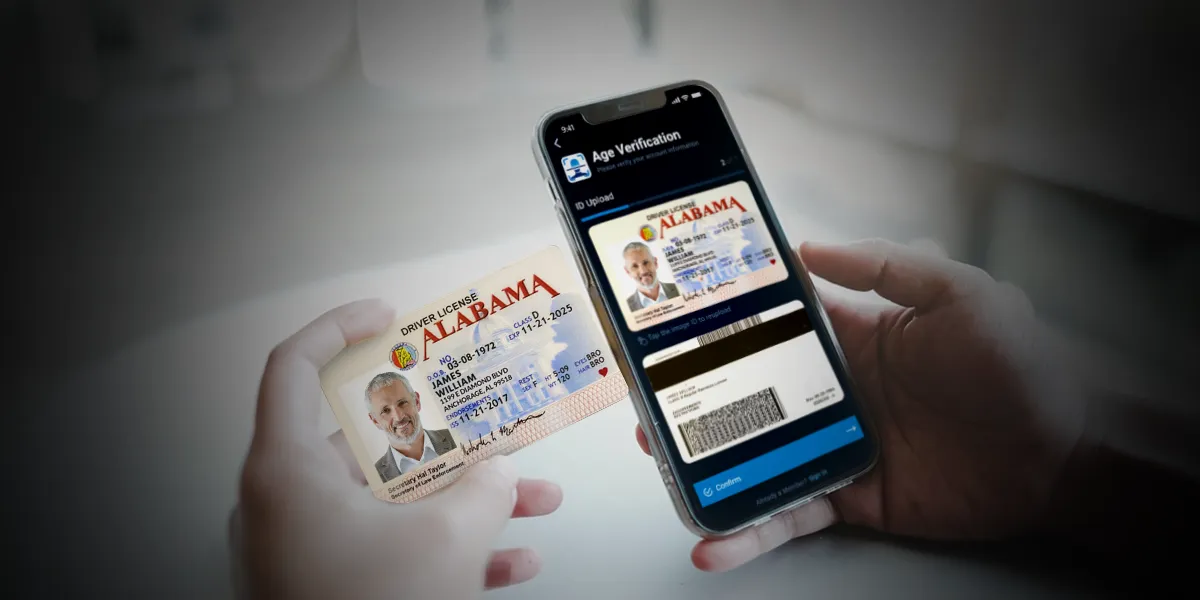
The customer uploads a photo of their government-issued ID. A driver's license, a passport, and a national identity card. The system scans the document using optical character recognition to extract the text, including the date of birth. Advanced systems do not stop there. They analyze the document's security features, looking for holograms, microprints, and font consistency. If everything checks out, the age is confirmed. If something looks off, the transaction is flagged.
Technologies Used
Optical character recognition, or OCR, handles the text extraction. AI document validation looks for signs of tampering or forgery. Fraud detection systems cross-reference the data against known patterns and watchlists. Together, these technologies create a robust first line of defense.
Benefits
The accuracy is high. A genuine government ID is hard to fake well. This method also satisfies the strictest compliance requirements because it relies on authoritative sources. Fake IDs get caught more often than not.
Limitations
It requires cooperation from the user. They have to have their ID handy and be willing to photograph it. Some customers hesitate to upload such sensitive documents, even with assurances of security. That hesitation can cost you sales.
Method 2: Biometric Age Verification
Biometrics move beyond documents and into the physical characteristics of the user themselves. It is verification based on who you are, not what you carry.
How It Works
The user takes a selfie using their device's camera. AI-powered facial recognition algorithms analyze the image, mapping facial landmarks and features. Some systems estimate age directly from the face. Others compare the selfie to a photo on an ID that was submitted separately. The goal is to confirm that the person present matches the identity they claim.
Technologies Involved
Facial recognition algorithms do the heavy lifting, trained on thousands of faces to identify key features. AI age estimation models can predict age range based on facial characteristics. Liveness detection ensures the selfie is coming from a real person in real time, not a photograph or a video replay.
Benefits
It is fast. A selfie takes seconds. It is also highly secure when combined with liveness detection, because it prevents someone from using a stolen photo. Identity fraud becomes much harder when you have to show your live face.
Limitations
The user needs a camera, which is common but not universal. Privacy concerns also come up. Some people are uncomfortable with facial recognition, even when told their image will not be stored. Clear communication about data handling helps, but it does not eliminate the concern entirely.
Method 3: Selfie Verification with Liveness Detection
This method takes biometrics a step further. It does not just look at a static face. It watches for signs of life.
How It Works
The user records a short selfie video. During the recording, the system prompts them to perform specific actions. Blink your eyes. Turn your head to the left. Smile. These actions are random and unpredictable. The AI analyzes the video to confirm that the movements are natural and that the face matches the ID photo. If the user passes, they are verified.
Technologies Involved
Passive liveness detection works quietly in the background, analyzing micro-movements, skin texture, and light reflection without requiring user action. Active liveness detection asks for those specific movements, adding an extra layer of proof. Both approaches catch spoofing attempts that static checks might miss.
Benefits
This method stops almost all spoofing attempts. Printed photos do not blink. Video replays do not respond to random prompts. Deepfakes, which are getting disturbingly good, still struggle to produce natural, real-time reactions to unpredictable commands. Security improves dramatically.
Limitations
The process takes slightly longer than a simple selfie. The user has to follow instructions and wait for the analysis. It also requires a smartphone or a webcam, which again is common but not universal.
Method 4: Database and Public Record Verification
This method skips documents and selfies entirely. It relies on data that already exists elsewhere.
How It Works
The user submits basic personal information. Name, address, and date of birth. The system takes that information and runs it against databases of public records, credit bureau data, or other authoritative sources. If the information matches what is on file, the age is confirmed. The user never has to upload anything.
Technologies Used
This method depends on APIs that connect to data aggregators and public record databases. The system queries these sources, receives a match or no-match response, and makes a decision based on the result.
Benefits
There is no document upload. For users who are privacy-conscious or simply do not have their ID handy, this feels less intrusive. The process is also fast and automated, often completing in seconds.
Limitations
Accuracy depends entirely on the quality of the databases being checked. If the records are outdated or incomplete, the verification fails even for legitimate users. This method also does not work well in countries without robust public record systems. And it does nothing to confirm that the person submitting the information is actually the person named in the records. A minor with access to an adult's information could pass this check.
Method 5: AI-Based Age Estimation
This is the newest and fastest method, and it is gaining traction quickly.
How It Works
The user uploads a selfie. An AI model, trained on thousands of faces across different age groups, analyzes the image and predicts an age range. The system then compares that range to the legal threshold. If the estimated age is above the requirement, access is granted. If it falls below, the user may be asked for additional verification.
Technology Behind It
Deep learning and computer vision drive this method. The models are trained on vast datasets, learning to associate facial features like skin texture, bone structure, and wrinkles with specific age ranges. The technology improves constantly as more data becomes available.
Benefits
It is incredibly fast. No document scanning, no database queries, just a quick analysis and a decision. The user friction is minimal, which translates to higher conversion rates. For businesses that prioritize speed and simplicity, this is attractive.
Limitations
It is not 100 percent accurate. No AI model is. A teenager who looks older than their years might slip through. A thirty-year-old who looks young might get flagged for additional checks. Because of this, AI age estimation is rarely used alone for high-stakes compliance. It works best as a first layer, catching obvious cases and passing borderline ones to a more rigorous method.
Conclusion
Age verification is not just a legal requirement. It is an ethical responsibility and a business imperative. Selling age-restricted products without proper checks invites fines, license revocations, and reputational damage that takes years to repair.
No single method is perfect. Each has strengths and weaknesses. The businesses that protect themselves best use layered approaches. AI age estimation for speed and low friction. Document verification for high assurance. Liveness detection to catch spoofs. Combined, these layers create a system that is both secure and user-friendly.
The goal is not to build the most complex system. It is to build one that fits your customers, your industry, and your risk tolerance while keeping minors out and regulators satisfied.
























Sign in to leave a comment.