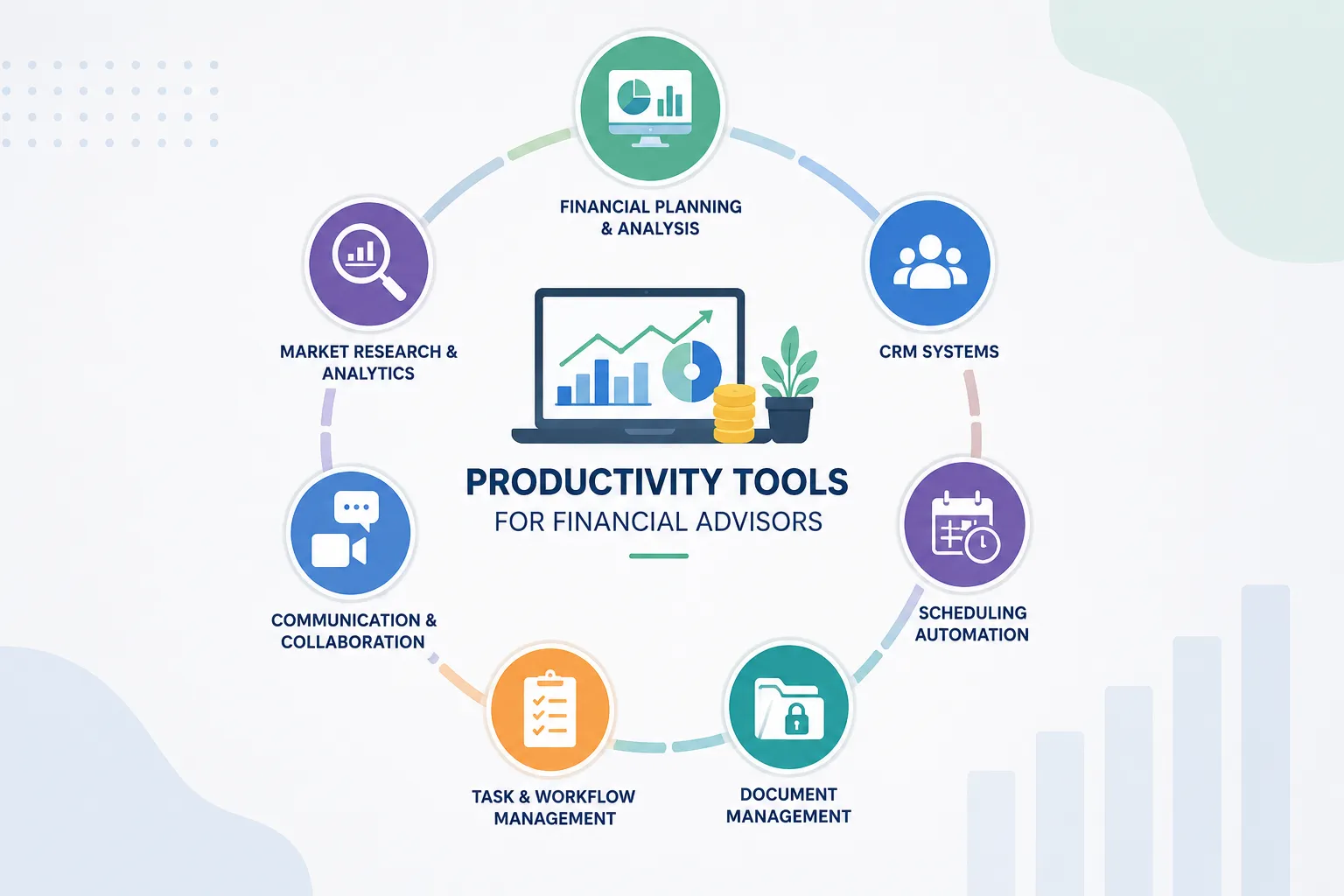

Financial advisory work has become increasingly data-driven, fast-paced, and client-focused. Advisors are expected to manage portfolios, communicate clearly, maintain compliance, and deliver personalized financial strategies—all at the same time. Without the right systems in place, even highly skilled professionals can struggle with workload pressure and inefficiency.
Productivity tools have become essential for financial advisors who want to scale their practice while maintaining accuracy and strong client relationships. These tools are not just about convenience—they directly impact client satisfaction, business growth, and operational stability.
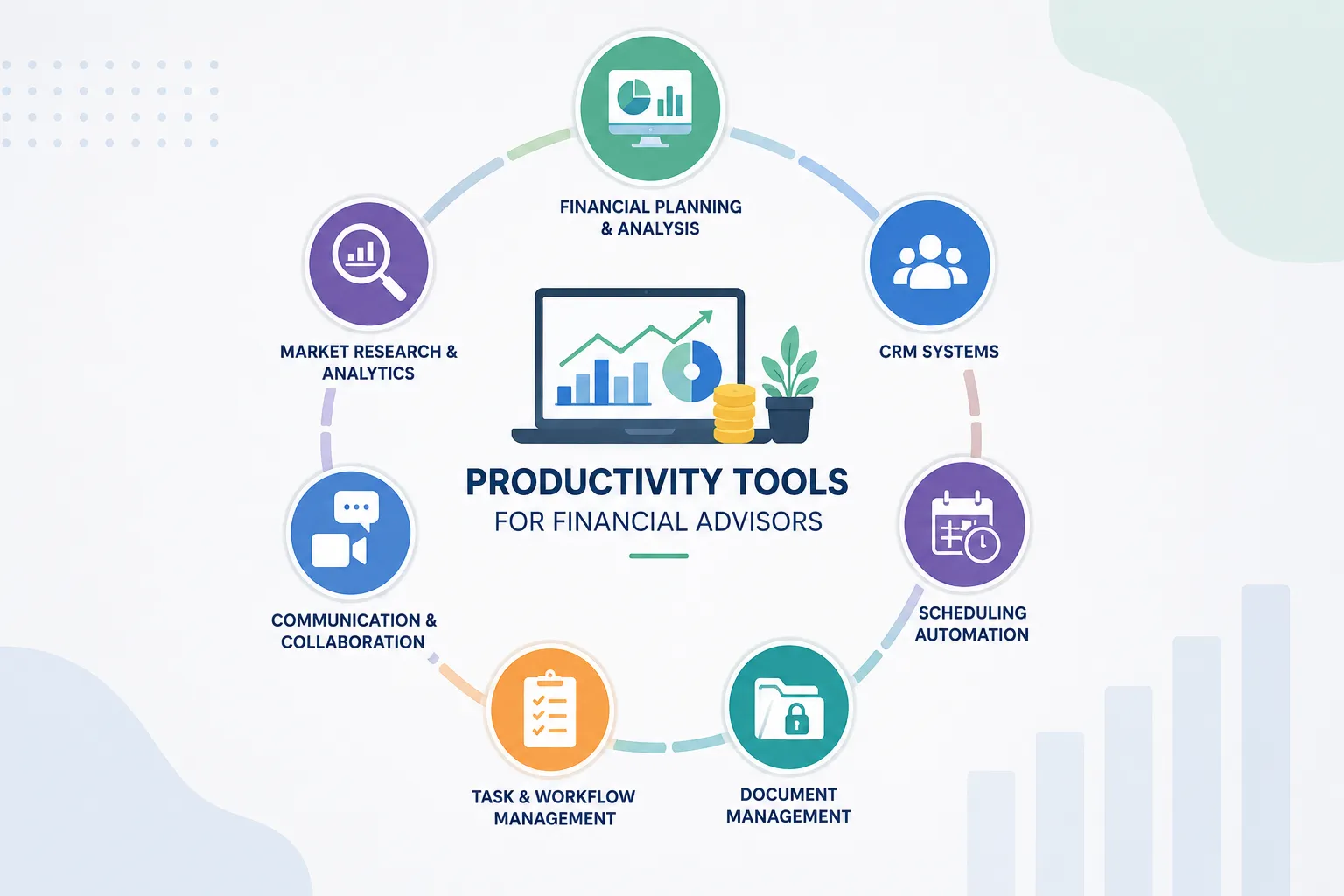
Productivity tools every financial advisor should integrate into their workflow in 2026.
1. Financial Planning and Analysis Tools
Financial planning software forms the backbone of an advisor’s decision-making process. These tools allow advisors to build structured financial plans, simulate future outcomes, and evaluate different investment scenarios without relying on manual calculations.
Instead of working across spreadsheets and disconnected documents, advisors can consolidate everything into a single platform that automatically updates projections based on market changes or client adjustments. This ensures accuracy while saving significant time.
Most advanced platforms also include retirement forecasting, tax planning insights, cash flow analysis, and risk modeling. These features allow advisors to present clients with clear, data-backed strategies that are easy to understand.
Another major advantage is visualization. Charts, dashboards, and scenario comparisons help clients see the long-term impact of financial decisions more clearly, improving trust and engagement.
2. Customer Relationship Management (CRM) Systems
Managing client relationships effectively is one of the most important aspects of financial advisory work. Without a structured system, client communication, follow-ups, and data tracking can quickly become inconsistent.
CRM systems solve this by centralizing all client information in one place. Advisors can store contact details, meeting notes, financial goals, investment history, and communication records in an organized dashboard. This eliminates the risk of missing important interactions.
Automation is another key benefit. CRMs can automatically schedule reminders for follow-ups, send client updates, and even segment clients based on financial profiles. This helps advisors deliver more personalized communication without additional effort.
A well-implemented CRM system also improves compliance tracking, ensuring that all client interactions are properly documented.
“If client management is your priority, you can also read the blog - Best CRM for financial advisors in 2026.”
This type of system becomes especially valuable as advisory firms grow, allowing professionals to maintain personalized service even with a large client base.
3. Calendar Management and Scheduling Automation Tools
Time management is one of the biggest challenges in financial advisory roles. Meetings, consultations, research, and administrative tasks often overlap, making scheduling difficult to manage manually.
Calendar automation tools simplify this process by allowing clients to book appointments based on real-time availability. This eliminates back-and-forth communication and reduces scheduling delays.
These tools also include automated reminders via email or SMS, which significantly reduces missed appointments. Time zone synchronization is especially useful for advisors working with international clients.
More advanced scheduling systems integrate directly with video conferencing platforms, allowing meetings to be set up instantly without additional coordination.
Overall, these tools help advisors maintain a structured daily routine while ensuring clients have easy access to consultations.
4. Document Management and Digital Signature Tools
Financial advisors handle large volumes of sensitive documents, including contracts, investment agreements, compliance forms, and client reports. Managing these manually can create inefficiencies and security risks.
Document management systems provide a centralized and secure environment for storing and organizing files. Advisors can quickly retrieve documents, track versions, and control access permissions.
Digital signature tools further streamline the workflow by allowing clients to sign documents electronically. This removes the need for printing, scanning, or physical mailing, significantly speeding up approval processes.
These systems also improve compliance, as they maintain clear audit trails for every document interaction. This is especially important in regulated financial environments where recordkeeping is critical.
5. Task and Workflow Management Tools
Financial advisory work involves multiple ongoing responsibilities, from onboarding new clients to monitoring portfolios and preparing reports. Without proper task organization, important deadlines can easily be missed.
Task management tools help advisors structure their workload into clear, trackable systems. Tasks can be categorized by priority, assigned deadlines, and monitored through completion stages.
Many platforms also offer workflow automation, where repetitive tasks such as reminders or status updates are handled automatically. This reduces manual effort and ensures consistency across operations.
These tools are particularly useful for advisory teams, where multiple professionals need visibility into shared responsibilities and client tasks.
6. Communication and Collaboration Platforms
Strong communication is essential in financial advisory services, both internally and externally. Clients expect timely updates, while teams require seamless coordination.
Modern communication tools combine messaging, video conferencing, and file sharing into a single platform. This reduces dependency on email and improves response times.
For advisory firms, these tools help create dedicated communication channels for different clients or projects. This ensures that important discussions are not lost in scattered email threads.
Video conferencing integration also allows advisors to conduct virtual meetings efficiently, improving accessibility for clients who prefer remote consultations.
7. Market Research and Data Analytics Tools
Financial decisions rely heavily on accurate and timely data. Market research tools provide advisors with real-time insights into economic trends, asset performance, and investment opportunities.
These platforms collect and analyze data from multiple financial sources, presenting it in easy-to-understand dashboards. Advisors can track portfolio performance, compare investment options, and identify emerging market trends.
Advanced analytics tools also allow advisors to generate predictive insights, helping them anticipate market shifts rather than simply reacting to them.
This leads to more strategic decision-making and improves the quality of financial advice delivered to clients.
Conclusion
Productivity tools have become essential for financial advisors who want to remain competitive in a rapidly evolving industry. Each tool—whether for financial planning, client management, scheduling, documentation, or analytics—plays a specific role in improving efficiency and service quality.
Advisors who adopt the right combination of tools can significantly reduce manual workload, improve accuracy, and deliver a more personalized client experience. As client expectations continue to rise, leveraging technology is no longer optional—it is a core part of building a successful advisory practice.
A well-integrated system not only improves day-to-day operations but also creates the foundation for long-term growth and scalability in the financial advisory industry.





















Sign in to leave a comment.