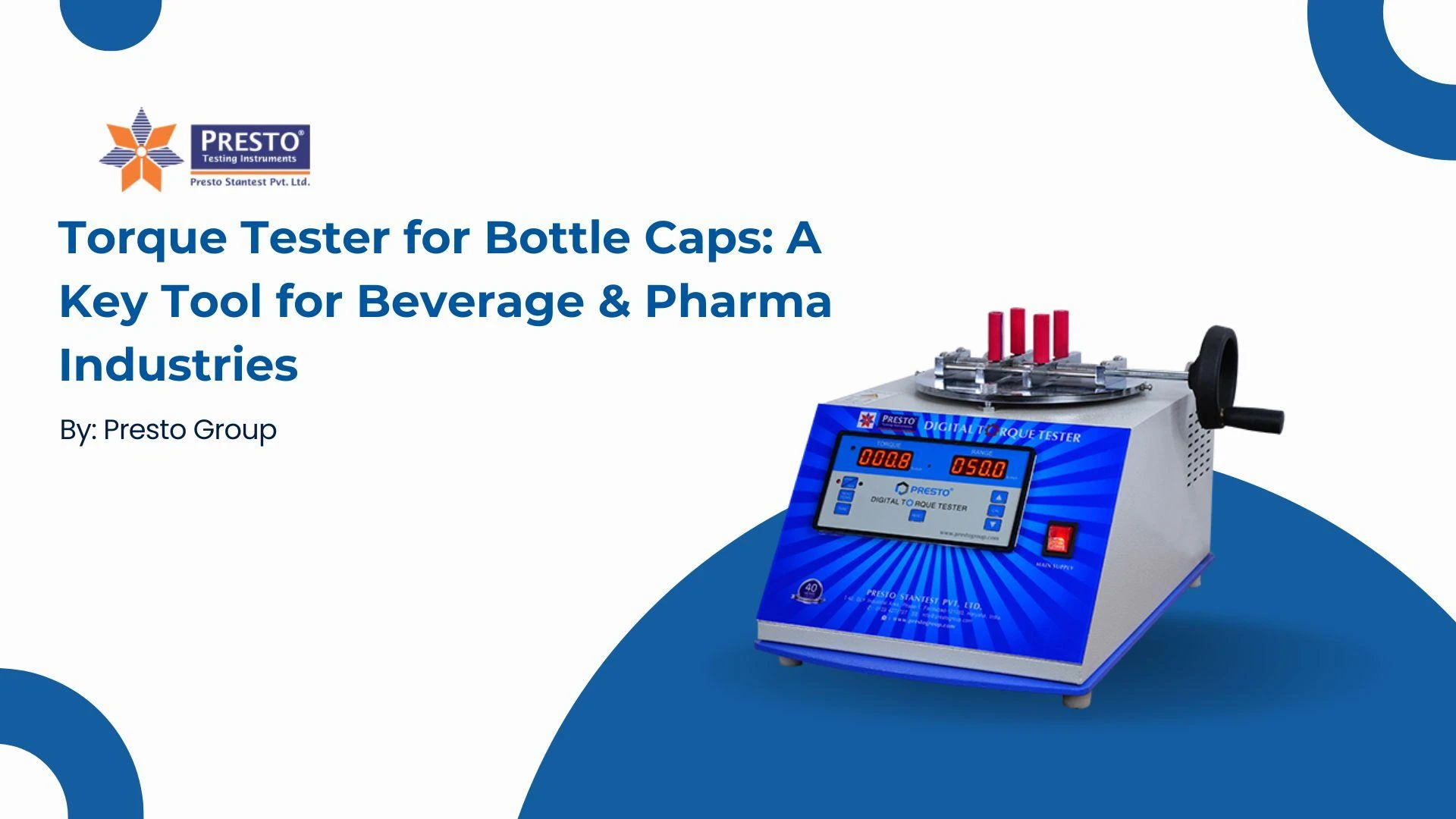

In the beverage and pharmaceutical industries, packaging plays a critical role in maintaining product safety, quality, and customer trust. Among the many packaging quality checks, one essential factor is the torque strength of bottle caps. A bottle cap that is too loose can lead to leakage, contamination, and reduced shelf life, while one that is too tight can frustrate customers and even damage the product. To address this challenge, manufacturers rely on a Torque Tester for bottle caps—a precise and reliable instrument designed to measure the torque required to open or close bottle caps.
What Is a Torque Tester?
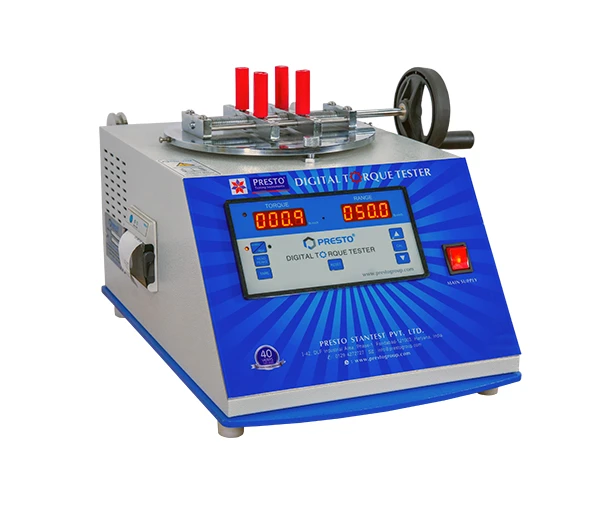
A torque tester is a device that assesses screw-on caps such as bottle cap in terms of the force, more specifically torque, to open or close it. In simplest terms, a torque tester is a measurement of how tight a cap is closed. This reading is important for quality control in numerous industries, particularly those with beverages and medicines, where product integrity and customer safety are of prime concern. The instrument gives a closure torque value, i.e., the torque required to turn a cap. This value is important in letting the manufacturers know that there is consistency in their production line.
The torque tester can be a basic torque tester analogue model, or else a digital one that is more complex. The torque tester analogue works on a mechanical basis, usually through a spring-based mechanism that deflects proportionally with applied torque. These instruments are simple and durable, with no power source needed, making them suitable for site tests. Digital versions, however, employ a transducer that translates torque into an electrical signal, which it displays on a screen. Both devices serve the same basic purpose: to measure force applied adequately to a bottle cap.
Why Do You Need a Torque Tester for Bottle Caps?
The torque tester equipment used for bottle caps is a critical piece of equipment in product quality and safety-testing systems. The contents of a bottle can leak, spoil, and/or become tainted if the cap was not tightened properly. For instance, consider a bottle of juice leaking into a grocery bag. Or how about a bottle of liquid medicine that has gone bad due to the introduction of air or moisture and is now of no therapeutic use to the patient. If it was too tight, a frustrated customer might experience the worst possible experience--or worse yet, an impossible opening-- which the customer provides complaints, and complaints will harm the reputation of any brand. In the case of that same bottle of medicine, if the cap is too tight, it could mean a patient was delayed their potentially lifesaving medication as the result of maybe having a complete crisis. Thus, the bottle cap torque tester provides the essential information needed to find that sweet spot of tightness but still easy enough to access.
With a torque test for bottle caps, manufacturers are able to set and sustain high standards of quality control. They can test caps along the entire production process—right from the sealing stage to random inspections on the finished product. This proactive initiative ensures problems with materials or capping machines are detected and addressed before widespread product recalls. Data from the torque tester allows for precise adjustment of the settings on the capping machine so that all of the bottles fit into the preferred torque range. Adequate torque testing is a part of GMP (good manufacturing practices) and often needs to be done for compliance with legislation in drugs or foods.
How do I choose a torque tester supplier and how much do they cost?
Choosing a quality torque tester supplier is crucial to obtaining a dependable torque tester that is within your project requirements. When looking for torque tester supplier, there are many factors to consider, such as supplier reputation, product supply, and customer support. A suitable supplier will provide an assortment of models ranging from basic torque tester analogue equipment to advanced digital testers with features such as data logging and statistics analysis. They should also offer calibration services and technical support to enable you to keep your equipment accurate in the long term. Requesting references or case histories from other businesses within your industry is also a good method of screening a prospective torque tester supplier.
The torque tester price may range broadly depending on the device type, features, and brand. A basic analogue torque tester systems might be priced at a couple hundred dollars, and a premium level digital bottle cap torque tester with high quality software and higher capacity could be thousands of dollars. Yes, it might be tempting to go with the cheapest torque tester possible, though bear in mind that you are actually making an investment into your brand name, and the quality of your product. An inexpensive errors device could ultimately result in expensive mistakes, and possibly lots of recalls later on. In general, it is often less expensive to buy a reliable torque tester from a reputable supplier. The tester should accurately measure torque with consistent results. Therefore, the cost of the torque tester has to be considered against the savings you might receive when you potentially lose fewer products and give customers a better experience.
Finding the right Torque Tester Price is simple with Presto. Our torque testing machines are designed to measure the opening and closing torque of bottles, caps, and closures with maximum accuracy. Built to deliver consistent results, our testers are trusted across packaging and manufacturing industries.
📞 Call us today at +91 9210 903 903 or 📩 email [email protected] to get your best deal on Torque Testers now.

























Sign in to leave a comment.