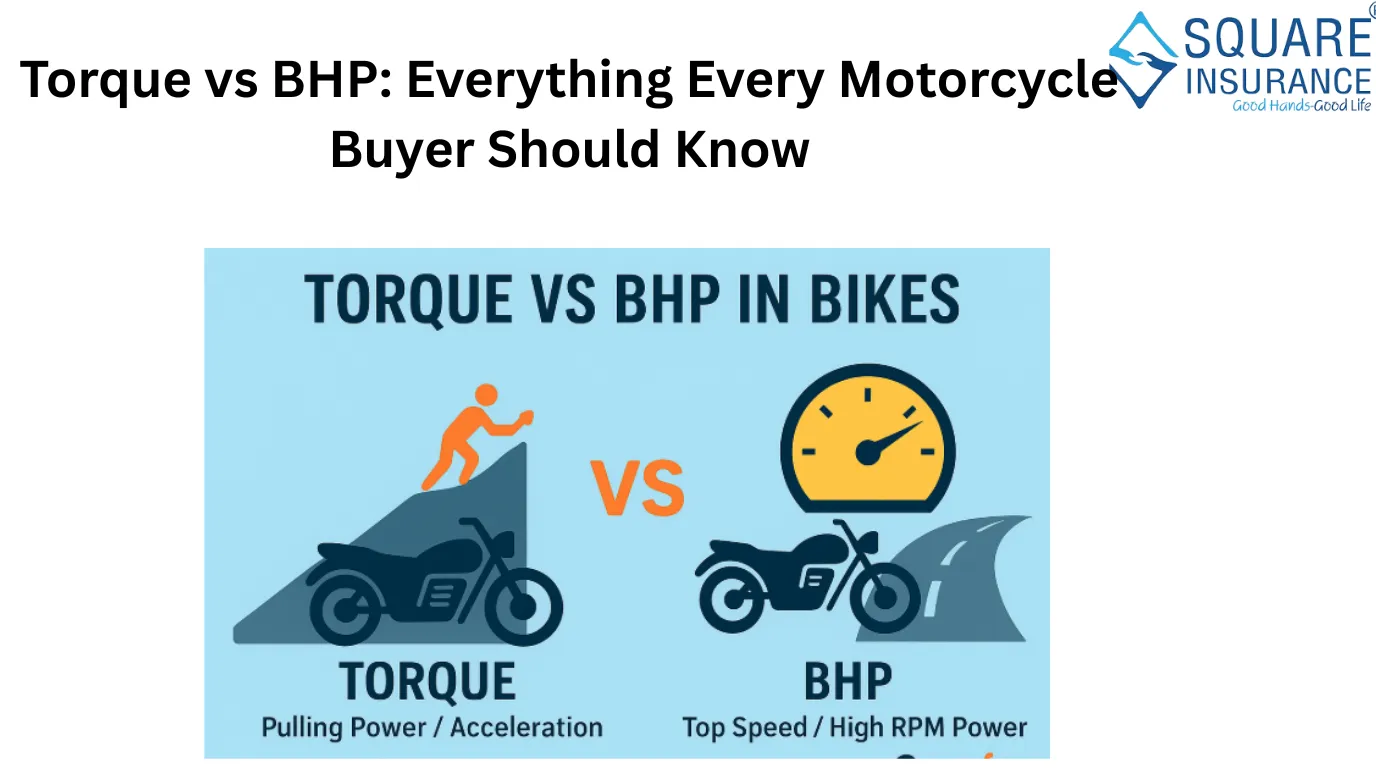

Buying a motorcycle isn't just about choosing a stylish design or a trusted brand. Modern buyers are becoming more aware of technical specifications, especially terms like Torque and BHP (Brake Horsepower). These two figures are often highlighted in motorcycle brochures, advertisements, and reviews, but many riders are unsure what they actually mean.
If you've ever wondered what is Torque vs BHP in a bike, understanding these performance metrics can help you choose a motorcycle that suits your riding style. Torque and BHP play different but equally important roles in determining how a bike accelerates, delivers power, and performs on various road conditions.
What is Torque in a Motorcycle?
Torque is the rotational force produced by a motorcycle's engine. In simple words, it is the force that turns the wheels and gets the bike moving.
Torque determines how strongly your motorcycle can pull from a standstill or accelerate without needing frequent gear changes.
It is commonly measured in:
- Newton Meters (Nm)
- Pound-feet (lb-ft) in some international markets
The higher the torque, the easier it becomes for the motorcycle to carry weight, climb slopes, and accelerate at lower engine speeds.
What is BHP (Brake Horsepower)?
BHP stands for Brake Horsepower, which measures the actual power produced by the engine before drivetrain losses.
Unlike torque, BHP indicates how much work the engine can perform over time. It plays a significant role in determining a motorcycle's:
- Top speed
- High-speed acceleration
- Overall engine performance
Higher BHP generally means the motorcycle can sustain greater speeds and deliver stronger performance at higher RPMs.
How Torque Affects Motorcycle Performance
Torque plays a major role in everyday riding.
1. Faster Initial Pickup
A motorcycle with higher torque accelerates quickly when you twist the throttle.
This is particularly useful during:
- Traffic signals
- Overtaking
- Stop-and-go traffic
2. Better Hill Climbing
Higher torque provides better pulling power while riding on steep roads or mountainous terrain.
The engine works more comfortably without frequent downshifting.
3. Comfortable Riding with Pillion
Whether you're carrying luggage or riding with a passenger, higher torque helps the motorcycle maintain smooth performance.
4. Reduced Gear Changes
High-torque motorcycles often require fewer gear shifts during city rides, making them easier to ride.
How BHP Influences Motorcycle Performance
While torque is noticeable at lower speeds, BHP becomes important as speed increases.
Higher Top Speed
Motorcycles with higher BHP can generally achieve greater maximum speeds.
Better Highway Cruising
High BHP allows smoother overtaking and comfortable cruising on highways.
Strong High-RPM Performance
Sport motorcycles rely heavily on higher BHP to deliver exciting performance at higher engine speeds.
Better Racing Capability
Track-focused motorcycles are designed to maximize horsepower for superior speed and lap times.
Which is More Important: Torque or BHP?
The answer depends entirely on your riding requirements.
Choose Higher Torque If You:
- Ride mostly in cities
- Commute daily
- Travel with a pillion
- Carry luggage
- Frequently ride on hilly roads
Higher torque makes everyday riding smoother and less tiring.
Choose Higher BHP If You:
- Ride on highways frequently
- Prefer sports motorcycles
- Enjoy high-speed touring
- Want stronger top-end performance
Higher horsepower becomes more valuable during long-distance rides.
How Torque and BHP Work Together
Torque and BHP are not competitors—they complement each other.
Horsepower is actually calculated using torque and engine speed (RPM). A well-balanced motorcycle delivers sufficient torque for low-speed riding while also producing enough BHP for comfortable highway performance.
Modern motorcycles are engineered to provide the right balance depending on their intended purpose.
For example:
- Commuter bikes prioritize usable torque.
- Touring motorcycles balance torque and horsepower.
- Sports bikes emphasize higher BHP while maintaining adequate torque.
Why RPM Matters
RPM (Revolutions Per Minute) indicates how fast the engine crankshaft rotates.
Here's how RPM affects both:
- Torque usually peaks at lower or mid RPM.
- BHP generally reaches its maximum at higher RPM.
This explains why sports motorcycles often require higher engine revs to unlock their full performance.
Real-Life Example
Imagine two motorcycles:
Motorcycle A
- 18 BHP
- 17 Nm Torque
Motorcycle B
- 25 BHP
- 18 Nm Torque
In city traffic, Motorcycle A may feel more responsive if its torque is available at lower RPM.
However, on highways, Motorcycle B will likely deliver better top-speed performance because of its higher horsepower.
This example shows why looking at only one specification doesn't provide the complete picture.
Does Higher Torque Mean Better Mileage?
Not necessarily.
Fuel efficiency depends on multiple factors, including:
- Engine tuning
- Riding habits
- Traffic conditions
- Motorcycle weight
- Aerodynamics
- Maintenance
A motorcycle with higher torque can sometimes improve efficiency in city riding because fewer gear changes are needed, but mileage is influenced by several other variables.
Torque vs BHP for Different Types of Riders
Daily Commuters
For office commuters and city riders, torque is generally more beneficial.
Benefits include:
- Quick acceleration
- Easier overtaking
- Smooth traffic riding
- Less gear shifting
Long-Distance Tourers
Touring riders should look for motorcycles that balance torque and horsepower.
Such bikes provide:
- Comfortable cruising
- Better overtaking
- Stable highway performance
- Strong luggage-carrying ability
Adventure Riders
Adventure motorcycles require high torque to handle:
- Off-road trails
- Hills
- Loose surfaces
- Heavy luggage
Sports Bike Enthusiasts
Performance-focused riders usually prioritize higher BHP for:
- Faster acceleration at high speeds
- Better racing capability
- Higher top speeds
Common Myths About Torque and BHP
Myth 1: Higher BHP Always Means a Better Bike
Reality:
The best motorcycle depends on your riding style, not just horsepower.
Myth 2: Torque Only Matters for Large Bikes
Reality:
Even small commuter motorcycles benefit from good low-end torque.
Myth 3: Higher Torque Means Higher Fuel Consumption
Reality:
Fuel efficiency depends on multiple engine and riding factors, not torque alone.
Myth 4: Horsepower and Torque Are the Same
Reality:
Torque measures rotational force, while BHP measures engine power. They are different but interconnected.
Tips for Motorcycle Buyers
Before purchasing a motorcycle, keep these factors in mind:
- Understand your primary riding purpose.
- Compare both torque and BHP instead of focusing on only one.
- Test ride the motorcycle whenever possible.
- Check the torque delivery curve, not just the peak figure.
- Consider comfort, braking, suspension, and fuel efficiency alongside engine performance.
- Evaluate maintenance costs and service availability.
- Balance performance with practicality.
A well-informed decision ensures you choose a motorcycle that offers the best riding experience for your lifestyle.
Conclusion
Understanding the difference between torque and BHP is essential for making a smarter motorcycle buying decision. Torque determines how quickly your bike responds at lower speeds and handles everyday riding conditions, while BHP influences high-speed performance and overall power delivery. Instead of choosing a motorcycle based solely on one specification, consider how both torque and horsepower align with your riding habits, travel needs, and budget.
Once you've selected the right motorcycle, protecting it with suitable insurance is equally important. Square Insurance helps riders compare bike insurance plans, understand policy features, and choose coverage that suits their needs. With the right motorcycle and comprehensive insurance protection, you can enjoy every ride with greater confidence and peace of mind.
Frequently Asked Questions (FAQs)
1. What is the main difference between torque and BHP?
Torque is the rotational force that helps a motorcycle accelerate and pull efficiently, while BHP measures the engine's power output, influencing top speed and high-RPM performance.
2. Which is more important for city riding: torque or BHP?
Torque is generally more important for city riding because it provides quicker acceleration, smoother traffic handling, and reduces the need for frequent gear changes.
3. Does higher BHP always mean a faster motorcycle?
Not always. While higher BHP contributes to better top speed and high-speed performance, factors like motorcycle weight, aerodynamics, gearing, and engine tuning also affect overall speed.
4. Is high torque better for touring?
Yes. Higher torque is beneficial for touring, especially when riding with luggage or a pillion, as it provides stronger pulling power and comfortable cruising.
5. Can two motorcycles have the same torque but different BHP?
Yes. Since BHP also depends on engine RPM, two motorcycles can produce similar torque figures while delivering different horsepower outputs.
6. Does torque affect fuel efficiency?
Torque alone does not determine fuel efficiency. Mileage depends on engine design, riding style, traffic conditions, maintenance, and overall vehicle efficiency.
7. Should beginners focus on torque or BHP when buying a motorcycle?
Beginners usually benefit more from motorcycles with balanced or higher low-end torque, as they are easier to ride, more forgiving in traffic, and require fewer gear changes.




























Sign in to leave a comment.