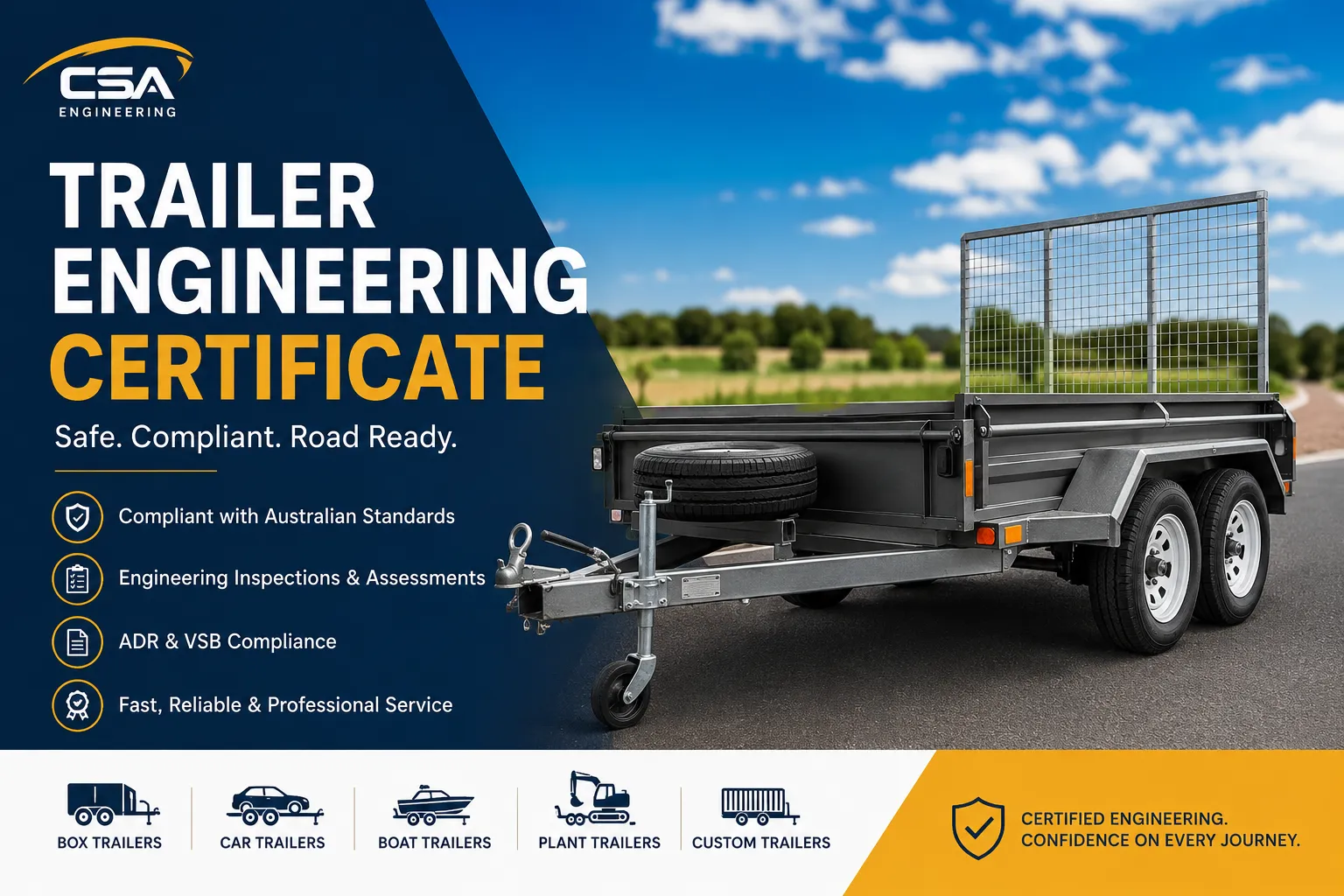

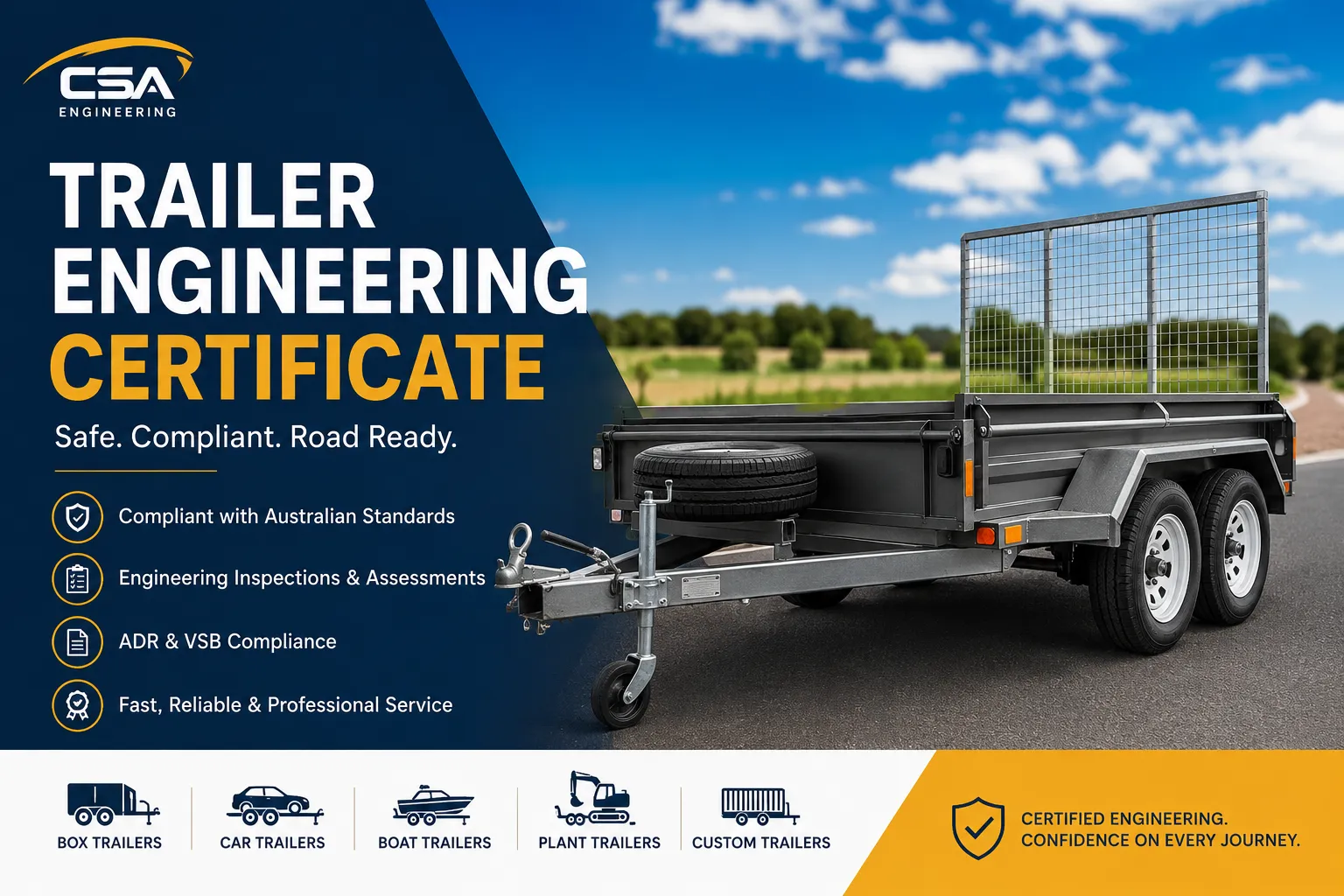
Trailers are an essential part of many industries, from construction and agriculture to logistics and recreational transport. Whether you're manufacturing a new trailer, modifying an existing one, or importing a trailer into Australia, ensuring it meets national safety and compliance standards is critical. One of the most important steps in this process is obtaining a trailer engineering certificate.
A certified trailer not only improves road safety but also simplifies registration, protects your investment, and demonstrates compliance with Australian Design Rules (ADRs) and relevant engineering standards. Working with experienced engineering professionals helps ensure your trailer is designed, assessed, and approved correctly from the beginning.
If you're looking for reliable trailer engineering services, CSA Engineering provides professional assessments, certification, compliance support, and engineering solutions for a wide range of trailers across Australia.
What Is a Trailer Engineering Certificate?
A trailer engineering certificate is an official engineering document issued after a qualified engineer has inspected, assessed, and verified that a trailer complies with applicable Australian regulations and engineering standards.
The certificate confirms that the trailer's design and construction meet safety requirements, making it suitable for registration and road use.
Engineering certification is often required for:
- Newly manufactured trailers
- Custom-built trailers
- Imported trailers
- Modified trailers
- Heavy-duty trailers
- Commercial transport trailers
- Recreational trailers
Without proper engineering certification, registering a trailer can become difficult, and owners may face additional inspections or costly modifications.
Why Trailer Engineering Certification Is Important
Obtaining engineering certification offers much more than regulatory compliance. It provides confidence that your trailer has been professionally evaluated for structural strength, durability, and operational safety.
Some of the key benefits include:
Improved Road Safety
A professionally engineered trailer is designed to withstand expected loads while maintaining stability during operation. Proper engineering reduces the likelihood of structural failures and improves overall road safety.
Easier Registration Process
Many registration authorities require engineering documentation before approving certain trailer types. Having the necessary certification can significantly reduce delays during registration.
Compliance with Australian Standards
Certified engineering ensures the trailer complies with:
- Australian Design Rules (ADRs)
- Vehicle Standards Bulletin (VSB)
- National Heavy Vehicle requirements (where applicable)
- State registration authority guidelines
Better Long-Term Reliability
Engineering assessments identify potential structural weaknesses before they become serious problems, reducing future repair costs.
When Do You Need Trailer Engineering Services?
Engineering certification may be necessary in several situations.
Building a Custom Trailer
Custom trailers require professional design verification to ensure the chassis, suspension, braking system, tow coupling, and structural components meet engineering standards.
Modifying an Existing Trailer
Changes such as:
- Increasing load capacity
- Extending the chassis
- Changing axle configurations
- Installing new suspension systems
- Adding specialized equipment
may require engineering approval before the trailer can legally operate.
Importing Trailers into Australia
Imported trailers often require inspections and engineering certification to demonstrate compliance with Australian regulations before registration.
Commercial Fleet Expansion
Businesses adding trailers to their fleet benefit from engineering assessments that ensure every unit complies with national safety requirements.
Components Assessed During Trailer Certification
Professional trailer engineers evaluate multiple areas before issuing certification.
Structural Design
Engineers examine:
- Chassis strength
- Weld quality
- Material specifications
- Frame rigidity
- Load-bearing capacity
These assessments ensure the trailer can safely support its intended payload.
Suspension Systems
The suspension system directly affects trailer stability and handling.
Engineering inspections verify:
- Suspension configuration
- Mounting points
- Axle alignment
- Weight distribution
Braking Systems
Proper braking performance is essential for safe towing.
Engineers inspect:
- Brake type
- Brake efficiency
- Brake installation
- Compliance with ADR requirements
Coupling Systems
Tow couplings must be suitable for the trailer's intended capacity.
Inspections include:
- Coupling strength
- Safety chains
- Mounting integrity
- Compatibility with towing vehicles
Lighting and Safety Equipment
Certification also includes checking:
- Lighting systems
- Reflectors
- Electrical wiring
- Safety labels
- Identification plates
Secondary Engineering Services That Support Certification
A professional engineering firm offers more than inspections alone.
Additional services often include:
Trailer Design
Engineering begins long before construction starts.
Qualified engineers prepare detailed trailer designs that optimize:
- Structural strength
- Weight distribution
- Manufacturing efficiency
- Regulatory compliance
Engineering Calculations
Accurate engineering calculations determine:
- Maximum payload
- Stress distribution
- Chassis performance
- Structural integrity
These calculations form a key part of the certification process.
Compliance Documentation
Professional engineers prepare technical reports, engineering drawings, and supporting documentation required by registration authorities.
Engineering Consultation
Whether you're designing a single trailer or managing commercial production, expert consultation helps avoid expensive compliance issues later.
Industries That Benefit from Trailer Engineering
Trailer engineering supports a wide range of industries.
These include:
- Construction
- Agriculture
- Mining
- Transport and logistics
- Manufacturing
- Marine
- Automotive
- Recreational vehicle industry
Each sector has unique trailer requirements, making professional engineering essential for long-term safety and compliance.
Common Types of Trailers Requiring Certification
Engineering certification is available for various trailer categories.
These include:
- Box trailers
- Flatbed trailers
- Car trailers
- Boat trailers
- Horse floats
- Equipment trailers
- Machinery trailers
- Caravan trailers
- Plant trailers
- Heavy-duty transport trailers
- Custom-built trailers
Each trailer type requires individual engineering assessment based on its intended use.
Why Choose Professional Trailer Engineers?
Choosing experienced engineering professionals provides several advantages.
Accurate Compliance Assessment
Qualified engineers understand current Australian regulations and ensure every aspect of the trailer meets applicable requirements.
Reduced Approval Delays
Well-prepared engineering documentation helps registration authorities process applications more efficiently.
Cost Savings
Identifying engineering issues during design is significantly less expensive than correcting completed trailers.
Practical Engineering Advice
Experienced engineers recommend design improvements that increase durability, reduce maintenance, and improve operational performance.
Why CSA Engineering Is a Trusted Choice
CSA Engineering offers comprehensive trailer engineering solutions for manufacturers, builders, importers, and private owners throughout Australia.
Their services include:
- Trailer engineering assessments
- Engineering certification
- Structural analysis
- Compliance inspections
- ADR compliance support
- Engineering drawings
- Design verification
- Modification approval
- Technical reporting
Their experienced engineering team works closely with clients throughout the entire certification process, helping ensure trailers meet all applicable Australian standards while minimizing delays.
Whether you're building a new trailer, modifying an existing one, or seeking approval for an imported trailer, CSA Engineering provides practical engineering expertise tailored to your specific project.
Learn more about their trailer engineering services at:
https://www.csaengineering.com.au/trailer-engineering/
Final Thoughts
Obtaining a trailer engineering certificate is one of the most important steps in ensuring your trailer is safe, legally compliant, and ready for Australian roads. From structural integrity and braking systems to suspension and ADR compliance, professional engineering certification helps protect both your investment and everyone sharing the road.
Rather than navigating complex engineering requirements alone, partnering with experienced professionals ensures the process is accurate, efficient, and stress-free. If you're planning to build, modify, import, or certify a trailer, CSA Engineering offers the expertise needed to guide your project from concept through compliance.
Choose trusted engineering support, secure your trailer engineering certificate, and ensure your trailer meets the highest standards of safety, reliability, and performance for years to come.



























Sign in to leave a comment.