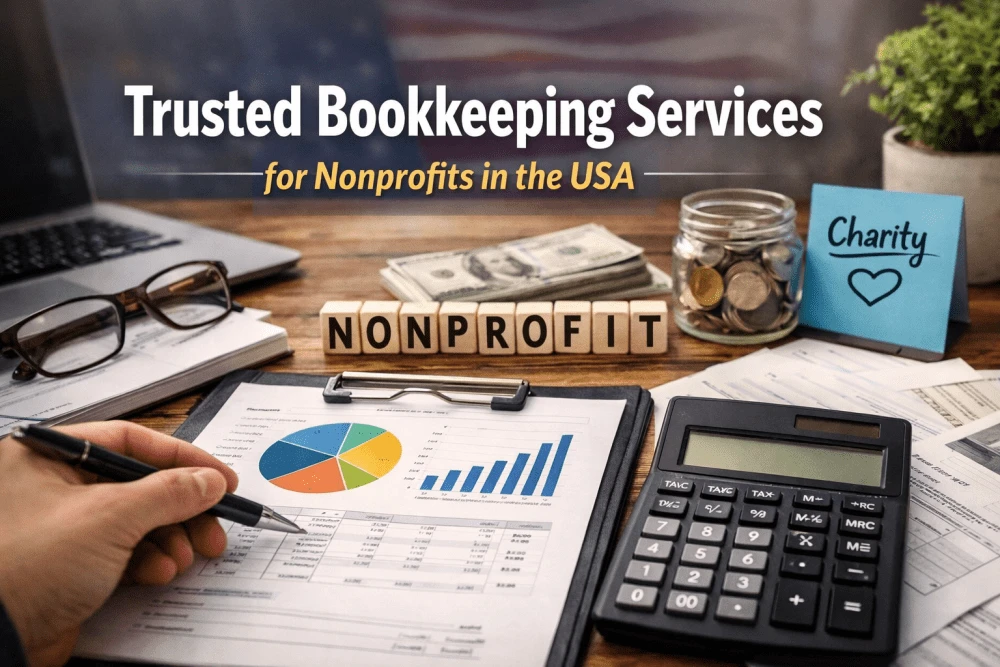

Running a nonprofit is rewarding work, but the financial side of things can get complicated fast. Between tracking grants, managing restricted funds, filing IRS Form 990, and keeping board members informed, it’s easy to see how financial management becomes a full-time job in itself. That’s where professional bookkeeping services for nonprofits come in.
Unlike for-profit accounting, nonprofit bookkeeping follows a different set of rules. There’s no “profit” line to chase. Instead, the goal is accountability, transparency, and staying true to your mission. Organizations that get this right tend to build stronger donor trust, pass audits smoothly, and keep their tax-exempt status without the headache.
What to Look For in a Nonprofit Bookkeeper
Not every CPA or bookkeeper has worked with nonprofits. When evaluating options, it’s worth asking a few specific questions:
• Do they have experience with fund accounting specifically?
• Have they prepared IRS Form 990s before?
• Are they familiar with your accounting software (QuickBooks Nonprofit, Aplos, Sage Intacct)?
• Can they support audit preparation if your organization is required to have one?
• Do they understand restricted vs. unrestricted fund reporting?
References matter too. Talk to other nonprofits they’ve worked with. A bookkeeper who’s helped similar organizations navigate a first audit or a complex grant is worth their weight in gold.
Common Financial Mistakes Nonprofits Make
Even well-run organizations trip up on certain bookkeeping issues. A few of the most common:
• Comingling restricted and unrestricted funds. This is probably the most frequent issue. Even well-intentioned organizations sometimes spend restricted grant money on general operations when cash gets tight, creating a compliance problem that’s hard to unwind.
• Not reconciling accounts monthly. Letting reconciliation slide for a quarter or two turns a manageable task into a major project.
• Misclassifying expenses. Incorrectly coding program expenses as administrative (or vice versa) affects your program efficiency ratios, which donors and watchdog sites pay close attention to.
• Missing Form 990 deadlines. The IRS can revoke tax-exempt status if a nonprofit fails to file for three consecutive years. Late filing penalties also add up.
How Non-Profit Books Supports Organizations Across the USA
Non-Profit Books (non-profitbooks.com) works exclusively with tax-exempt organizations. That focus matters. The team isn’t dividing attention between retail clients and real estate developers. The work is specifically tailored to the compliance and reporting needs of nonprofits, which shows in the quality of the service.
Whether you’re a startup nonprofit still figuring out your financial systems, or an established organization preparing for your first audit, the right bookkeeping support helps you stay organized, compliant, and focused on the work that actually matters.
Outsourcing your nonprofit bookkeeping services doesn’t mean losing control. It means gaining a partner who keeps the financial house in order while your team concentrates on delivering programs and building community.
When Is the Right Time to Hire a Nonprofit Bookkeeper?
There’s no single answer, but a few situations usually signal it’s time to get professional help:
• Your organization is applying for or receiving its first major grant
• Your annual budget has crossed $250,000
• Your treasurer is overwhelmed or your volunteer capacity has maxed out
• You’ve had audit findings or financial discrepancies in the past
• Your board is asking financial questions you’re struggling to answer confidently
At any of those inflection points, investing in professional nonprofit accounting services pays off quickly, both in time saved and mistakes avoided.
The Bottom Line on Nonprofit Bookkeeping
Good financial management is foundational to a healthy nonprofit. It supports donor trust, regulatory compliance, strategic planning, and ultimately, the ability to do more good in the world. The organizations that tend to thrive long-term are the ones that take their finances as seriously as their mission.
Whether you’re just getting started or looking to level up your financial systems, finding the right nonprofit bookkeeping services is one of the most practical investments your organization can make. Get the books right, and everything else gets a little easier.
FAQ: Nonprofit Bookkeeping Services
Q: What is the difference between nonprofit bookkeeping and regular bookkeeping?
Nonprofit bookkeeping uses fund accounting to track money by its intended purpose, such as restricted grants or program-specific donations. Regular bookkeeping focuses on profit and loss, which doesn’t apply to tax-exempt organizations. Nonprofits also have unique reporting requirements, including IRS Form 990 and grant financial reports.
Q: How much do bookkeeping services for nonprofits typically cost?
Costs vary based on the size of the organization, transaction volume, and the scope of services needed. Small nonprofits might pay a few hundred dollars per month for basic bookkeeping, while larger organizations with multiple funding streams and audit requirements will pay more. Outsourcing is generally more cost-effective than hiring a full-time in-house accountant.
Q: Do all nonprofits need to file IRS Form 990?
Most federally tax-exempt organizations are required to file some version of Form 990 annually. The specific form depends on the organization’s gross receipts and total assets. Very small nonprofits may qualify to file the 990-N (e-Postcard), while larger organizations file the full 990. Failing to file for three consecutive years results in automatic revocation of tax-exempt status.
Q: What accounting software do nonprofits typically use?
QuickBooks for Nonprofits is widely used by smaller to mid-sized organizations. Aplos and Sage Intacct are popular among organizations that need more robust fund accounting features. The right choice depends on your budget, staff capacity, and reporting needs.
Q: Can a bookkeeper help us prepare for an audit?
Yes. A bookkeeper experienced in nonprofit accounting services can organize your financial records, reconcile accounts, prepare necessary schedules, and work alongside your auditors. Having well-maintained books going into an audit significantly reduces the time and cost involved.






























Sign in to leave a comment.