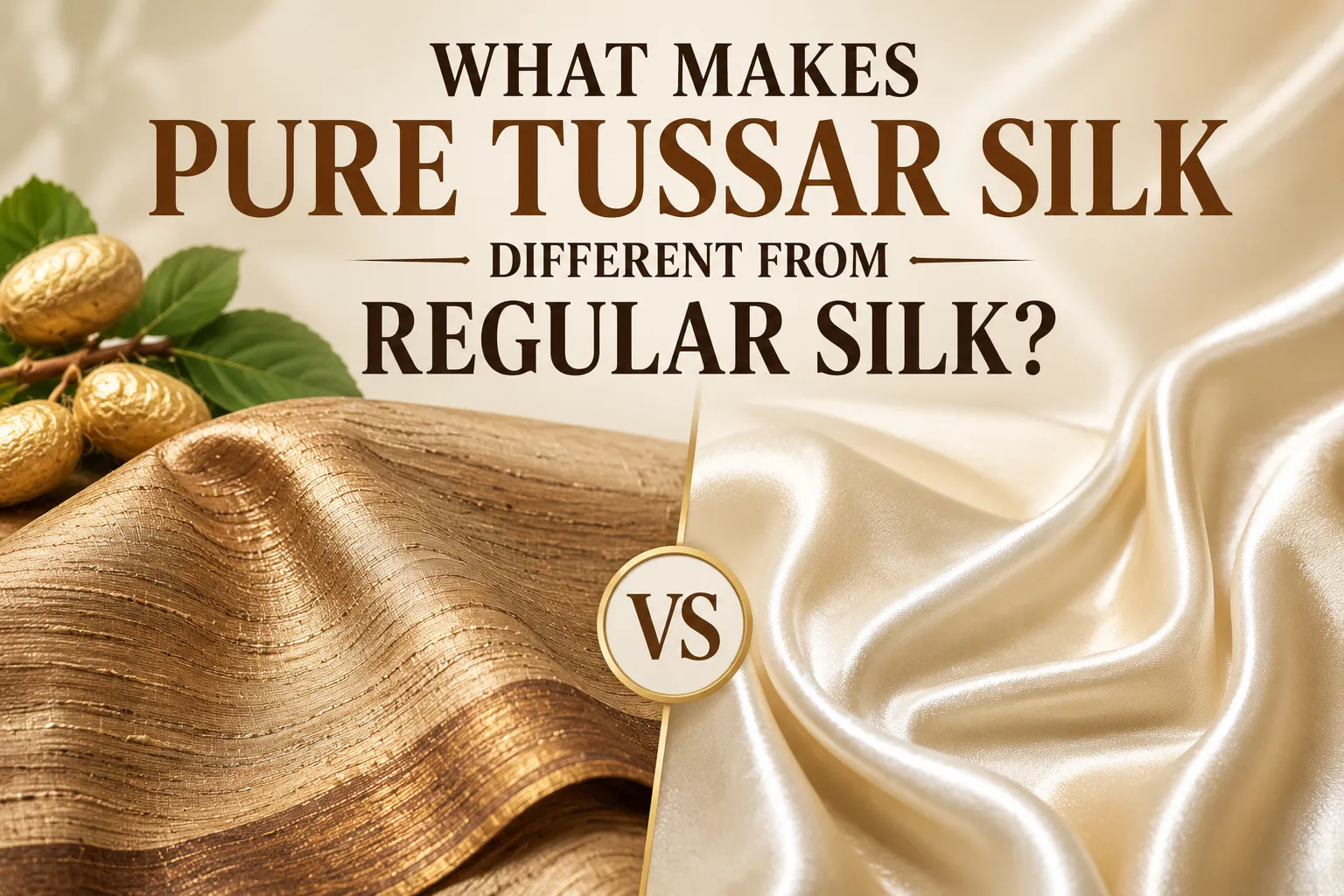

Pure Tussar silk stands apart from regular silk because of its texture, natural colour, production process, and overall appearance. While both fabrics come from silkworms, they are produced by different species and have noticeably different qualities.
The most recognisable tussar silk characteristics include a lightly textured surface, warm natural tones, subtle shine, and visible variations in the weave. Regular silk, particularly mulberry silk, is usually smoother, glossier, and more uniform.
What Is Pure Tussar Silk?
Pure Tussar silk is a type of wild silk produced by silkworms that live on trees in forested regions. These silkworms commonly feed on leaves from Arjun, Sal, and Asan trees.
Unlike cultivated silkworms used for mulberry silk, Tussar silkworms grow in a more natural environment. This affects the structure of the silk fibres and gives the finished fabric its recognisable texture.
A pure tussar silk saree usually has a warm beige, honey, cream, or golden-brown base. This natural colour comes from the silk fibre itself and contributes to the fabric’s earthy appearance.
How Is Regular Silk Different?
The term regular silk commonly refers to mulberry silk, the most widely produced variety of silk. Mulberry silkworms are raised in controlled conditions and fed mainly on mulberry leaves.
This controlled production creates long, fine, and uniform silk fibres. As a result, mulberry silk feels smoother and has a brighter, more polished shine.
Tussar silk fibres are generally shorter and less uniform. They create subtle slubs and variations across the fabric. These are not defects. They are natural tussar silk characteristics that give each saree a slightly different appearance.
Tussar Silk Has a More Textured Surface
Texture is one of the easiest ways to distinguish pure Tussar silk from regular silk. When touched, Tussar silk feels slightly grainy or crisp compared to the smooth and slippery surface of mulberry silk.
This texture gives the fabric enough body to hold pleats and structured drapes. It works well for sarees, dupattas, jackets, and garments that need to maintain their shape.
Regular silk flows more freely and creates softer folds. It may be preferred when the wearer wants a fluid, close-fitting drape.
The Shine Is Softer and More Natural
Regular silk is known for its bright and reflective sheen. Under direct light, the fabric can appear highly polished and luminous.
Tussar silk has a more muted glow. Its shine appears earthy and understated rather than glossy. This softer lustre is among the tussar silk characteristics that make the fabric suitable for both traditional and contemporary outfits.
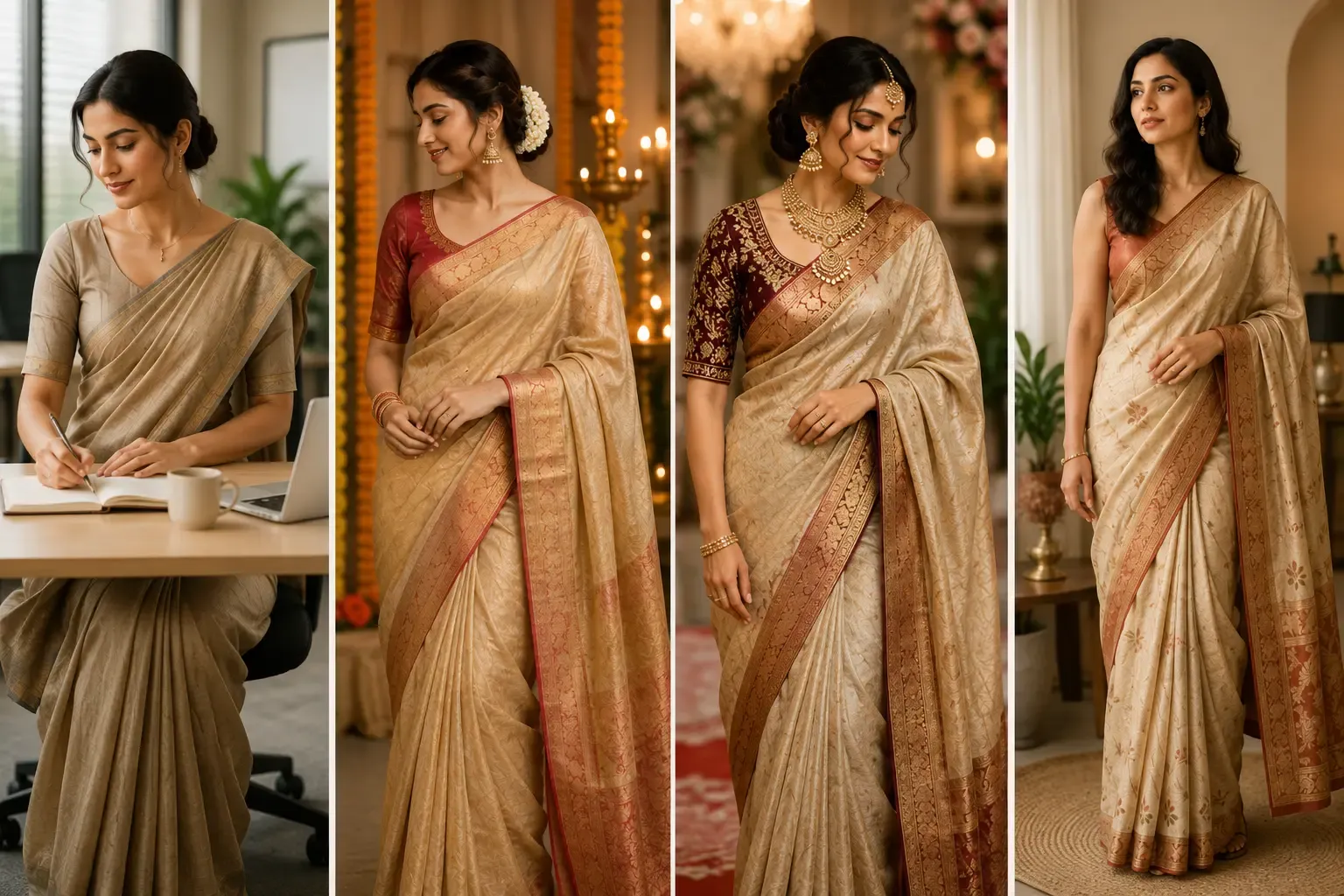
Tussar silk can be worn for daytime celebrations, festive gatherings, weddings, cultural events, and professional occasions. It looks elegant without appearing excessively formal.
Pure Tussar Silk Has Natural Colour Variations
Another major difference is the natural colour of the raw fibre. Mulberry silk is generally white or creamy, allowing it to take on bright and uniform shades easily.
Tussar silk naturally appears in beige, tan, gold, or light brown tones. Even after dyeing, its original base colour can add warmth and depth to the final shade.
Minor colour variations may appear because the fibres do not always absorb dye evenly. Instead of making the saree look unfinished, these changes strengthen its handmade and natural character.
The Weave Often Shows Natural Slubs
Pure Tussar silk commonly contains fine lines, knots, or slubs within the weave. These appear because wild silk fibres are less uniform than cultivated mulberry silk fibres.
Regular silk generally has a smooth and consistent weave. In Tussar silk, visible fibre variations create texture and movement across the saree.
These irregularities are valued by people who appreciate handloom textiles. Among the most authentic tussar silk characteristics, natural slubs help distinguish genuine fabric from highly uniform synthetic or machine-made alternatives.
Tussar Silk Feels Light but Holds Its Shape
Although Tussar silk has a firm texture, it is usually lightweight and breathable. It does not cling closely to the body and allows air to move through its weave.
This makes it comfortable for warm weather and suitable for occasions lasting several hours. The fabric also has enough structure to keep saree pleats neat and prevent the pallu from losing its shape.
Regular silk may feel softer against the skin. However, heavier silk varieties can feel warmer or more difficult to manage during long events.
Is Pure Tussar Silk Suitable for Sarees?
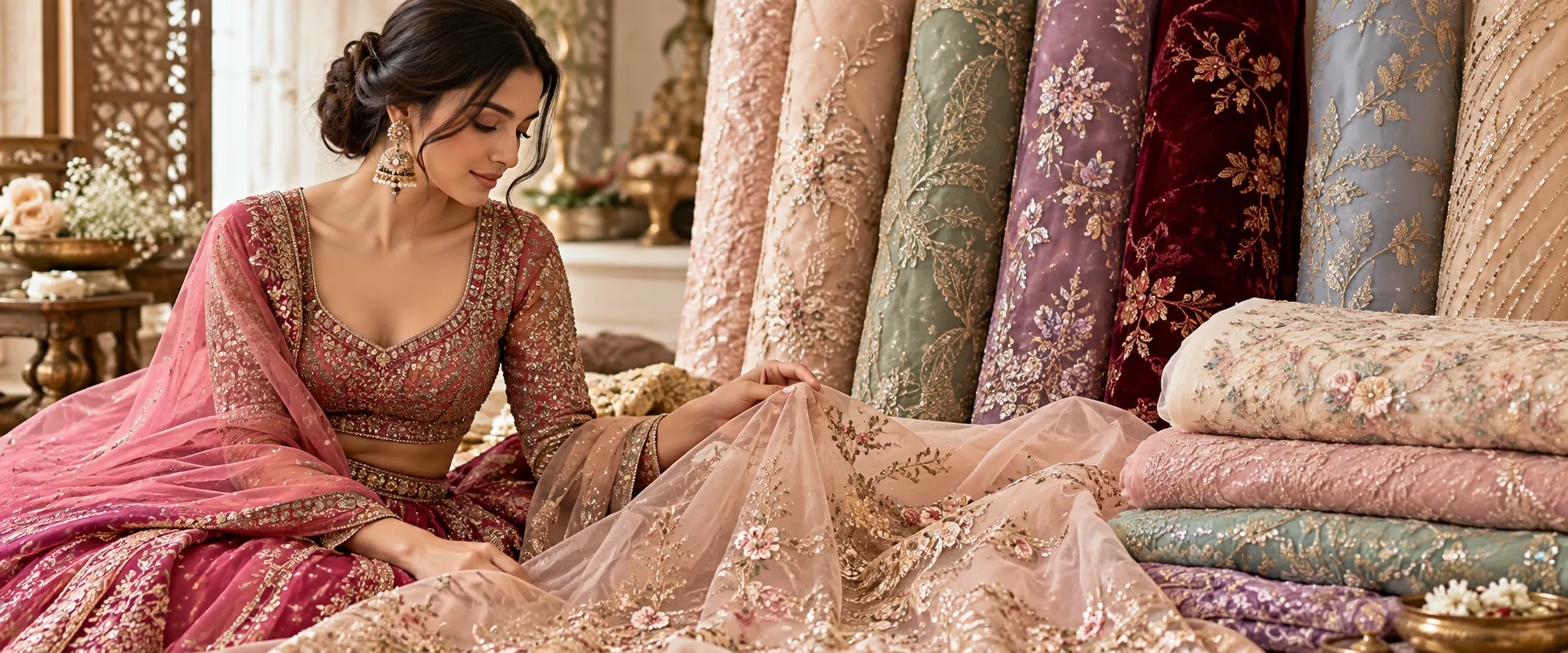
Pure Tussar silk works especially well for sarees because it combines comfort, structure, and natural elegance. Its surface can support hand painting, block printing, embroidery, zari borders, and woven motifs without losing its original character.
The fabric can be styled with traditional jewellery for weddings or paired with a simple blouse for smaller occasions. Its muted shine also makes it easy to dress up or tone down.
Final Thoughts
Pure Tussar silk differs from regular silk mainly in its origin, texture, colour, shine, and weave. Regular silk is smoother, brighter, and more uniform. Tussar silk is textured, warm-toned, breathable, and naturally irregular.
Understanding these tussar silk characteristics can help you choose a fabric that suits your preferred drape and occasion. Pure Tussar silk is ideal for those who appreciate subtle shine, visible craftsmanship, and the natural beauty of handwoven textiles.
Frequently Asked Questions on Tussar Silk Characteristics and Key Differences
1. What are the main Tussar silk characteristics?
The main Tussar silk characteristics include a slightly textured surface, natural golden-beige colour, subtle shine, visible slubs, and breathable weave. Unlike smooth mulberry silk, Tussar silk has a more earthy and handcrafted appearance.
2. How is pure Tussar silk different from regular silk?
Pure Tussar silk is produced by wild silkworms and has shorter, less uniform fibres. Regular mulberry silk comes from cultivated silkworms and has finer, smoother fibres. Tussar silk is more textured, while mulberry silk is softer and glossier.
3. Is Tussar silk rough or comfortable to wear?
Tussar silk has a slightly crisp and grainy texture, but it is generally lightweight and breathable. The fabric becomes softer with use while retaining enough structure to hold saree pleats and the pallu neatly.
4. Does pure Tussar silk have a natural golden colour?
Yes. One of the most recognisable Tussar silk characteristics is its natural beige, honey, tan, or golden-brown colour. This warm base gives dyed Tussar handloom silk sarees greater depth and an earthy finish.
5. Is Tussar silk suitable for weddings and festive occasions?
Yes. Tussar silk sarees are suitable for weddings, festivals, cultural gatherings, and daytime celebrations. Their subtle shine, structured drape, and compatibility with zari, embroidery, prints, and woven motifs make them easy to style for different occasions.



















Sign in to leave a comment.