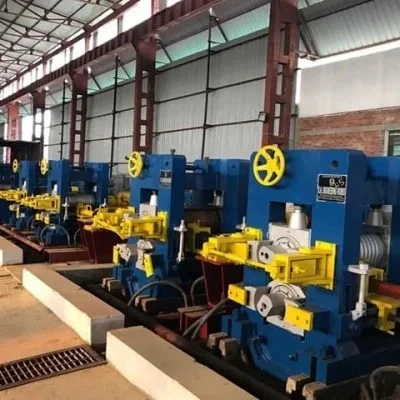

In the realm of steel re-rolling and manufacturing, twin channel rolling mill systems have become quite important. Twin channels were made particularly for high-speed rolling processes, like those in twin channel rolling mill. They make it much easier to cool and handle finished steel bars.
The twin channels combine with the quenching system to quickly and safely move red-hot bars to the cooling bed. This blog looks at all the different parts of twin channel rolling mills, including how they are built, how they work, their benefits, how they are used in Indian steel factories, new technologies, and what the future holds for them.
Learning About How Twin Channels Work in Rolling Mills
In the last step of rolling, twin channel rolling mill are quite important. Twin channels are an important link between the rolling mill and the cooling bed. They are put in after the finishing stand. Their main job is to catch hot bars that are coming in quickly and safely and evenly guide them to the cooling bed. In a normal arrangement, single channels or manual procedures were used, which made it more likely that the bars would flex, the surface would change shape, and the bars wouldn't line up properly. As dual channel systems have gotten better, steel makers have been able to cut down on the need for people to get involved, make things safer, and make sure that cooling is even. Twin channels use pneumatic cylinders and flapper devices to control the path of the bar. The technology cuts down on delays and speeds up the flow of the mill by guiding two strands at the same time into different routes. The design also stops bars from overlapping and noses from bending, which are major concerns in previous systems.
The dual channel rolling mill technology is a big deal for making steel nowadays, especially when it comes to TMT bars. These systems boost throughput, lower material loss, and raise the overall quality of the product by making sure that red-hot bars are handled safely and accurately. Their use in Indian steel factories shows a move towards more automation, accuracy, and efficiency. As new ideas come up, twin channels will change in both design and function.



























Sign in to leave a comment.