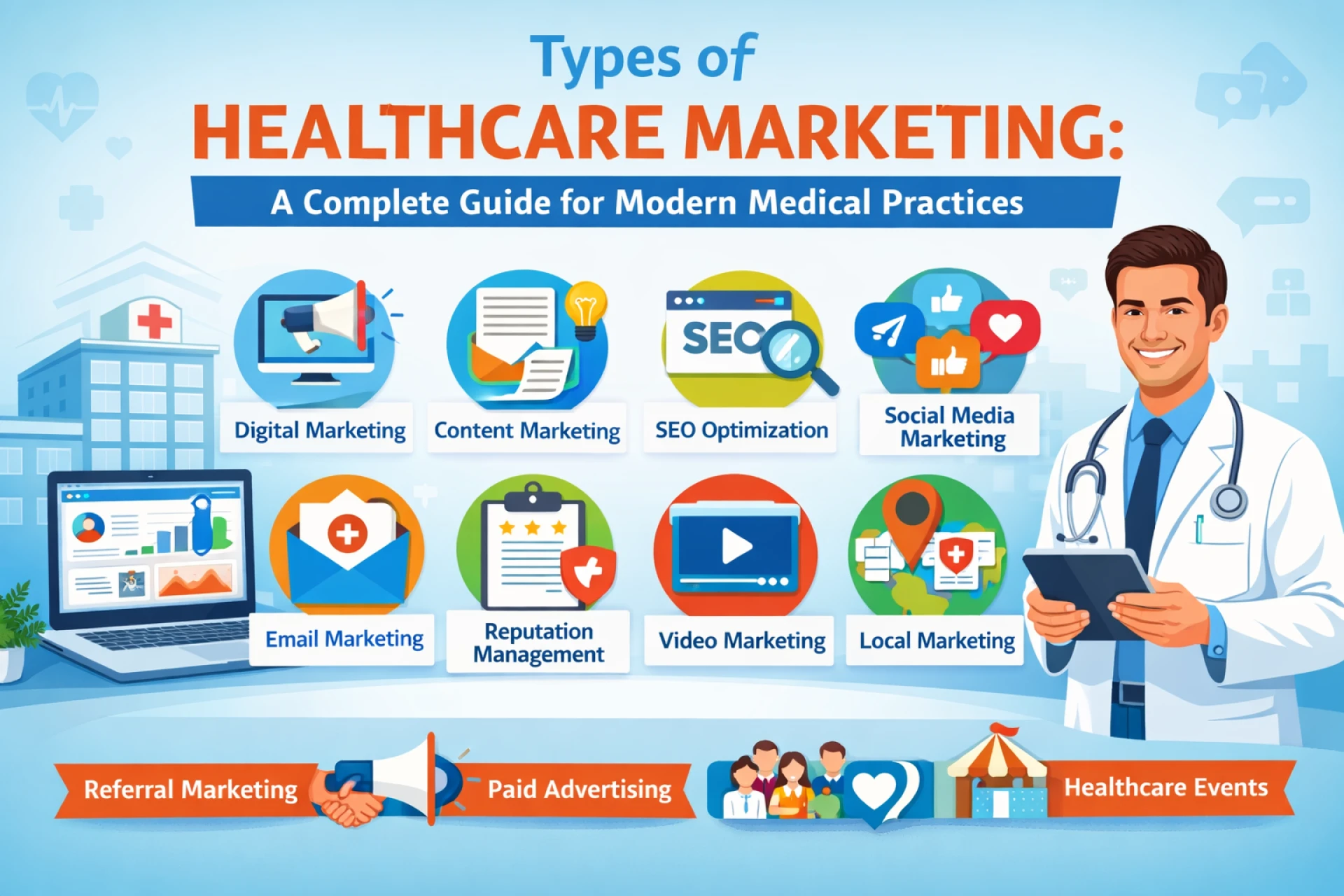

The healthcare industry has experienced a significant transformation in recent years. Patients today are more informed, digitally connected, and actively involved in their healthcare decisions. Before selecting a doctor, clinic, or hospital, many patients search online, read reviews, compare services, and look for reliable medical information. Because of this shift in patient behavior, healthcare providers must adopt strategic marketing approaches to remain visible and competitive.
Healthcare marketing is not just about promoting services. It is about building trust, educating patients, improving communication, and creating meaningful relationships with communities. By understanding the different types of healthcare marketing, medical practices can design strategies that attract the right audience, improve patient engagement, and support long-term growth.
This comprehensive guide explains the most effective healthcare marketing types used by modern hospitals, clinics, and healthcare professionals.
Digital Marketing in Healthcare
Digital marketing has become the foundation of modern healthcare promotion. It involves using online platforms, digital tools, and internet-based strategies to reach potential patients. Since most people now search online for healthcare information and medical providers, having a strong digital presence is essential for any medical practice.
Digital marketing allows healthcare organizations to communicate directly with patients through their websites, search engines, social media platforms, and digital advertising channels. A well-optimized digital strategy can help healthcare providers increase brand visibility, educate patients, and improve appointment bookings.
Some common digital marketing activities in healthcare include website optimization, online advertising, search engine marketing, social media promotion, and patient engagement campaigns. These strategies allow healthcare organizations to reach their target audience efficiently and measure the success of their campaigns through analytics and performance tracking.
Healthcare Content Marketing
Content marketing plays a vital role in educating patients and establishing medical authority. Instead of directly promoting services, content marketing focuses on providing valuable information that helps patients understand health conditions, treatments, and preventive care.
Healthcare content can take many forms, including blog articles, health guides, educational videos, infographics, patient resources, and frequently asked questions. When patients search for health information online, informative content helps them find reliable answers and builds trust in the healthcare provider offering that information.
For example, a dermatology clinic may publish articles about skin care routines, treatment options for acne, or tips for protecting skin from sun damage. This type of educational content helps potential patients understand their health concerns while positioning the clinic as a trusted source of medical knowledge.
Consistent content marketing also improves search engine visibility, making it easier for patients to discover healthcare providers online.
Search Engine Optimization (SEO) for Healthcare
Search Engine Optimization is one of the most powerful healthcare marketing strategies because it helps medical websites appear higher in search engine results. When patients search for phrases such as “best cardiologist near me” or “pediatric clinic in my city,” SEO determines which healthcare websites appear at the top of the results.
Healthcare SEO focuses on improving website content, structure, and technical performance so search engines can easily understand and rank the site. Key elements of healthcare SEO include keyword optimization, mobile-friendly design, fast page loading speed, and high-quality health content.
Local SEO is particularly important for medical practices because most patients prefer healthcare providers located near them. By optimizing local listings, directories, and online profiles, clinics and hospitals can improve their visibility for local search results.
Effective SEO strategies help healthcare organizations attract organic traffic, increase patient inquiries, and build long-term online visibility.
Social Media Marketing for Healthcare
Social media platforms have become essential communication channels for healthcare organizations. They allow hospitals, clinics, and medical professionals to connect with patients, share educational information, and promote health awareness initiatives.
Through social media marketing, healthcare providers can build a more personal connection with their audience. Platforms like Facebook, Instagram, LinkedIn, and YouTube allow medical practices to share health tips, clinic updates, preventive care advice, and public health announcements.
Social media is also an excellent platform for promoting healthcare campaigns such as vaccination drives, disease awareness programs, and wellness initiatives. These campaigns help increase public awareness while strengthening the reputation of the healthcare provider.
Additionally, social media provides an opportunity for patients to ask questions, interact with healthcare professionals, and stay informed about new services and treatments.
Email Marketing in Healthcare
Email marketing remains one of the most reliable communication tools in healthcare marketing. It allows medical practices to maintain direct contact with patients and deliver personalized messages based on their needs.
Healthcare organizations use email marketing for many purposes, including appointment reminders, health newsletters, wellness tips, vaccination updates, and follow-up care instructions. These communications help improve patient engagement while ensuring patients stay informed about their health.
Personalized email campaigns can also improve patient satisfaction by delivering relevant information at the right time. For example, a clinic may send seasonal health tips during flu season or reminders for annual health checkups.
When used responsibly and in compliance with patient privacy regulations, email marketing strengthens relationships between healthcare providers and patients.
Healthcare Reputation Management
Reputation plays a crucial role in healthcare decision-making. Patients often read online reviews before choosing a doctor or medical facility. Positive reviews and strong patient feedback can significantly influence new patients when selecting healthcare providers.
Healthcare reputation management focuses on monitoring, maintaining, and improving the public perception of a healthcare organization. This involves encouraging satisfied patients to leave positive reviews, responding professionally to feedback, and addressing concerns in a timely manner.
Online reputation management also includes monitoring healthcare review platforms, directories, and social media discussions related to the practice. By actively managing their reputation, healthcare providers can build trust and demonstrate their commitment to patient care.
A strong reputation not only attracts new patients but also reinforces confidence among existing patients.
Local Healthcare Marketing
Local healthcare marketing focuses on reaching patients within a specific geographic area. Because most medical services are location-based, it is important for healthcare providers to maintain strong local visibility.
Local marketing strategies include optimizing online listings, maintaining accurate contact information across directories, encouraging patient reviews, and participating in community-based activities. Healthcare providers can also collaborate with local organizations, schools, and community centers to promote health awareness programs.
By strengthening local visibility, clinics and hospitals can ensure that nearby patients can easily find and contact them when healthcare services are needed.
Healthcare Video Marketing
Video marketing has become an increasingly powerful tool for healthcare communication. Medical topics can sometimes be complex, and videos make it easier for patients to understand treatments, procedures, and preventive care.
Healthcare organizations use video marketing for doctor introductions, patient testimonials, treatment explanations, wellness education, and virtual tours of medical facilities. These videos help patients feel more comfortable and familiar with healthcare providers before visiting the clinic.
Educational videos also help simplify medical information, making it easier for patients to understand health conditions and treatment options.
Video content can be shared across websites, social media platforms, and online advertising campaigns to increase engagement and reach a wider audience.
Paid Healthcare Advertising
Paid advertising allows healthcare organizations to reach potential patients quickly through targeted campaigns. Unlike organic marketing strategies that take time to build momentum, paid advertisements provide immediate visibility.
Healthcare providers can run advertising campaigns on search engines, social media platforms, and healthcare directories. These ads can promote specific services, highlight new treatments, or encourage patients to book appointments.
Paid marketing campaigns can also be targeted based on location, demographics, and patient interests, ensuring that the advertisements reach the most relevant audience.
When combined with strong content and SEO strategies, paid advertising can significantly improve patient acquisition.
Healthcare Referral Marketing
Referral marketing has always been a powerful method for growing medical practices. Patients often trust recommendations from family members, friends, or other healthcare professionals.
Healthcare providers can strengthen referral marketing by delivering exceptional patient experiences and building strong professional networks with other medical specialists. When patients receive excellent care, they are more likely to recommend the practice to others.
Physician referrals also play a critical role in specialized healthcare services. For example, a general practitioner may refer patients to cardiologists, orthopedic surgeons, or dermatologists for advanced treatment.
Developing strong referral relationships can significantly increase patient flow while reinforcing trust within the healthcare community.
Community Outreach and Healthcare Education Marketing
Community outreach marketing focuses on building relationships with the local population through education and engagement initiatives. These programs allow healthcare organizations to demonstrate their commitment to improving public health.
Community outreach activities may include free health screenings, wellness workshops, public health awareness campaigns, school health programs, and participation in community events.
These initiatives not only promote healthcare services but also position healthcare providers as trusted contributors to community well-being.
By actively engaging with communities, healthcare organizations strengthen their reputation while improving public health awareness.
Conclusion
Healthcare marketing has evolved dramatically as patient behavior continues to shift toward digital platforms and online research. Modern medical practices must adopt a combination of strategies such as digital marketing, content creation, search engine optimization, reputation management, social media engagement, and community outreach to remain competitive.
Each type of healthcare marketing serves a unique purpose in building visibility, educating patients, and strengthening long-term relationships. When healthcare providers implement these strategies effectively, they can attract new patients, improve patient satisfaction, and establish themselves as trusted leaders in the healthcare industry.
For healthcare organizations seeking advanced strategies to improve visibility and patient engagement, professional healthcare marketing solutions offered by Innovational Marketing can help practices navigate the rapidly evolving digital healthcare landscape and achieve sustainable growth.




























Sign in to leave a comment.