

Understanding Different Types of Communication Cables for Modern Systems
Communication cables play an important role in modern networking, internet connectivity, telecommunications, and industrial communication systems. From homes and offices to large industrial setups, communication cables help transfer data, signals, and information efficiently. Choosing the right cable type improves signal quality, connection speed, and long-term system performance.
What Are Communication Cables?
Communication cables are specially designed cables used to transmit data, audio, video, and internet signals between devices and systems. These cables are commonly used in computer networks, telephone systems, broadcasting, industrial automation, and security systems.
Modern communication systems require cables that offer high-speed data transfer, low signal loss, and strong durability for long-term use.
Different Types of Communication Cables
There are several types of communication cables used in networking and telecommunication systems. Each cable type serves different purposes depending on speed, distance, and application requirements.
1. Twisted Pair Cables
Twisted pair cables are widely used in telephone systems and computer networking. They consist of insulated copper wires twisted together to reduce signal interference.
Advantages:
- Cost-effective
- Easy installation
- Suitable for LAN networks
- Good data transmission performance
2. Coaxial Cables
Coaxial cables are commonly used for television signals, internet connections, and video transmission systems. These cables provide better protection against signal interference.
Advantages:
- Strong signal quality
- Better shielding
- Reliable for video transmission
- Durable structure
3. Fiber Optic Cables
Fiber optic cables use light signals to transfer data at very high speeds. These cables are commonly used in high-speed internet networks, telecommunications, and data centers.
Advantages:
- Extremely fast data transfer
- Low signal loss
- Long-distance communication support
- High bandwidth capacity
Why Industrial Wire Cables Are Important
Industrial wire cables are designed to handle heavy electrical loads and harsh industrial environments. These cables are used in factories, machinery, manufacturing units, and commercial electrical systems.
High-quality industrial wire cables improve electrical safety, operational efficiency, and equipment reliability.
Key Benefits of Industrial Wire Cables
- Heat resistance
- High durability
- Strong insulation
- Reliable electrical performance
- Long operational life
Industrial cables are built to support demanding applications while reducing maintenance and electrical risks.
Importance of Fire Resistant Cables
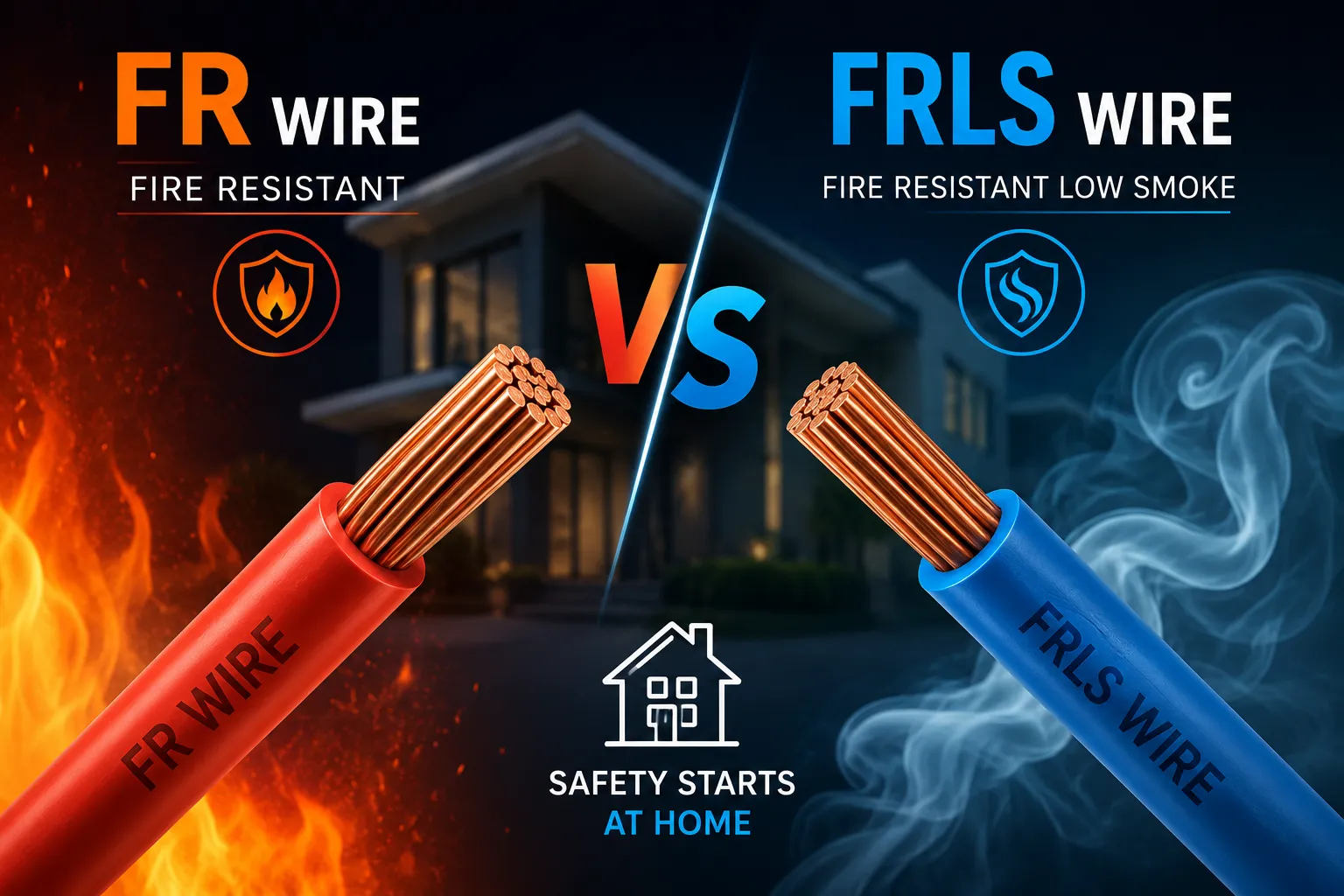
Fire resistant cables are designed to continue functioning during fire emergencies. These cables help maintain power supply for emergency lighting, fire alarms, and evacuation systems.
They are commonly used in:
- Hospitals
- Shopping malls
- Offices
- Industrial buildings
- Residential apartments
Benefits of Fire Resistant Cables
- Improved fire safety
- Reduced electrical hazards
- Better emergency support
- Lower smoke generation
- Reliable performance during critical situations
Using fire resistant cables can help protect both people and property during emergencies.
How Cables and Wires Support Electrical Systems
Cables and wires are essential components in every electrical system. They help transfer electrical power and communication signals safely between devices and systems.
Quality cables improve:
- Energy efficiency
- Electrical safety
- System performance
- Long-term reliability
Selecting the right cables and wires reduces maintenance costs and supports smooth electrical operations.
Choosing the Right Communication Cable
When selecting communication cables, consider the following factors:
Speed Requirements
Choose cables based on internet speed and data transfer needs.
Distance
Long-distance communication systems may require fiber optic cables for better performance.
Environmental Conditions
Industrial environments may require heat-resistant and durable cables.
Safety Standards
Always select cables that meet safety and quality standards.
Conclusion
Communication cables, industrial wire cables, and fire resistant cables are essential for modern electrical and networking systems. Choosing high-quality cables improves safety, performance, and long-term reliability for residential, commercial, and industrial applications.
Businesses and industries should always invest in reliable cable solutions to support efficient communication and electrical operations. To explore more cable and wiring solutions, visit KundanCab and learn about modern electrical products designed for today’s infrastructure needs.
























Sign in to leave a comment.