Headaches are one of the most common neurological complaints worldwide, affecting people of all ages and significantly impacting daily function, productivity, and quality of life. They are typically described as a painful sensation in the head or upper neck region and can vary from a dull, pressing ache to sharp, throbbing pain.
Growing research indicates that musculoskeletal variables, especially those related to the neck, posture, and surrounding soft tissues, play a major role in many headache presentations, regardless of the fact that headaches are frequently treated with medicine alone. Physiotherapy can be really beneficial in this situation.
Headaches are classified under the International Classification of Headache Disorders (ICHD). Physiotherapists most commonly assess and treat tension-type headaches, cervicogenic headaches, and certain presentations of migraine where neck involvement is present.
Common Types of Headaches Seen in Physiotherapy
Migraines
Migraines are a recurrent headache disorder affecting approximately 15% of the global population, with higher prevalence in women. They often begin in adolescence or early adulthood but can develop later in life.
Migraines are divided into two main subtypes:
Migraine with Aura
Aura refers to transient neurological symptoms that may include flashing lights, blind spots, sensory changes, or speech disturbances. These symptoms typically occur before or alongside the headache phase.
Migraine with aura is diagnosed based on:
- At least two migraine attacks with reversible aura symptoms
- Visual, sensory, or speech disturbances that develop gradually over minutes
- Aura symptoms followed by a headache within one hour
Migraine without Aura
This is the most common migraine presentation. It is characterised by:
- Recurrent unilateral, throbbing head pain
- Headache duration of 4–72 hours
- Moderate to severe intensity
- Associated symptoms such as nausea, vomiting, sensitivity to light (photophobia) or sound (phonophobia)
Emerging research (2024–2026) increasingly supports physiotherapy’s role in migraine management when neck stiffness, postural strain, or cervical dysfunction is present, particularly alongside medical management.
Tension-Type Headaches (TTH)
Tension-type headaches are the most prevalent headache disorder worldwide, with lifetime prevalence estimates ranging from 30–78%.
They are typically described as:
- A tight, band-like pressure around the head
- Bilateral pain
- Mild to moderate intensity
- Duration ranging from 30 minutes to several days
Unlike migraines, TTH are not worsened by routine physical activity and are usually not associated with nausea, although light or sound sensitivity may occur.
Diagnosis commonly includes:
- Pressing or tightening quality
- No vomiting
- Either photophobia or phonophobia (not both)
Although once thought to be purely stress-related, current evidence highlights a strong association between muscle tension, sustained posture, cervical joint restriction, and reduced endurance of deep neck muscles.
Cervicogenic Headaches (CGH)
Cervicogenic headaches are a secondary headache, meaning they originate from a disorder of the cervical spine (neck) rather than the brain itself.
They account for:
- 2.5–4% of the general population
- Up to 20% of people who experience frequent headaches
CGH commonly presents as:
- Unilateral headache without side-shifting.
- Pain originating in the neck and radiating to the head, temple, or eye
- Reduced neck range of motion
- Headache reproduced or aggravated by neck movement or sustained postures
Research indicates that dysfunction at the C2–C3 spinal segment is involved in up to 70% of cervicogenic headache cases, making this condition particularly responsive to physiotherapy intervention.
Why the Neck Matters in Headaches
The cervical spine consists of seven vertebrae (C1–C7), associated joints, muscles, ligaments, and nerves.
- C1 (atlas) supports the skull and allows flexion and extension
- C2 (axis) enables rotational movement
- The upper cervical nerves (C1–C3) share neural pathways with sensory structures of the head
This anatomical overlap explains why dysfunction in the neck can refer pain to the head, face, or behind the eyes.
Modern imaging and neurophysiology research continue to support this neck–head pain connection, reinforcing the role of targeted physiotherapy in headache care.
How Can Physiotherapy Help with Headaches?
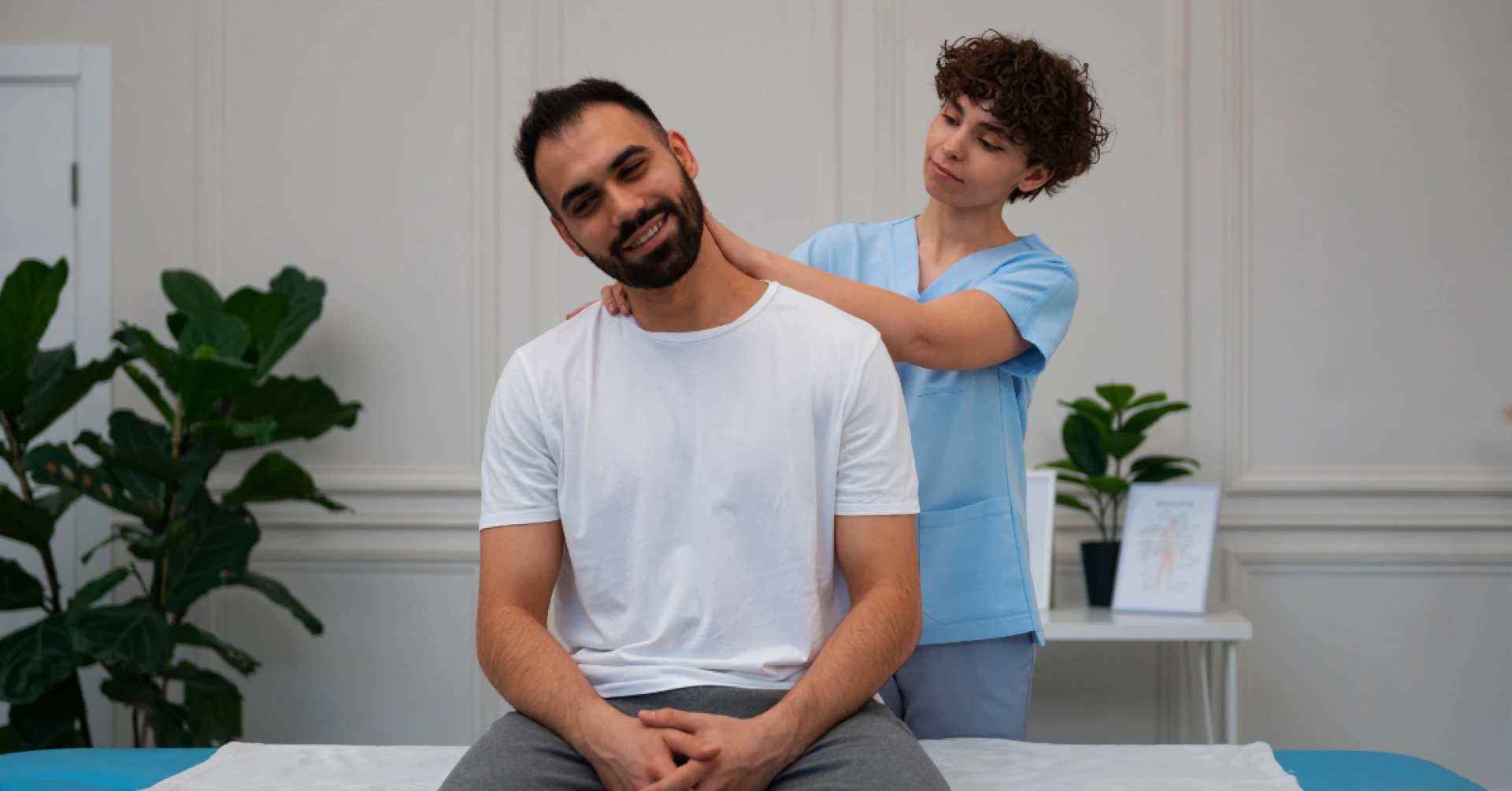
Physiotherapists assess whether musculoskeletal dysfunction is contributing to headache symptoms. This includes evaluating posture, joint mobility, muscle strength, endurance, and movement patterns.
Evidence-based physiotherapy management may include:
- Manual therapy to the cervical and thoracic spine
- Targeted strengthening of deep neck flexors
- Postural retraining and ergonomic advice
- Movement education and self-management strategies
Clinical studies consistently show that physiotherapy can help reduce:
- Headache frequency
- Headache intensity
- Duration and disability associated with headaches
For individuals experiencing headaches linked to neck dysfunction, headache-focused physiotherapy programs, such as those offered through Canberra Physiotherapy Centre’s specialised headache physiotherapy services, can help to address the underlying mechanical contributors rather than simply managing symptoms.
Exercises Commonly Used in Headache Management
Exercises should always be prescribed individually following assessment.
1. Chin Tucks
Designed to activate the deep neck flexor muscles and correct forward-head posture, chin tucks help reduce strain on cervical joints and surrounding muscles.
2. Scapular Control Exercises
Strengthening and coordinating the muscles around the shoulder blades supports better posture and reduces sustained neck load, particularly for desk-based workers.
3. Upper Trapezius Stretch
Releasing tension in the trapezius muscles improves neck mobility and can ease muscle-driven headache patterns.
A Patient-Centred Approach
Modern headache management focuses not only on pain reduction but on quality of life, function, and long-term self-management.
Outcome measures commonly assess:
- Frequency
- Duration
- Intensity
- Impact on daily activities
Physiotherapy plays a key role in helping individuals understand their headache triggers, optimise movement, and regain confidence in daily activities.
While not all headaches are musculoskeletal in origin, many are either caused or aggravated by neck dysfunction and posture-related strain. Identifying these contributors early and addressing them with physiotherapy can make a meaningful difference, particularly for those experiencing persistent or recurring headaches.


























Sign in to leave a comment.