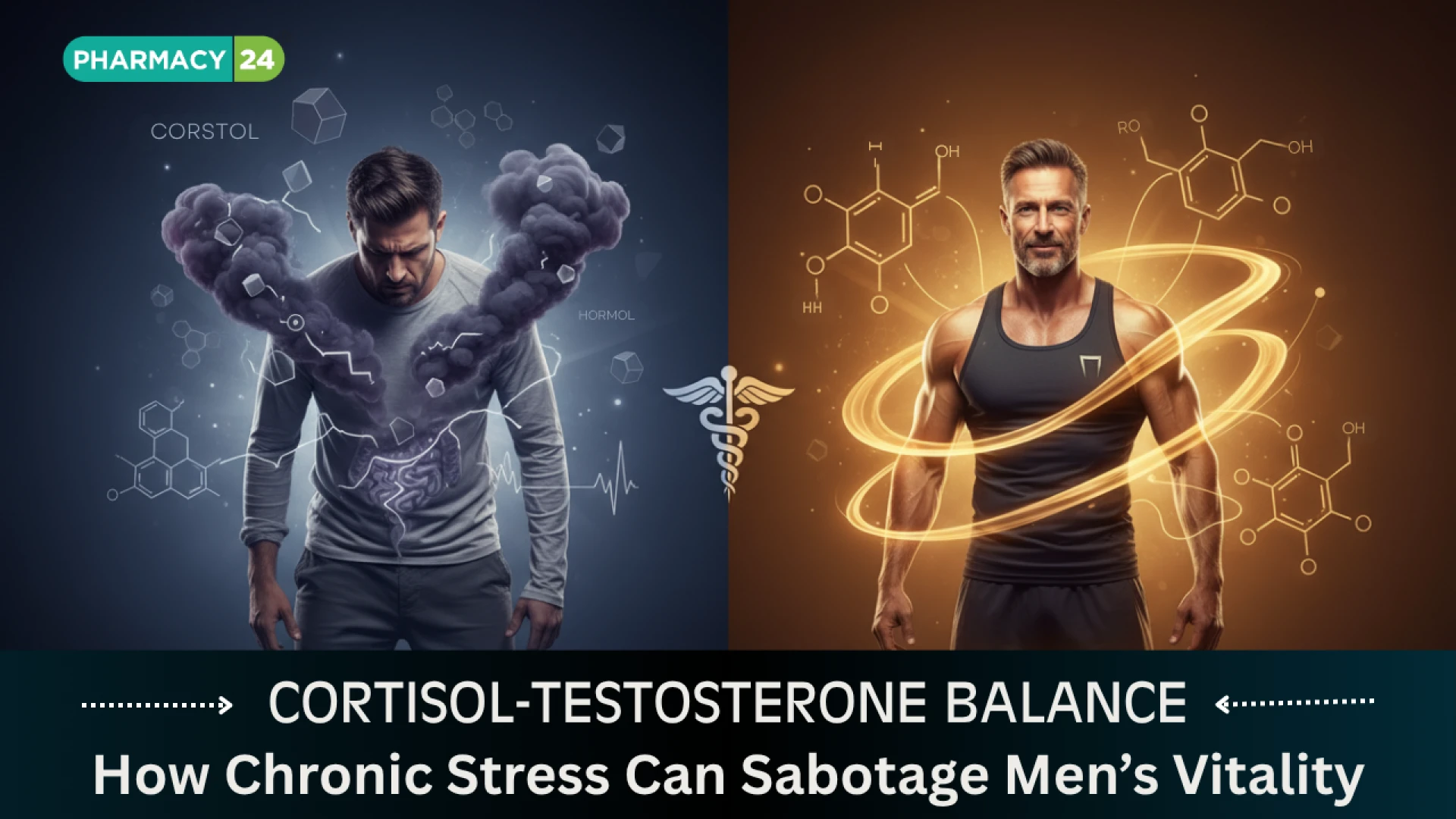

Men today live in a pressure cooker. Deadlines, late-night screens, financial strain, relationship expectations, and constant digital stimulation all hit the body in the same way: they push cortisol up and testosterone down.
Most men don’t notice the shift until they wake one day feeling heavier, slower, less driven, and strangely disconnected from their old selves. That creeping change is rarely “aging.” More often, it’s the silent seesaw between cortisol and testosterone.
The cortisol-testosterone balance isn’t just another wellness buzz phrase. It’s the biological axis that shapes a man’s energy, muscle strength, libido, mood, decision-making, and overall vitality. When this balance tilts, everything feels harder - workouts, work performance, motivation, even intimacy.
This guide cuts through the noise, drawing from recent medical research to explain how chronic stress sabotages testosterone, how to read the early signs, and what men can do to reclaim hormonal balance naturally and safely.
Take Control of Your Hormones Today - BUY NOW
The Modern Stress Trap: Why Men Feel ‘Tired but Wired’
Many men describe the same pattern:
- Feeling exhausted all day but restless at night
- Losing muscle despite working out
- Lower libido
- More irritability
- Belly fat that refuses to budge
- Brain fog that feels permanent
This “tired but wired” state is often driven by chronically elevated cortisol. High cortisol drains testosterone production, tightens sleep cycles, disrupts metabolism, and dampens sexual function - even in younger men.
The kicker?
Men often push harder instead of slowing down. More caffeine. More overtraining. More late-night work. This drive, once an asset, becomes the very force working against their biology.
Cortisol: The Engine of the Stress Response
Cortisol is not the villain. It helps you:
- React quickly
- Manage inflammation
- Regulate blood sugar
- Wake up feeling alert
You need cortisol - just not all day, every day.
Under chronic stress, cortisol becomes overactive. Instead of pulsing in healthy rises and falls, it stays elevated, flattening the natural rhythm your hormones depend on.
Testosterone: The Hormone of Drive, Strength, and Vitality
Testosterone fuels nearly everything men associate with their sense of self:
- Muscle mass and strength
- Sexual desire and performance
- Competitive drive
- Confidence and emotional stability
- Bone density
- Cognitive sharpness
But testosterone production is sensitive. It drops when the body senses long-term threat. Chronic stress tells the brain:
“Survival first, reproduction and strength later.”
So the body lowers testosterone to conserve resources.
How Cortisol and Testosterone Interact: A Tug-of-War Inside the Male Body
Cortisol and testosterone operate like two ends of a biological seesaw. When cortisol is high for extended periods, testosterone naturally dips. This is due to:
- HPA Axis Activation - Stress signals the brain to produce more cortisol.
- HPG Axis Suppression - The same stress signal suppresses testosterone production in the testes.
- LH & FSH Interference - High cortisol disrupts the hormones responsible for triggering testosterone release.
- Increased Aromatase Activity - Chronic stress can convert more testosterone into estrogen.
- Sleep Disruption - Cortisol-driven insomnia lowers morning testosterone peaks.
Understanding this seesaw is the foundation of understanding the cortisol testosterone balance - your primary keyword and the core of this guide.
Why the Testosterone–Cortisol Ratio Matters
Scientists use the testosterone cortisol ratio (T:C ratio) to measure the body’s anabolic (building) versus catabolic (breaking down) state.
A healthy ratio suggests:
- Strong recovery
- Good muscle-building potential
- Efficient stress response
- Robust metabolic health
A chronically low ratio warns of:
- Overtraining
- Poor recovery
- Excess stress load
- Early signs of burnout
- Hormonal imbalance that can evolve into clinical issues
Although the ratio is popular in sports science, its value extends far beyond athletes - it’s one of the clearest indicators of how well a man’s body is coping with stress daily.
Ready to Restore Your Vitality?- BUY NOW
Acute vs Chronic Stress: When Cortisol Shifts from Helpful to Harmful
Acute stress is normal. It spikes cortisol briefly, then the body resets.
Chronic stress, however, keeps the system switched “on,” altering hormones:
- Cortisol remains high for hours or days
- Testosterone production slows
- The body prioritizes survival mode
- Libido and muscle-building shut down
- Mood and sleep spiral
This hormonal shift becomes self-reinforcing: poor sleep raises cortisol, high cortisol lowers testosterone, low testosterone worsens mood and energy, and round it goes.
How High Cortisol and Low Testosterone Show Up in Daily Life
Hormonal imbalance rarely begins with dramatic symptoms. Instead, it creeps in quietly. Men often blame long work hours, age, or “not being in shape,” when the real issue is the cortisol-testosterone balance slipping out of sync. Because cortisol and testosterone influence every major system - energy, metabolism, mood, and sexual function - the signs appear in multiple parts of life.
Here are the patterns most men notice first:
Energy & Mood Changes: When Stress Hijacks the Brain
Common signs include:
- Feeling drained all day, despite sleeping
- Afternoon crashes
- Irritability, impatience, or quick anger
- Brain fog, trouble concentrating
- Loss of drive or motivation
- Mild depression or persistent anxiety
High cortisol increases adrenaline-like tension, while low testosterone reduces confidence, assertiveness, and emotional stability. Many men describe it as feeling “less like myself,” even if they can’t pinpoint why.
Body Composition Shifts: Stubborn Belly Fat & Muscle Loss
Chronically high cortisol encourages fat storage - especially around the midsection - and breaks down muscle tissue. Meanwhile, low testosterone reduces the body’s ability to rebuild muscle.
Key changes you may notice:
- Increased belly fat, even with exercise
- Harder to gain muscle
- Easier to lose muscle when stressed
- Slower recovery after workouts
- Reduced strength or performance
These changes can occur even without overeating, because stress hormones alter how fat and muscle are regulated.
Sexual Health Disruptions: A Critical Warning Sign
Testosterone is central to male sexual function. When levels drop, the effects show up quickly.
Possible symptoms:
- Lower libido
- Weaker or inconsistent erections
- Reduced morning erections
- Lower semen volume
- Fertility challenges
Because sexual health is sensitive to hormone changes, these signs often appear early - a major clue the cortisol-testosterone balance has shifted.
Sleep Disturbances: The Hidden Catalyst
The hormone cycle depends on sleep. When cortisol rises at night, sleep quality drops, suppressing next-morning testosterone levels.
Signs of cortisol-driven sleep issues:
- Waking around 2–4 a.m.
- Difficulty falling asleep
- Feeling wired at night
- Not feeling refreshed in the morning
- Increased cravings for sugar or caffeine
Sleep is both a cause and consequence of disrupted hormones.
Transform Your Health in 30 Days - BUY NOW
Long-Term Health Risks If the Imbalance Persists
Unchecked stress and low testosterone don’t just affect energy and libido - they shape long-term health.
Chronic risks include:
- High blood pressure
- Insulin resistance
- Higher visceral fat
- Metabolic syndrome
- Elevated heart disease risk
- Joint pain and inflammation
- Reduced bone density
This is why early identification is crucial. Hormones are foundational, and correcting them early prevents downstream metabolic issues.
Testing Your Cortisol-Testosterone Balance: What Men Should Know
Most men skip lab testing because they assume it’s complex or unnecessary. In reality, testing is the fastest and most objective way to confirm whether stress is sabotaging testosterone.
Below is a structured, simple guide.
When Should Men Get Tested?
You should consider testing if you experience:
- Low libido or erectile issues
- Chronic exhaustion
- Trouble building muscle
- Increased belly fat
- Mood swings or irritability
- Poor sleep
- High work or emotional stress
- Low motivation or depression without clear cause
Men over 35 or those with high-stress lifestyles should test hormones annually.
Red Flags in the Cortisol-Testosterone Relationship
A doctor should evaluate you if you notice:
- Consistently low morning testosterone
- High nighttime cortisol
- No morning energy
- Erectile dysfunction lasting more than 3 months
- Rapid muscle loss
- Significant depression or anxiety
- Sudden weight gain
- Inability to sleep through the night
- Very low libido
These signs suggest more than lifestyle stress - they may indicate endocrine dysfunction requiring medical management.
When to See a Specialist
You should consult an endocrinologist or urologist if:
- Testosterone levels are below normal range for your age
- Cortisol patterns are consistently abnormal
- Symptoms persist despite lifestyle changes
- You suspect sleep apnea, thyroid issues, or chronic inflammation
- You are considering TRT (testosterone replacement therapy)
A specialist can evaluate deeper issues such as:
- Adrenal fatigue myths vs real adrenal dysfunction
- Pituitary disorders
- Insulin resistance
- Sleep disorders affecting hormone cycles
How to Balance Cortisol and Testosterone Naturally
The body wants balance. When men stop fighting their biology and start working with it, hormones often improve faster than expected. The following strategies form the non-negotiable foundations for restoring the cortisol-testosterone balance before considering medication or TRT.
Stress Hygiene: Your Daily Defense Against Cortisol Spikes
“Stress management” sounds vague, so here are practical, physiological tools that directly influence cortisol output.
1. Breathwork That Lowers Cortisol Within Minutes
Slow, diaphragmatic breathing activates the parasympathetic system.
Try:
- Physiological Sigh: 2 quick inhales → slow exhale
- Box Breathing: 4 seconds inhale → 4 hold → 4 exhale → 4 hold
Research shows these patterns rapidly reduce cortisol and heart rate.
2. Micro-breaks During Work
Men under chronic deadline pressure often push through exhaustion. Taking 2–3 minutes every hour to move or stretch resets the nervous system, preventing cortisol accumulation.
3. Light Exposure in the Morning
10–15 minutes of sunlight early in the day:
- Supports cortisol’s natural rise
- Improves nighttime melatonin
- Stabilizes daily testosterone rhythms
4. Limit Nighttime Blue Light
Screens suppress melatonin and raise nighttime cortisol - a direct hit to testosterone production.
Use:
- Night mode
- Blue-light glasses
- Screen curfew 60 minutes before bed
Sleep as Hormone Therapy
Sleep is the single most powerful testosterone booster for men - more effective than supplements and sometimes more effective than TRT in mild cases.
Why sleep matters:
- 70%+ of daily testosterone is released during deep sleep
- Cortisol resets during the early hours
- Sleep debt reduces next-day testosterone by up to 10–15%
Sleep rules for hormonal balance:
- Sleep 7–9 hours
- Keep the room cool (18–20°C / 65–68°F)
- Avoid alcohol within 3 hours of bed
- Keep a consistent wake-up time
Cortisol-specific sleep hacks:
- Magnesium glycinate before bed
- White noise for fragmented sleep
- Cut caffeine after 2 p.m.
Smart Training: Build Strength Without Overloading Cortisol
Exercise boosts testosterone - but only when done correctly.
Best training choices for hormonal balance:
- Strength training: 3–4 days/week
- Compound lifts (squats, deadlifts, rows, presses)
- Moderate intensity instead of daily maxing out
Training mistakes that elevate cortisol:
- Excessive HIIT (more than 2–3 times weekly)
- Long-distance endurance running
- Training on 4–5 hours of sleep
- Fasting workouts for men under high stress
The goal is simple: Stimulate, don’t annihilate.
Make Your Well-Being a Priority - BUY NOW
Nutrition That Supports Testosterone and Calms Cortisol
Food sends hormonal signals. Some foods stabilize the cortisol-testosterone balance; others make it worse.
The essentials:
- Protein with every meal (1.2–1.6 g/kg/day)
- Healthy fats (olive oil, nuts, eggs, fatty fish)
- Complex carbohydrates (oats, sweet potatoes, fruit)
Carbs help testosterone - and reduce cortisol
Low-carb diets can spike cortisol and lower testosterone in some men.
Balanced carbs improve recovery, sleep, and anabolic hormones.
Micronutrients men often lack:
- Vitamin D
- Zinc
- Magnesium
- Omega-3s
- B vitamins
These support both stress resilience and testosterone synthesis.
Weight Management: Visceral Fat Is a Hormonal Saboteur
Excess abdominal fat increases the enzyme aromatase, which converts testosterone into estrogen. It also raises cortisol and inflammation.
Losing 5–10% of body weight can significantly improve:
- Free testosterone
- Energy
- Insulin sensitivity
- Sleep quality
This is why fat loss is not just cosmetic - it’s hormonal therapy.
Evidence-Based Supplements (With Realistic Expectations)
Supplements aren’t magic, but some have meaningful research support.
Ashwagandha
Shown to reduce cortisol and slightly increase testosterone in men under stress.
Use standardized KSM-66 or Sensorial extract.
Buy now
Omega-3 Fatty Acids
Reduce inflammation and improve recovery.
Vitamin D3
Low levels correlate with lower testosterone and higher stress markers.
Magnesium Glycinate
Improves sleep quality and muscle relaxation.
Zinc
Helps support testosterone production, especially in men who are deficient.
Important:
These are helpful as additions, not replacements for sleep, diet, or training.
Medical Options: When Lifestyle Isn’t Enough
Hormonal imbalance sometimes requires medical evaluation. Men with significant symptoms or abnormal labs should not rely solely on lifestyle changes.
1. Identifying the Underlying Medical Drivers
Doctors may investigate:
- Thyroid problems
- Sleep apnea
- Chronic inflammation
- Depression or anxiety
- Obesity or insulin resistance
- Medications like steroids or opioids
Correcting these can normalize hormones naturally.
2. Testosterone Replacement Therapy (TRT)
TRT is appropriate when:
- Symptoms are moderate to severe
- Labs confirm low testosterone on two separate mornings
- Underlying causes have been addressed
Benefits may include:
- Stronger libido
- More energy
- Improved mood
- Increased muscle and strength
- Better cognitive clarity
Risks and considerations:
- Can reduce fertility
- Requires lifelong or long-term commitment
- Needs regular monitoring (hematocrit, PSA, estradiol)
Always work with a qualified endocrinologist or urologist.
FAQs
1. Does cortisol lower testosterone in men?
Yes. Chronic high cortisol suppresses testosterone production by disrupting LH, sleep quality, and recovery. The relationship is well-documented in clinical research.
2. How long does it take to restore testosterone lowered by stress?
Most men see improvements in 4–12 weeks with better sleep, reduced stress, strength training, and improved nutrition.
3. What is a healthy testosterone–cortisol ratio?
Ranges vary by lab, but a higher ratio generally indicates better recovery, lower stress, and stronger anabolic state. Patterns matter more than exact numbers.
4. Can you lower cortisol and raise testosterone naturally?
Yes. Sleep, sunlight, strength training, stress management, and nutrient-rich food support both.
5. What are the signs of high cortisol and low testosterone?
Low libido, belly fat, fatigue, mood changes, poor sleep, muscle loss, and slow recovery.
6. Are testosterone boosters helpful if cortisol is high?
Usually not. High cortisol overrides most OTC “boosters.” Fix stress and sleep first.
7. Can meditation and breathwork affect hormones?
Yes. Both can reduce cortisol and indirectly support healthy testosterone rhythms.
Conclusion
The cortisol-testosterone balance is central to men’s vitality. When stress stays high, cortisol rises and testosterone falls, leading to fatigue, belly fat, low libido, poor sleep, and reduced motivation. The good news: this balance is highly responsive to daily habits.
Prioritizing sleep, smart training, nutrient-dense foods, and stress management can shift hormones back into a healthier rhythm within weeks. For persistent symptoms or abnormal labs, medical evaluation ensures deeper issues aren’t overlooked.
Rebalancing cortisol and testosterone isn’t just about hormones - it’s about restoring energy, confidence, clarity, and long-term health. Small, consistent changes create lasting transformations.



























Sign in to leave a comment.