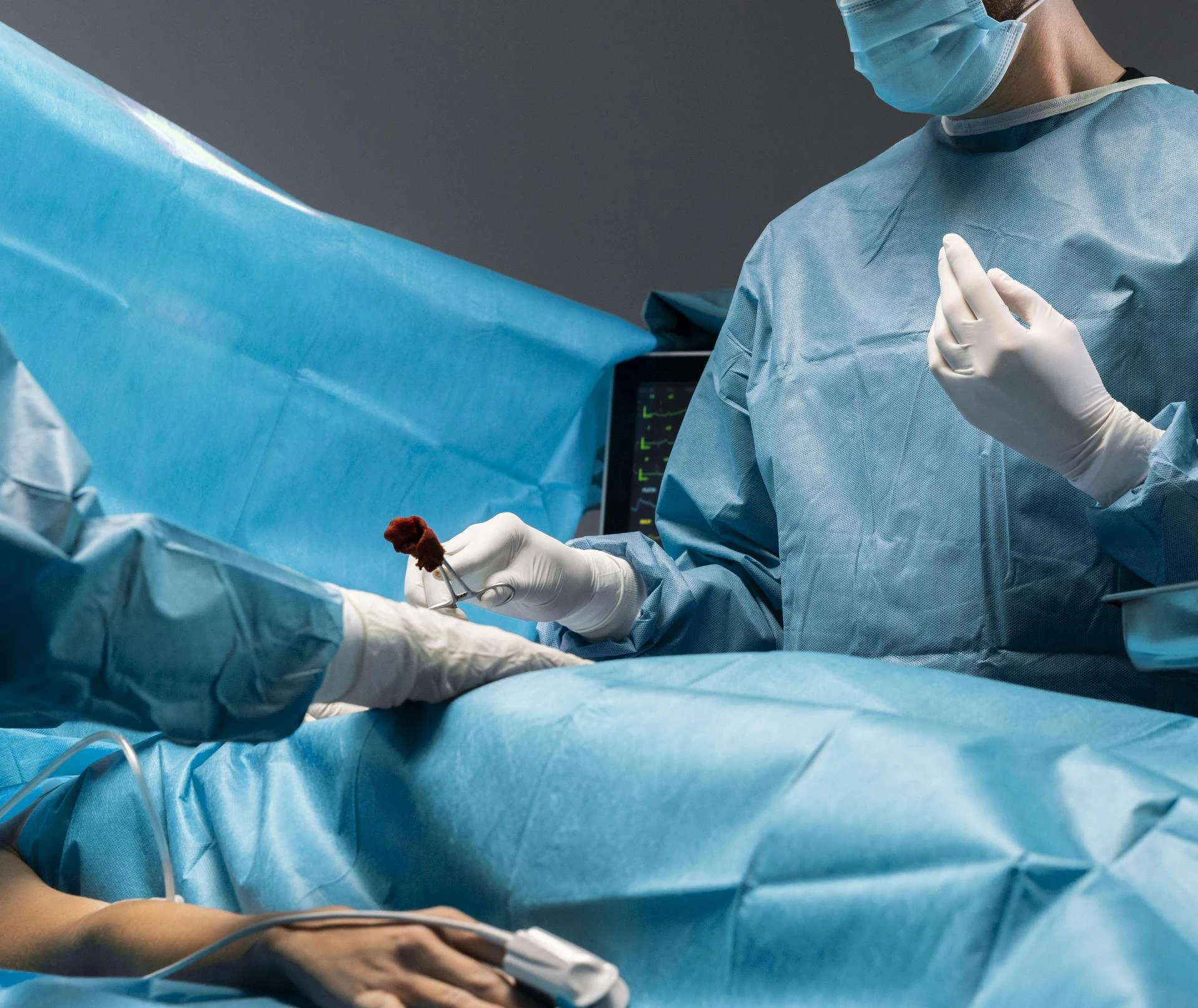

Colorectal cancer is such a disorder that grows silently with little or no symptoms in the early stage. When detected at the advanced stage, it is the second most common cause of cancer-related deaths.
While most cases of colorectal cancer occur in older individuals, the number of people diagnosed with the disease in their 20s, 30s, or 40s is increasing drastically. In Stage 1, the disease is highly treatable with an improved survival rate, but it decreases as the malignant cells progress.
Therefore, staging of colorectal cancer plays an important role in determining the extent of its spread and the available treatment options, such as colorectal cancer surgery, which helps doctors predict the outcomes.
In this blog, we will list the stages of colorectal cancer and explain what each stage means for diagnosis and treatment. However, first, we will explore what staging entails.
Understanding Staging in Colorectal Cancer
Once an individual gets diagnosed with colorectal cancer, surgeons try to find out if it has spread and, if so, how much. This process is known as staging, and it describes the size of the tumour. It also allows the doctor to determine if the malignant cells have metastasised to the nearby lymph nodes and organs.
As the stage progresses, the cancer becomes more complicated, where treatment is difficult, and the 5-year survival rate also decreases to a great extent.
For most cancers, doctors usually follow the TNM system—Tumour, Nodes, and Metastasis—to assign a stage from 0 to IV.
Different Stages of Colorectal Cancer
Stage 0
Stage 0 of colon and rectal cancer is also known as carcinoma in situ or sometimes intramucosal carcinoma. It represents the earliest form of cancer, where the abnormal cells are found in their place of origin. The cancer cells have not invaded the deepest layers or spread elsewhere.
Colorectal cancer at this stage is highly curable. Mostly, the abnormal cells are removed during colonoscopy, but if required, colorectal cancer surgery might be performed. The prognosis is excellent, with high cure rates.
Stage 1
Here, the cancer cells have grown beyond the inner layers and spread to the submucosa (layer of tissue next to the mucosa) or to the muscle layer of the colon wall. However, it has not metastasised to the nearby or distant sites.
The primary and curative treatment at Stage 1 is surgical intervention. The goal is to completely remove the tumour along with the nearby healthy tissues. In specific individuals, chemotherapy is recommended. The survival rate is also very high.
Stage 2
Stage II colorectal cancer indicates that the cancer cells have spread through the muscle layer of the colon wall to the serosa (the outermost layer) of the colon wall. This stage is often divided into subcategories (IIA, IIB, and IIC) based on the extent to which the cancer has penetrated.
Colorectal cancer surgery remains the standard treatment. If needed, other approaches like chemotherapy or radiation therapy are suggested. Outcomes are still favourable, particularly when the cancer cells are removed completely.
Stage 3
Diagnosis at this stage means that the cancer has already spread to the nearby lymph nodes but not to the distant sites. The stage is also divided into several sub-categories depending on how deeply the tumour has grown.
Treatment involves surgery followed by other approaches like chemotherapy, radiation therapy or targeted therapy to reduce the risk of recurrence. Stage 3 is more serious, with an improved survival rate because of modern treatment availability.
Stage 4
This is the most advanced stage, where the cancer cells have already reached the nearby organs like the liver, abdomen and lungs. Symptoms also become noticeable, including pain, fever, bowel changes and weight loss.
Treatment is more complex and highly individualised. Surgery is needed along with other therapies like chemotherapy, targeted therapy, or immunotherapy. While stage 4 colorectal cancer is not always curable, patients can have an improved quality of life.
Conclusion
From Stage 0 to Stage 4, surgery is the most effective treatment option. With early diagnosis and timely care, it is possible to fight against this disease and lead a normal life.














Sign in to leave a comment.